
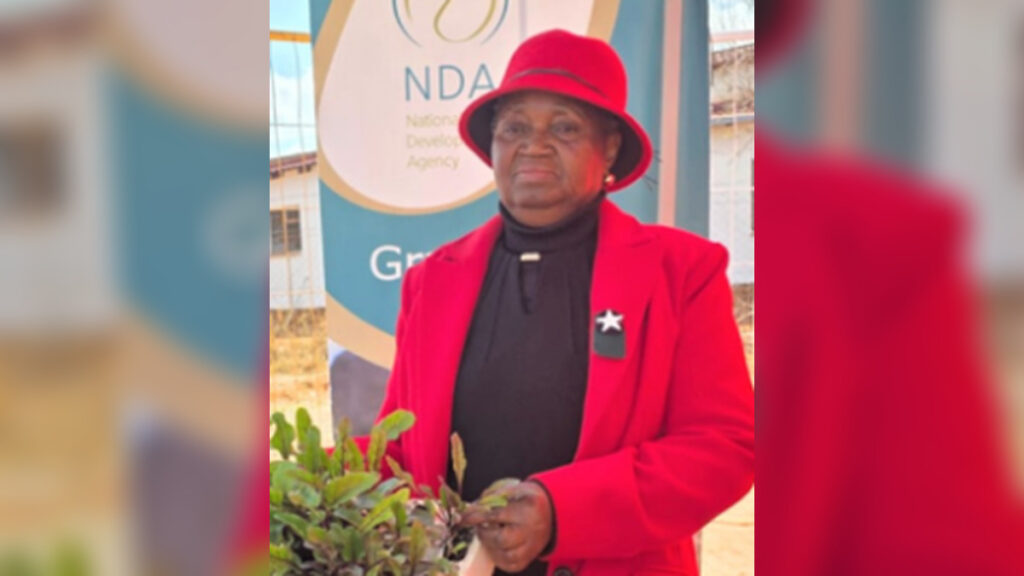
A mother’s concern grows into a lifeline for Maphosa village
What began with Johanna Mailula worrying about children left to fend for themselves after school has developed into a wide-ranging community project tackling some of the biggest challenges facing families in Maphosa village in Botlokwa, Limpopo.
Mailula, a mother of three and grandmother of two, established the Maphosa Drop-in Centre in 2016 after repeatedly seeing schoolchildren spending their afternoons on the streets without adult supervision.
Her response was simple but determined: create a safe environment where children could receive care, support and guidance.
From a small idea to support for 68 children
Mailula started the initiative with very limited resources, drawing motivation from the unemployment, poverty and lack of economic opportunities affecting households in her community.
In its early days, she depended heavily on donations from local residents.
She personally went from door to door asking community members to contribute whatever they could.
“The community supported us with the little they had, and that encouraged me to continue, despite the challenges,” she said.
Almost a decade later, the centre has grown significantly and now supports 68 vulnerable children.
Children receive more than just a safe place
The Maphosa Drop-in Centre has expanded beyond providing supervision after school.
Children benefit from psychosocial support, help with homework, educational enrichment and life-skills programmes.
The centre also provides nutritious meals, helping address food insecurity while contributing to the overall wellbeing of children from vulnerable households.
For Mailula, however, it became increasingly clear that supporting children also meant confronting the economic difficulties experienced by their families.
Agriculture becomes a new source of opportunity
The organisation responded by expanding into agriculture, turning food production into a tool for both community development and job creation.
The agricultural initiative has created 17 permanent jobs while also opening opportunities for seasonal workers and volunteers.
Vegetable production has become one of the centre’s most successful ventures, with its produce attracting buyers from different parts of Limpopo.




Mailula said she is particularly proud that customers are willing to travel significant distances because of their confidence in the quality of the vegetables produced by the project.
Five hectares could transform the project
The initiative has also secured access to five hectares of land allocated by the Traditional Council, giving Mailula a much larger platform from which to expand production.
She sees the additional land as an opportunity to move the project beyond its current scale and establish a commercially sustainable agricultural enterprise.
Her ambitions extend beyond the local and provincial markets.
Mailula hopes increased production will eventually allow the organisation to export its agricultural products outside South Africa.
Partnerships provide a major boost
The centre’s development has been supported by several government institutions and development organisations, demonstrating the importance of partnerships in strengthening grassroots initiatives.
Among those providing assistance are the Department of Social Development, the National Lotteries Commission and the local municipality.
The centre also works with humanitarian organisations, including Gift of the Givers, particularly when assisting households affected by food insecurity.
R1.3 million partnership expands Green Harvest
One of the most significant developments came in 2026 when assistance facilitated by the National Development Agency helped establish a partnership between the Maphosa Drop-in Centre and The Church of Jesus Christ of Latter-day Saints.
The partnership brought R1.3 million in support for the Green Harvest Project.
The funding has helped improve the centre’s agricultural infrastructure through irrigation systems, boreholes, water-storage facilities, fencing and shade-net structures.
It has also supported seedling production and crop cultivation, while training and mentorship have been introduced to improve farming practices, employment opportunities and access to markets.
A community project with a much bigger purpose
The transformation of the centre illustrates how a project initially created to protect children can evolve into a broader response to rural poverty.
Its activities now address several interconnected issues, including child vulnerability, unemployment, food insecurity and limited access to economic opportunities.
Rather than treating these challenges separately, Mailula’s initiative has created a model that links childcare and social support with food production, skills development and employment.
Mailula’s vision extends beyond today
Despite the progress made since 2016, Mailula believes the work is only beginning.
Her plans to expand agricultural production and eventually reach international markets point to an ambition that goes well beyond running a drop-in centre.
The long-term goal is to build an enterprise capable of creating sustainable opportunities for the wider community while continuing to provide essential support to vulnerable children.
A grassroots leader creating lasting change
Mailula’s experience demonstrates how determined local leadership can turn a modest idea into a platform for wider social and economic development.
The Maphosa Drop-in Centre has grown from an effort to give children a safe place after school into an initiative combining childcare, food security, employment and agricultural development.
With continued community involvement and strategic partnerships, Mailula hopes the project will become a lasting economic force in Maphosa and create opportunities for future generations.
For the woman who once simply wanted to keep children off the streets after school, the journey has evolved into something much larger: building a community where vulnerable children are protected and families have greater opportunities to create sustainable livelihoods.
- Bryan Kohberger’s New Lawyer Hints at Fresh Idaho Murders Evidence as Convicted Killer Launches Bid to Undo Guilty Pleas
- George Santos Permanently Banned by Kalshi After Controversial State of the Union Betting Scandal
- Gayton McKenzie Defends Airlink Flyover as International Critics Question Safety of Springboks Stadium Spectacle
- Nick Castle Turns 78 and Looks Almost Unrecognizable Decades After Becoming the Man Behind Halloween’s Terrifying Michael Myers
- Bill Maher Questions Lindsay Clancy’s Female Supporters as Hundreds Rally Outside Murder Trial and Back Accused Child Killer
- Koeberg Unit 1 Taken Offline After Sudden Turbine Trip as Eskom Assures South Africans Nuclear Safety Was Never Threatened

