
For generations of horror fans, Nick Castle is best known for one of cinema‘s most recognizable figures — the silent, relentless Michael Myers from the 1978 classic Halloween.
Yet Castle himself has spent much of his career far away from the terrifying image that made him famous.
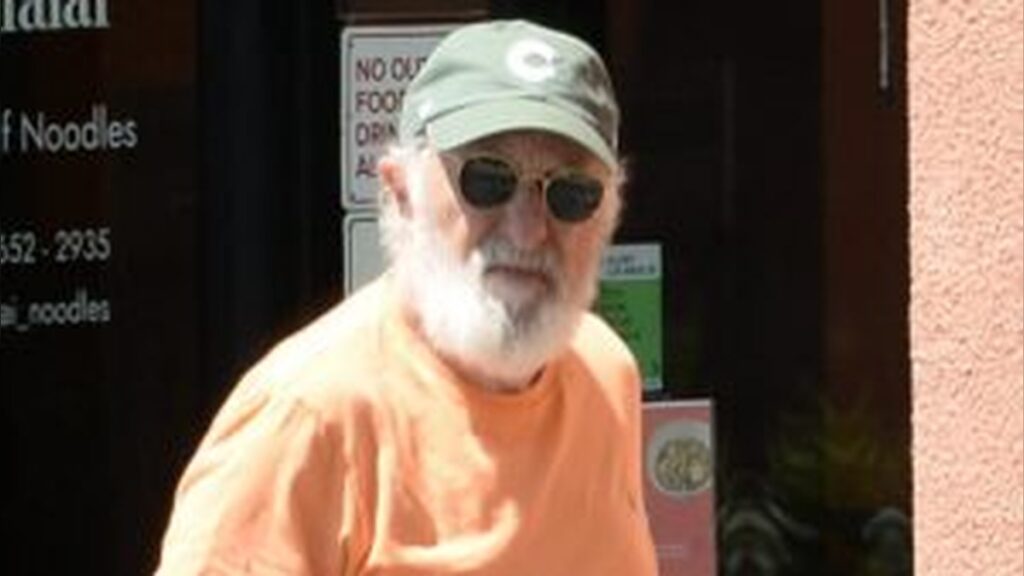
Now 78, the actor and filmmaker was recently spotted during a rare outing in Los Angeles, appearing almost impossible to recognize compared with the figure audiences remember stalking Laurie Strode.
Wearing an orange T-shirt, cargo trousers, baseball cap and sunglasses, Castle was also sporting a full white beard.
The transformation was striking enough to make the man behind one of horror’s most famous masks virtually unrecognizable.
The Accidental Birth of Michael Myers
Castle’s involvement with Halloween was hardly the carefully planned casting decision one might expect for such an iconic character.
At the time, he was spending time on the Los Angeles set because he wanted to learn more about filmmaking.
Director John Carpenter, who had been Castle’s classmate at the University of Southern California, needed someone to portray the mysterious figure known as The Shape.
Carpenter asked his friend to put on the now-famous mask and simply walk through the scenes.
Castle accepted the unusual assignment and ultimately became Michael Myers, earning just $25 a day for the role.
The Mask That Hid a Hollywood Legend
The decision to conceal Myers’ face became a crucial part of the character’s appeal.
Rather than revealing the identity or emotions of the killer, the film presented audiences with an almost expressionless figure whose movements and presence created much of the tension.
The mask itself was a modified version of a Captain Kirk mask based on William Shatner’s Star Trek character.
Castle’s slow, deliberate movement added another layer to the character.
He later explained that Carpenter gave him remarkably little direction for his first appearance, essentially telling him to walk across the street toward the camera.
What might have appeared insignificant at the time ultimately became one of the defining physical characteristics of Michael Myers.
Halloween Changed the Horror Genre
Released in 1978, Halloween went on to become a landmark in horror cinema and helped establish the template for the modern slasher movie.
Jamie Lee Curtis starred as Laurie Strode, the young woman forced to survive Myers’ pursuit, while Donald Pleasence played psychiatrist Dr. Samuel Loomis.
Although Castle did not return to play Myers in Halloween II in 1981, his association with the franchise continued for decades.
He later made appearances connected to David Gordon Green’s trilogy, including Halloween in 2018, Halloween Kills in 2021 and Halloween Ends in 2022.



The 2018 film was particularly notable because it brought Castle back together with Curtis, whose character once again confronted the masked killer.
Castle Was Always More Than Michael Myers
Despite the enormous recognition attached to Michael Myers, acting was only one part of Castle’s career.
His professional relationship with Carpenter continued beyond Halloween.
Castle co-wrote the screenplay for the 1981 science-fiction action movie Escape from New York, which starred Kurt Russell as Snake Plissken and was directed by Carpenter.
That project demonstrated Castle’s ambitions as a writer and filmmaker rather than simply as an actor.
Carpenter also paid tribute to his longtime friend by naming a character after Castle in the 1980 horror film The Fog.
A Directing Career Took Center Stage
Castle moved behind the camera soon after his brief but transformative acting role.
His directorial debut came with Tag: The Assassination Game in 1982, followed by a series of films that included The Last Starfighter in 1984, The Boy Who Could Fly in 1986, Dennis the Menace in 1993 and Major Payne in 1995.
He later returned to screenwriting, working on the 2007 musical drama August Rush, which featured Freddie Highmore, Jonathan Rhys-Meyers, Robin Williams and Keri Russell.
Why the Original Performance Still Matters
Castle has previously described his appearance in the first Halloween as something that happened almost by chance.
He explained that Carpenter simply needed someone to fill the role and walk around wearing a mask.
But Castle’s physical appearance and the way he naturally moved helped shape the character.
At roughly six feet tall and weighing about 150 pounds at the time, Castle said his thin, angular build contributed to Myers’ distinctive silhouette.
His slow and methodical movements created an unsettling presence without making the killer appear robotic.
Those seemingly simple decisions helped create the mystery that became central to Michael Myers.
Life Away From the Horror Spotlight
Castle has stepped back from directing feature films but has not completely retired from the entertainment industry.
He continues to participate in occasional projects, including voice work, while also appearing at fan conventions and events where supporters seek his autograph and celebrate his connection to the Halloween franchise.
His continued involvement has allowed fans to meet the filmmaker and actor behind a character who spent much of his screen time deliberately hiding his identity.
A Career Defined by One Unlikely Opportunity
Castle’s story is a reminder of how unpredictable Hollywood careers can be.
He arrived on the Halloween set hoping to observe filmmaking and learn from Carpenter.
Instead, he was handed a mask, told to walk toward the camera and became part of horror history.
The role was never originally intended to define his entire career.
Castle went on to write, direct and work across several other productions, but Michael Myers remained the performance most closely associated with his name.
What’s Next for Nick Castle?
At 78, Castle remains active enough to maintain a connection with the entertainment world, even though feature-film directing is no longer the main focus of his career.
His occasional projects, voice work and appearances at fan events ensure that his connection to Halloween remains alive, while his wider body of work offers a reminder that there was considerably more to his Hollywood career than the man in the mask.
Summary
Nick Castle’s journey from aspiring filmmaker to the actor behind Michael Myers began almost accidentally on the set of Halloween.
A simple request from longtime friend and former USC classmate John Carpenter resulted in a performance that became one of horror cinema’s most enduring images.
Castle was paid only $25 a day, but the role opened the door to a career that eventually included screenwriting and directing.
Away from the mask, he directed films such as The Last Starfighter, The Boy Who Could Fly, Dennis the Menace and Major Payne, while also co-writing Escape from New York and writing August Rush.
Now, decades after audiences first saw Michael Myers stalking Laurie Strode, Castle continues to make occasional appearances — even if his white beard and casual Los Angeles attire make him look nothing like the silent killer who made him famous.

