
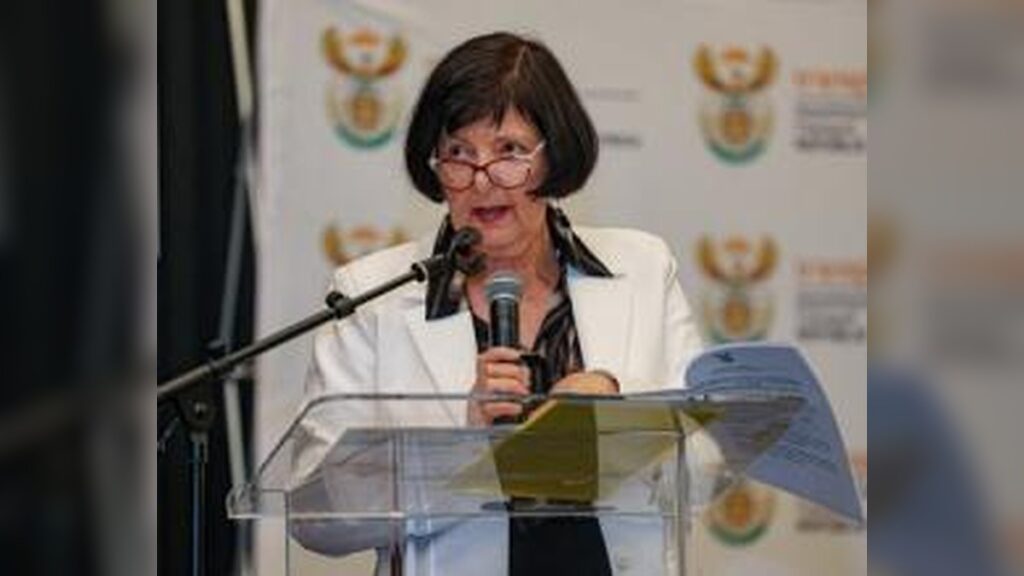
South Africa is preparing to strengthen its fight against drunk driving, with Transport Minister Barbara Creecy confirming that government is working on legislative changes that could introduce a strict zero-percent blood alcohol policy for motorists.
The proposed amendments will target Section 65 of the National Road Traffic Act, which governs alcohol consumption and driving.
Creecy said the process is already underway, with government seeking the necessary legal and socio-economic approvals before taking the amendment to Cabinet.
Speaking at the Road Safety Practitioners’ Colloquium in Ekurhuleni on Wednesday, the minister said the government aims to secure Cabinet concurrence for the proposed changes by the end of 2026.
Drunk Driving Remains a Major Enforcement Challenge
The push for tougher legislation comes as traffic authorities continue to record large numbers of arrests linked to alcohol and road use.
Creecy revealed that more than 18,000 people were arrested for driving under the influence of alcohol between March and the end of August 2026.
Those arrests represented roughly one-third of all traffic-related arrests recorded during the period.
The figures have reinforced concerns about the role alcohol continues to play in South Africa’s road safety crisis and the need for stronger measures to deter motorists from getting behind the wheel after drinking.
Government Refuses to Accept Nearly 12,000 Annual Deaths
Creecy said the country must not become accustomed to the scale of deaths occurring on its roads each year.
South Africa records close to 12,000 road deaths annually, a figure the government considers unacceptable.
The country has consequently set a target of cutting annual road fatalities by half by 2030, in line with the United Nations Sustainable Development Goals.
The minister pointed to recent improvements as evidence that coordinated interventions can produce results, although she stressed that the current figures remain far too high.
Road Deaths Fell by 9% in the First Eight Months
According to the latest road safety snapshot presented by Creecy, 6,457 people died on South African roads between 1 January and 23 August 2026.
That represented an overall nine percent reduction in fatalities compared with the same period in 2025.
However, pedestrians continued to account for the largest share of deaths, making up 48 percent of all road fatalities.
Gauteng and KwaZulu-Natal together also recorded more than one-third of the country’s total fatalities during the period.
The Eastern Cape, KwaZulu-Natal, Mpumalanga and North West either achieved or surpassed the 10 percent provincial target for reducing road deaths.




Recent Road Safety Campaigns Show Progress
Creecy highlighted several recent periods in which road safety statistics improved.
Annual crashes and fatalities were both more than six percent lower in 2025 than in 2024.
The 2025/26 Festive Season Road Safety Campaign also produced a five percent decline in both crashes and fatalities, with five provinces recording fewer deaths than during the corresponding period a year earlier.
The 2026 Easter long weekend produced another notable improvement.
The Road Traffic Management Corporation recorded the second-lowest number of crashes and fatalities across the previous four Easter periods.
Compared with the peak recorded in 2024, crashes during the 2026 Easter period fell by 24 percent, while fatalities dropped by 39 percent.
Despite those gains, Creecy warned that the country cannot afford to become complacent.
Pedestrian Safety Becomes a Priority
With pedestrians accounting for almost half of all road deaths, authorities have increased their focus on people walking or crossing major highways.
Creecy said enforcement agencies have specifically targeted dangerous pedestrian behaviour, including crossing or walking along highways.
Traffic authorities have also stepped up patrols around entertainment areas located close to major roads.
The aim is to prevent intoxicated pedestrians from attempting to cross busy highways and encourage the use of designated crossing points instead.
The minister said increased visibility around pedestrian accident hotspots, combined with community assistance and support from the South African Police Service, would be crucial to sustaining the downward trend in road deaths.
Communities Become Part of the Road Safety Strategy
Government’s approach extends beyond policing and enforcement, with Creecy emphasising the importance of involving communities in road safety efforts.
Civil society groups, traditional leaders and faith-based organisations have been brought into public awareness initiatives designed to change attitudes towards responsible road use.
According to the minister, more than 14,000 road safety education and awareness interventions have been carried out during 2026 through collaboration between the Department of Transport, the RTMC and provincial authorities.
Media Campaign Targets Drivers and Road Users
The Department of Transport and the RTMC have also maintained a coordinated media campaign throughout the year.
More than 50 media outlets have participated in efforts focusing on issues such as severe weather warnings, traffic conditions, vehicle roadworthiness and compliance inspections.
The government believes sustained public communication is necessary to complement enforcement and encourage motorists, pedestrians and other road users to make safer decisions.
What’s Next for the Zero-Alcohol Proposal?
The immediate priority is to complete the legal and socio-economic processes required before the proposed amendment to Section 65 can be considered by Cabinet.
Creecy said approval is being sought from the Chief State Law Advisor and through the Socio-Economic Impact Assessment System.
Government wants to obtain Cabinet concurrence for the legislative amendment by the end of 2026.
If ultimately approved and enacted, the proposal would represent a significant tightening of South Africa’s approach to alcohol and driving.
Summary
South Africa is moving towards a stricter zero-percent blood alcohol policy as government intensifies efforts to reduce road deaths.
More than 18,000 drunken-driving arrests between March and August demonstrate the scale of the enforcement challenge.
Although road fatalities have declined, with 6,457 deaths recorded in the first eight months of 2026 — nine percent fewer than the comparable period in 2025 — pedestrians remain particularly vulnerable.
Creecy says the gains achieved so far are the product of stronger enforcement, public education and cooperation between government and communities, but insists that much more needs to be done to meet the goal of halving annual road deaths by 2030.

