
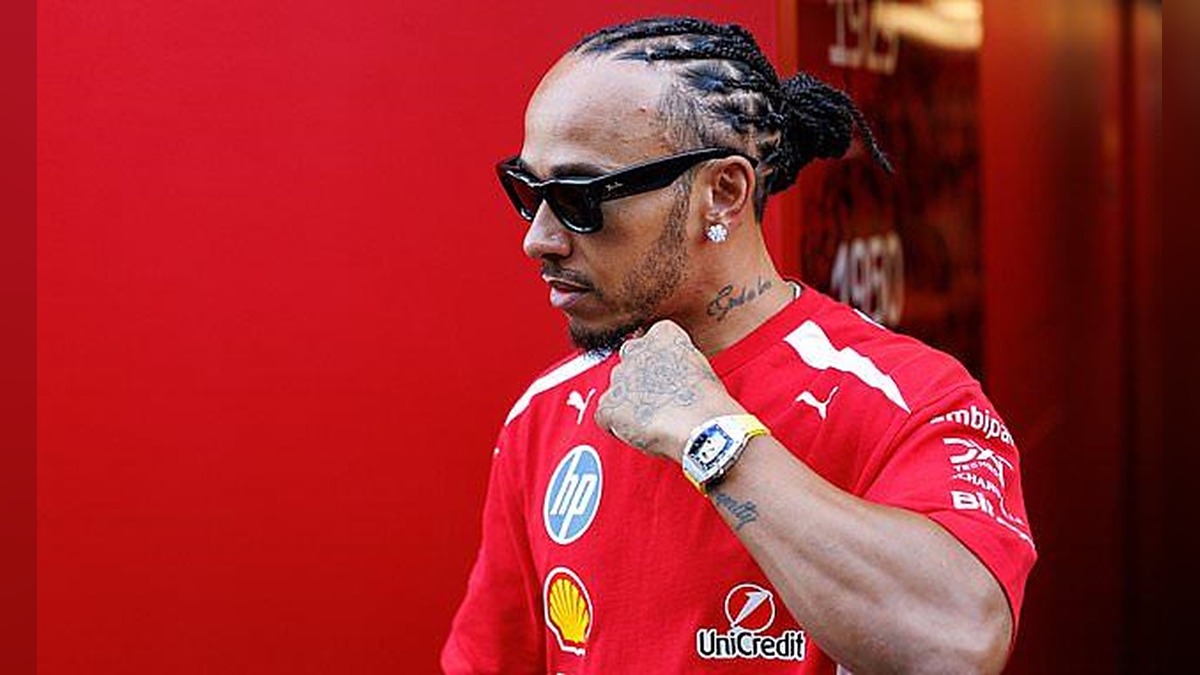
Lewis Hamilton has called for greater awareness of conflicts across Africa and the Middle East, urging people to educate themselves about colonialism and its lasting effects as he addressed concerns surrounding Formula One’s planned return to Africa.
The seven-time world champion spoke about Rwanda’s human rights record and the ongoing conflict in neighbouring Democratic Republic of Congo (DRC), while reiterating his support for bringing Formula One back to the continent.
Hamilton Urges Schools to Teach Africa’s Colonial History
Hamilton said his education in England had not adequately covered Africa’s history and argued that colonialism and Western intervention should be included in school curriculums.
“Growing up in England, they never ever taught us anything about Africa,” the 41-year-old said.
He added that many of the continent’s current challenges were connected to colonialism and external interference, while highlighting Africa’s natural resources and contribution to global brands.
Hamilton also expressed hope that African countries would eventually unite, saying the continent could become more powerful through greater cooperation.
“I really hope, and I still have hopes, that Africa unites,” he said, adding that he believed some people did not want that unity to happen.
Formula One’s Planned Return to Africa Raises Concerns
Formula One announced last week that Rwanda would host a Grand Prix from approximately 2032 under a 10-season agreement, marking the sport’s return to Africa for the first time since 1993.
The last African Grand Prix took place at Kyalami in South Africa more than three decades ago.
Hamilton has repeatedly expressed his desire to race on the continent and said he intends to continue competing in Formula One to fulfil that ambition.
However, he also acknowledged concerns about Rwanda’s human rights record and the circumstances surrounding the proposed race.
Hamilton said he did not decide where the sport races and noted that conflicts and other problems existed in different parts of the world.



“I think we really have to approach it with humility,” he said, adding that people should learn more about the issues affecting countries that host major sporting events.
Hamilton Calls for Greater Awareness of Congo Conflict
The British driver also addressed the conflict in the Democratic Republic of Congo, where fighting involving the M23 rebel group has contributed to a humanitarian crisis.
The United Nations and Western governments have accused Rwanda of supporting M23 with troops and weapons. Rwanda denies backing the insurgency.
The conflict in eastern DRC has resulted in millions of civilians being displaced or killed, according to the supplied report.
Hamilton called for greater public awareness of the situation, arguing that participating in a race in Rwanda should not prevent people from discussing the problems affecting the wider region.
“Of course, going doesn’t mean that you neglect the things that are happening there,” he said.
He encouraged people to educate themselves about the conflict and the region’s history, including events that have shaped its circumstances over hundreds of years.
Hamilton Names Congo, Sudan, Syria and Palestine
Hamilton extended his remarks beyond Africa, referring to the Israel-Hamas conflict, Sudan’s civil war and the ongoing conflict in Syria.
He called for people to speak up about the situations in these regions and expressed his hope for greater peace.
“I think we need to make sure we’re pushing to free Congo, free Sudan, free Syria, free Palestine,” Hamilton said.
He added that he hoped peace would eventually be achieved across the affected regions.
Rwanda’s Sports Sponsorships Face Human Rights Criticism
Rwanda has faced criticism in British sport over its human rights record and allegations of using sporting partnerships to improve its international image.
The country’s Visit Rwanda brand sponsored Arsenal for eight years before the partnership ended in June.
Visit Rwanda is now the main shirt sponsor of Aston Villa.
Felix Jakes, head of campaigns at Amnesty International UK, criticised Rwanda’s involvement in major sporting partnerships, arguing that they could help deflect attention from human rights concerns.
“Rwanda is buying into the world’s biggest sports to polish its image and deflect from its appalling human rights record,” Jakes said.
He also called on Formula One to use its influence with Rwandan authorities to press for change, rather than allowing its partnership with the country to become a public relations exercise.
