
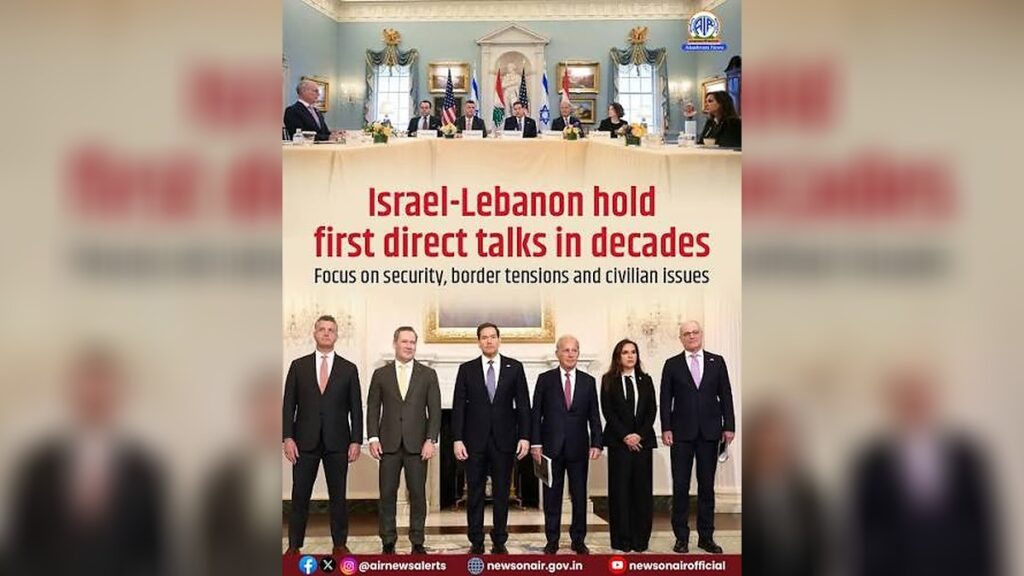
Lebanon is set to enter another round of negotiations with Israel on Tuesday in Washington, continuing a diplomatic track that Beirut says is essential to ending a prolonged and deadly conflict.
Despite the momentum behind the talks, the process is increasingly being shaped by wider regional dynamics, particularly the growing influence of Iran’s parallel negotiations with the United States.
Lebanon Insists on Face-to-Face Deal to End War
Lebanese officials maintain that only direct engagement with Israel can bring an end to the fighting that escalated on March 2, when Hezbollah launched cross-border fire in support of Iran, triggering a sustained Israeli military response.
Since then, Israeli air and ground operations have reportedly killed more than 4,000 people in Lebanon, according to officials cited in diplomatic briefings.
Beirut argues that only a negotiated settlement can stop the cycle of escalation.
However, four previous rounds of talks since April have failed to produce a lasting ceasefire.
Iran–US Understanding Reshapes the Diplomatic Landscape
A recent memorandum of understanding between Iran and United States has shifted the regional equation.
The agreement reportedly called for a halt to hostilities across multiple fronts, including Lebanon, and has temporarily reduced violence in the area.
While the pause in fighting has been welcomed by some actors, it has also complicated Lebanon’s position.
Officials in Beirut fear the deal strengthens Hezbollah’s standing while weakening the Lebanese state’s negotiating leverage.




President Joseph Aoun and other Lebanese leaders have repeatedly warned that Lebanon cannot allow external powers to negotiate on its behalf.
Doubts Over Progress as Trust Deficit Persists
A senior Lebanese official expressed skepticism about the upcoming three-day talks, citing a deep lack of trust between the two sides.
According to the official, both Lebanon and Israel remain locked in incompatible demands, with neither side showing willingness to compromise on core issues.
The official suggested that the new diplomatic round may struggle to produce meaningful breakthroughs given the entrenched positions.
Withdrawal Demand Central to Lebanon’s Position
One of Beirut’s key objectives in Washington will be securing a clear timeline for the withdrawal of Israeli forces from southern Lebanon.
However, Israeli officials have indicated that troops may remain in the region indefinitely, citing ongoing security concerns.
Israeli government spokesperson David Mencer has stated that any viable agreement must include the disarmament of Hezbollah, which Israel considers the central obstacle to peace.
Israel Frames Goal as Disarmament and Long-Term Peace
From Israel’s perspective, the talks are not only about ceasefire arrangements but also about achieving a broader political settlement with Lebanon.
Officials argue that any sustainable agreement would require the dismantling of Hezbollah’s military capabilities, which they describe as incompatible with long-term stability in the region.
Hezbollah Rejects Disarmament and Looks to Iran
The Lebanese government has attempted to navigate a delicate internal balance, moving cautiously on discussions around disarmament to avoid triggering internal conflict.
Meanwhile, Hezbollah has firmly rejected any proposal to lay down its arms and has urged Beirut to abandon direct negotiations with Israel.
Instead, the group has signaled confidence in Iran’s diplomatic channel with the United States, suggesting that Tehran could secure more favorable outcomes on Lebanon’s behalf.
Analysts Question Prospects for Breakthrough
Experts, including analysts from the Washington-based Tahrir Institute for Middle East Policy, warn that the diplomatic environment remains highly fragile.
They argue that despite temporary reductions in violence, there has been no meaningful structural shift in the positions of Lebanon or Israel that would suggest an imminent breakthrough.
With tensions shaped by multiple overlapping negotiations, observers say the Washington talks may struggle to move beyond familiar deadlock patterns.

