
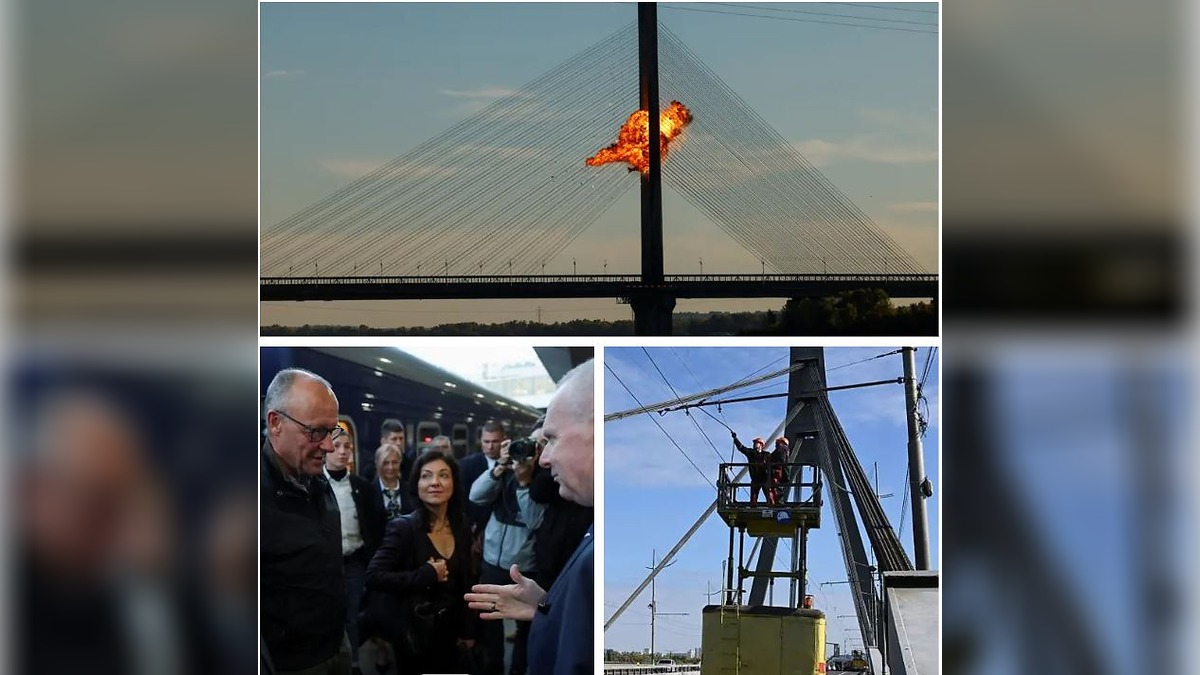
A major bridge in Kyiv has been struck for a second consecutive day as Russian attacks on critical infrastructure in the Ukrainian capital intensify.
The Pivnichnyi, or Northern Bridge, was targeted on Sunday morning, one day after an earlier strike damaged its roadway and overhead trolleybus cables.
Kyiv Mayor Vitali Klitschko said the latest attack also damaged a heating main, disrupting hot-water supplies in the northeastern Desnyanskyi district.
Repeated Strikes Disrupt Kyiv’s Key Crossings
The latest incident is part of a broader series of attacks on bridges spanning the Dnipro River.
The Northern Bridge and Pivdennyi, or Southern Bridge, connect the eastern and western parts of Kyiv and play an important role in the movement of residents and transport across the capital.
The Northern Bridge was first hit on Saturday, prompting emergency crews to respond and traffic to be suspended after damage was reported to the road surface and trolleybus infrastructure.
The Southern Bridge has also been struck repeatedly in recent days, causing further disruption to transport across the city.
Heating Infrastructure Also Damaged
Sunday’s strike created another problem for residents after a heating main was damaged.
Klitschko said the damage would result in a temporary interruption to hot-water supplies in the Desnyanskyi district.
The disruption adds to concerns about Kyiv’s infrastructure as Ukraine approaches another winter under sustained Russian attacks.
More than a third of Kyiv’s population lives on the eastern side of the Dnipro, while many residents travel to the western side for work and access to government institutions and businesses.




Attack Comes as German Chancellor Visits Kyiv
The latest strike coincided with German Chancellor Friedrich Merz’s visit to Kyiv, where he arrived amid air-raid sirens and explosions.
Merz travelled to the Ukrainian capital to reaffirm Germany’s support for Ukraine and discuss further military and energy assistance.
During the visit, Germany announced plans for a €1 billion military aid package and €350 million for repairs to Ukraine’s energy infrastructure. Berlin and Kyiv are also expected to finalise agreements on joint production of drones and other weapons.
Merz Pledges Continued German Support
Merz said Ukraine was entering a decisive period and insisted that Germany would remain alongside the country.
He argued that Germany’s own security was linked to the outcome of the war and said Berlin would continue providing assistance.
The German government has also been working with Ukraine on expanded defence cooperation, including drone technology and the potential development of long-range weapons.
Russia Says Bridges Are Military Targets
Russia has said its strikes on Kyiv’s bridges are aimed at disrupting routes used to move Ukrainian troops and military supplies.
Moscow has also warned foreign nationals and diplomats against travelling to or remaining in Ukraine, saying Russia intends to continue what it describes as targeted strikes.
Russia has framed the wider campaign as retaliation for Ukrainian attacks on Russian infrastructure.
Ukraine, meanwhile, has rejected Moscow’s justification for its attacks and has continued striking targets inside Russia.
Repeated Attacks Raise Concerns Over Bridge Closures
Experts cited in the original report said drones were unlikely to completely destroy Kyiv’s major bridges, but warned that repeated strikes could force them to remain closed and potentially weaken their structures.
That could create significant logistical problems for the capital, particularly if several crossings are unavailable at the same time.
The recent attacks have already caused traffic disruptions, with residents facing delays as authorities temporarily close or restrict access to affected bridges.
Kyiv Faces Growing Infrastructure Pressure
The attacks on the bridges come after Russia intensified strikes against infrastructure across Kyiv and other Ukrainian cities.
The campaign has raised particular concern over the coming winter, when damage to heating and energy facilities could have a major impact on residents.
For Kyiv, the repeated targeting of key crossings has added another layer of pressure, disrupting transportation while authorities work to repair damaged infrastructure and maintain essential services.

