
Australian authorities are investigating the background and links to Australia of the co-pilot accused of attacking the captain of a Flydubai passenger aircraft during a flight to Israel.
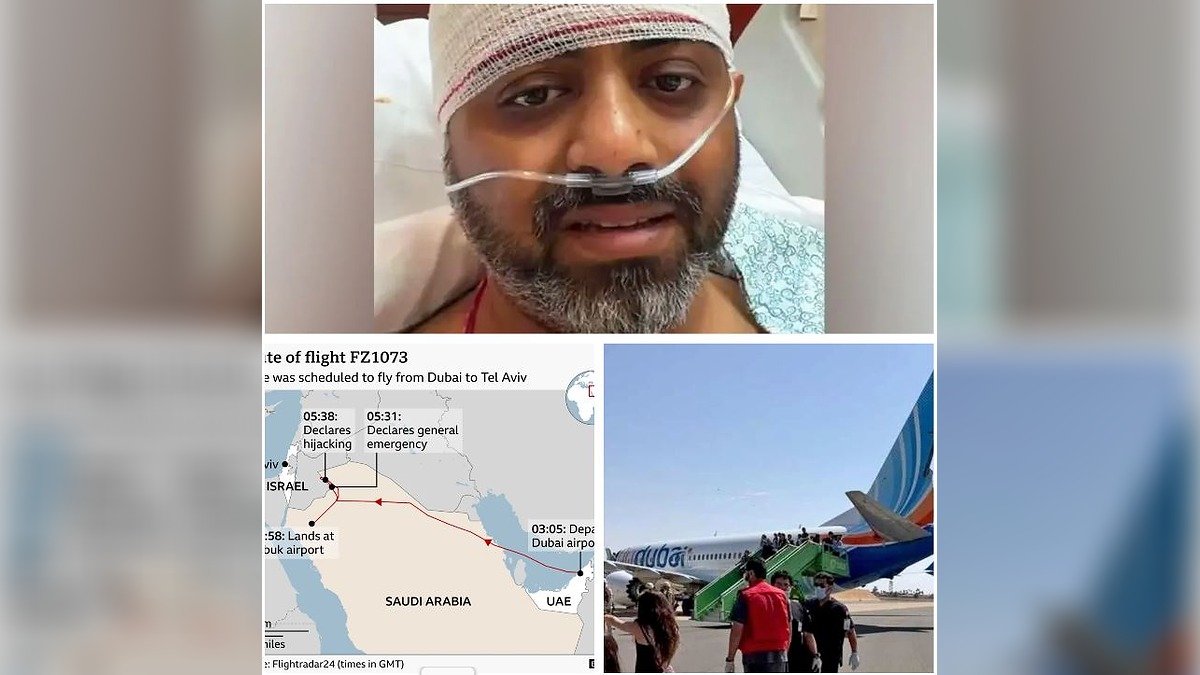
The incident occurred on Flydubai flight FZ1073 on 30 September, when the aircraft was travelling from Dubai to Tel Aviv with more than 170 people on board.
The flight was forced into an emergency diversion after the co-pilot allegedly attacked the captain and attempted to take control of the aircraft.
Australian Authorities Join Growing Investigation
The Australian Federal Police has confirmed that it is examining the man’s links to Australia.
The AFP said its investigation involves state police and the country’s security agency, with further information expected to be released when appropriate.
Australian media have reported that the co-pilot entered Australia on a student visa in 2014 and studied there between 2015 and 2017.
The ABC reported that his visa was cancelled in 2019 after he was no longer enrolled in a course.
Counter-terrorism officials are expected to examine whether the man was radicalised during his time in Australia, although no such conclusion has been established.
Co-Pilot Named by Media as Hammam al-Hammami
The UAE authorities have not publicly confirmed the identity of the co-pilot.
However, Reuters and other international media have identified him as Hammam al-Hammami, an Omani national, citing sources familiar with the investigation.
Israeli Prime Minister Benjamin Netanyahu has also described the suspect as an Omani national.
The UAE prosecutor general has said investigators are examining the circumstances of the incident, including the alleged attacker’s motives and any possible connections to terrorism.
Plane Plunged Thousands of Feet During Incident
The aircraft was cruising at altitude when the emergency unfolded.
According to flight data reviewed by Reuters, the plane subsequently lost more than 16,000 feet in just over 30 seconds during a dramatic descent.
The aircraft later transmitted emergency and unlawful-interference signals before diverting towards Saudi Arabia.




The plane eventually landed safely at Tabuk Airport in north-western Saudi Arabia, where the co-pilot was detained.
Injured Captain Managed to Open Cockpit Door
Captain Smit Machchhar was reportedly injured during the confrontation.
Despite his injuries, he managed to open the cockpit door while the aircraft was descending, allowing passengers to enter and intervene.
Several passengers helped overpower and restrain the co-pilot.
A passenger also briefly helped stabilise the aircraft before two off-duty pilots who were travelling on the flight took control and completed the emergency landing.
Machchhar was taken to hospital and later transferred to Abu Dhabi, where he was reported to be in a stable condition.
UAE Calls Incident an Attempted Terrorist Act
The UAE prosecutor general, Hamad Saif Al Shamsi, said an investigation had found that the co-pilot attempted to carry out a “terrorist attack”.
The statement marked a significant development in the case, although investigators have not publicly established the precise motive behind the alleged attack.
Authorities are continuing to examine whether the incident involved advance planning, outside direction or other participants.
The UAE is leading the investigation, while Saudi and Israeli authorities have also been involved in examining aspects of the incident.
Questions Over the Co-Pilot’s Previous Career
More information has also emerged about the suspect’s previous aviation career.
US media have reported that while working for Oman Air, he was removed from flight training over concerns about alleged radical views and was subsequently assigned another role.
Those reports have not established that his alleged views were directly connected to the Flydubai incident.
The co-pilot was also studying through a distance-learning programme operated by Buckinghamshire New University in the UK.
The university said he completed a degree in aviation management in 2023 but did not receive pilot training there.
Investigation Continues Across Several Countries
The case has raised questions about how the co-pilot was able to serve on an Israel-bound flight and whether information from his previous employment and time abroad should have triggered additional scrutiny.
Israeli officials have said there was no evidence of Iranian involvement in the incident at the time of their initial assessments.
The UAE investigation is expected to examine the suspect’s background, motives, employment history and any possible links to other individuals or organisations.
Passengers Helped Prevent a Potential Disaster
What began as a routine flight from Dubai to Tel Aviv turned into a major aviation emergency after the confrontation in the cockpit.
The captain’s decision to open the cockpit door despite his injuries gave passengers an opportunity to intervene, while trained pilots travelling as passengers ultimately brought the aircraft safely to the ground.
The investigation will now focus on establishing exactly why the attack occurred, whether it was planned and how the suspect passed the various security and aviation checks that allowed him to operate as a co-pilot.
For now, authorities have not released a final account of the motive or whether anyone else was involved.

