
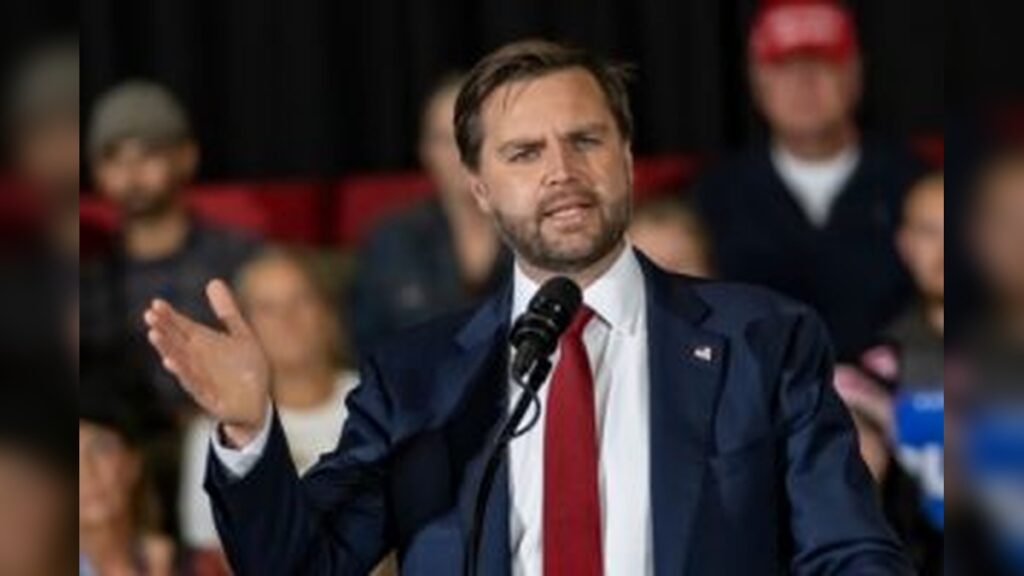
Fresh tensions have surfaced between Washington and Jerusalem after Vice President JD Vance suggested that Israel may not fully support President Donald Trump’s efforts to secure a long-term agreement with Iran.
His remarks came amid reports alleging that Israeli intelligence services have been monitoring American officials involved in sensitive negotiations with Tehran.
The controversy erupted following claims that U.S. intelligence agencies have become increasingly concerned about alleged surveillance activities targeting American diplomats and military personnel connected to the Iran talks.
Report Claims Israeli Intelligence Monitored Key U.S. Officials
According to a report published by the New York Times, U.S. officials have raised alarms over what they describe as extensive intelligence-gathering efforts by Israel.
The report alleges that Israeli operatives monitored several high-profile members of the Trump administration, including chief negotiator Steve Witkoff, Pentagon policy chief Elbridge Colby, and other government and military figures involved in discussions surrounding Iran.
The report further claimed that concerns within the Pentagon have intensified to the point where Israel is viewed as a significant counterintelligence challenge, despite being one of America’s closest allies.
Vance Avoids Direct Response to Espionage Allegations
During an interview on Fox News, host Jesse Watters pressed Vice President Vance about the accusations and whether the administration was troubled by reports of Israeli surveillance.
Vance declined to directly address the spying claims.
Instead, he focused on the broader relationship between the two countries, emphasizing that allies do not always share identical priorities.
He noted that while the United States and Israel maintain many common interests, there are occasions when their strategic goals differ.
Trump Administration Focused on Nuclear Restrictions
Vance reiterated that President Trump’s central objective remains preventing Iran from obtaining nuclear weapons.
He argued that diplomatic engagement could still produce a lasting settlement capable of addressing concerns over Tehran’s nuclear ambitions.
In discussing the ongoing negotiations, Vance appeared to acknowledge that Israel may not agree with every aspect of the proposed arrangement.
Nevertheless, he stressed that the White House would ultimately evaluate any agreement based on American national interests rather than the preferences of foreign governments.
His comments underscored a growing perception that the administration is prepared to pursue a deal even if some allies remain skeptical.
Middle East Violence Complicates Diplomatic Efforts
The debate over the negotiations comes as hostilities between Israel and Iran have escalated sharply in recent days.




Iran launched missile attacks against Israel on Sunday, accusing Jerusalem of violating a fragile ceasefire agreement.
Iranian officials linked the conflict to ongoing military activity in Lebanon and broader regional tensions involving the United States.
The situation intensified further when Israel carried out a series of airstrikes early Monday targeting military and economic infrastructure across Iran.
Reports of explosions emerged from Tehran, Isfahan, and several other locations.
Netanyahu Defends Military Response
Israeli Prime Minister Benjamin Netanyahu said the strikes were ordered after Iran attacked Israel in support of Hezbollah. While defending the operation, he later signaled a willingness to suspend further military action.
At the same time, Netanyahu warned that any future Iranian attack would trigger a strong Israeli response, leaving open the possibility of renewed escalation.
The developments have placed additional pressure on diplomatic efforts as negotiators attempt to prevent the conflict from derailing broader talks.
Trump Reportedly Pressuring Israel to Exercise Restraint
As violence threatened to undermine negotiations, President Trump reportedly urged Israeli leaders to avoid actions that could jeopardize a potential breakthrough with Iran.
Reports indicate that Trump has been actively encouraging restraint from Netanyahu while attempting to keep negotiations on track.
Sources cited in the report claim the president has even warned that U.S. support for Israel could be reassessed if military actions ultimately destroy the prospects for an agreement.
Administration officials believe a deal may be within reach and are seeking to prevent new clashes from disrupting progress.
Competing Demands Remain at the Center of Negotiations
The negotiations continue to revolve around several major points of disagreement.
Washington’s primary demands include an end to Iran’s pursuit of nuclear weapons and the surrender of its stockpile of enriched uranium.
Iran, meanwhile, is reportedly seeking greater control over the Strait of Hormuz, relief from U.S. economic restrictions affecting its ports, and a resolution to the ongoing conflict involving Israel and Hezbollah in Lebanon.
The gap between the two sides remains significant despite ongoing diplomatic engagement.
Israeli Embassy Rejects Allegations
Israeli officials have strongly denied the accusations contained in the New York Times report.
The Israeli Embassy stated that Israel does not conduct espionage against American officials or institutions and rejected any suggestion that it poses a threat to the United States.
Despite those denials, the allegations have generated concern among American policymakers and intelligence officials, who are reportedly examining the claims closely.
Administration Faces New Balancing Act
The report cited one senior administration official who described Israeli intelligence activities directed at U.S. personnel during Trump’s second term as unusually aggressive.
In addition, two senior military officials reportedly told the newspaper that American personnel working in Israel or alongside Israeli counterparts were aware of potential counterintelligence risks.
The controversy arrives at a delicate moment for the White House.
Trump is attempting to preserve a strategic alliance with Israel while simultaneously pursuing a diplomatic settlement with Iran that he believes would advance American interests and reduce the risk of a broader regional conflict.
For Vice President Vance, the message was unmistakable: although Israel remains a key ally, any final agreement with Iran will ultimately be judged by whether it benefits the United States first.

