
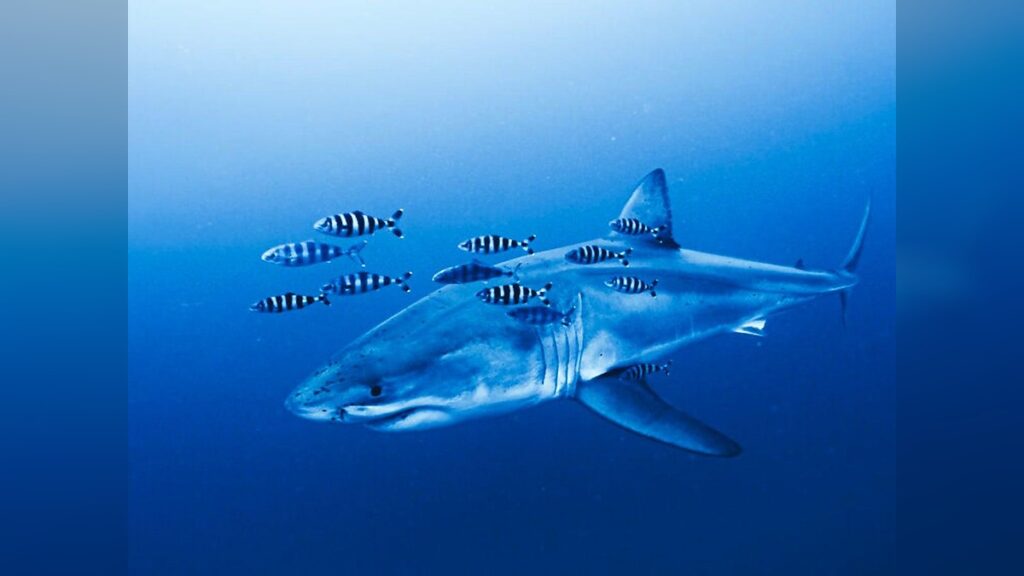
A rare ocean encounter in the waters between Sicily and Tunisia has renewed global interest in where shark attacks are most likely to occur.
Footage of an adult great white shark in the Mediterranean Sea has been described by researchers as an unusual but not alarming sighting, drawing both curiosity and concern among holidaymakers heading to the region.
Scientists say the appearance of the predator does not signal increased danger to swimmers or tourists.
Instead, they stress that such encounters highlight the natural range of ocean predators rather than an imminent threat to beachgoers.
Experts Urge Calm Over Rare Great White Presence in the Mediterranean
Marine specialists have moved quickly to reassure the public after the footage surfaced in the Mediterranean Sea, located between southern Europe and North Africa.
Dr Lauren Smith, a shark researcher at Saltwater Life, emphasized that the animal was observed far from populated beaches and tourist swimming zones.
She noted that sharks roaming open waters should not automatically trigger fear, but rather encourage awareness of marine ecosystems.
According to her, the ocean remains the natural environment of sharks, and isolated sightings in deep waters are not unusual when considered in a global context of shark migration patterns.
Florida Retains Its Position as the World’s Shark Attack Hotspot
Despite the Mediterranean sighting, global data continues to show that the highest concentration of unprovoked shark bites occurs in the United States, particularly in the state of Florida, United States.
Florida recorded 11 unprovoked encounters in 2025, representing roughly 17 percent of global cases.
More than half of these incidents were concentrated in Volusia County, located in east-central Florida, a region long associated with frequent shark-human interactions.
The broader dataset, maintained in international shark attack records, shows that while shark encounters remain statistically rare, certain coastal regions consistently report higher activity due to human water use patterns and local marine ecosystems.
Global Shark Attack Statistics Show Regional Clustering
Recent figures indicate that the United States recorded 25 bites overall, making it the most affected country worldwide.
Australia followed with 21 recorded incidents, while smaller numbers were reported in the Bahamas, New Zealand, and Vanuatu.




The year under review saw 65 total shark attacks globally, slightly below long-term averages.
However, fatalities rose above typical levels, with nine deaths recorded compared to an average of six.
Researchers tracking the data note that the figures include only “unprovoked” encounters, excluding situations where humans intentionally interacted with sharks or altered their behavior, such as fishing-related incidents.
Australia’s Risk Profile Linked to Species and Geography
The situation in Australia stands out not only for the number of incidents but also for their severity.
The country is home to three of the most dangerous shark species commonly referred to as the “big three”: bull sharks, tiger sharks, and great white sharks.
Australia, officially the Commonwealth of Australia, recorded the highest number of fatal shark attacks globally during the period studied.
Remote coastal areas are considered a contributing factor, as emergency response times can vary significantly depending on location.
Marine experts also point out that even exploratory bites from large sharks can cause severe injury due to their size, strength, and serrated teeth.
Isolated Incidents Highlight Global but Uneven Risk
Outside the leading hotspots, other regions also experienced notable but rare events.
In Canada, a paddleboarder survived an encounter in which a shark bit into his board, marking the country’s first recorded unprovoked case since 2021.
Meanwhile, South Africa recorded a fatal incident during the annual sardine run, a natural feeding event that draws large numbers of predators close to shore.
Recreational activities such as swimming, surfing, and snorkeling accounted for the majority of reported incidents worldwide.
Surfers in particular represented a significant portion of victims, followed by swimmers and snorkelers.
Why Shark Attack Numbers Remain Surprisingly Stable
One of the most puzzling findings for researchers is the long-term stability of shark attack statistics.
Despite fluctuations in human ocean activity and declining global shark populations, the number of annual incidents has remained relatively consistent across decades.
Experts suggest this may be influenced by overlapping factors such as coastal population growth, changing water sports habits, and shifting marine ecosystems.
At the same time, conservationists warn that many shark species are under threat, with a significant proportion of global species now considered endangered due to overfishing and environmental change.
Safety Advice for Ocean Visitors
Marine authorities continue to emphasize that the risk of a shark attack remains extremely low compared to other natural hazards.
Still, several precautionary guidelines are widely recommended for swimmers and surfers.
Common advice includes staying in groups, avoiding water at dawn or dusk, steering clear of murky areas, and refraining from entering the ocean with open wounds.
Bright jewelry, excessive splashing, and isolated swimming far from shore are also discouraged.
Officials stress that awareness and basic precautions are often enough to further reduce an already minimal risk of shark encounters.
