
The fragile balance in the Middle East looks increasingly strained as fresh military action, political rhetoric, and economic uncertainty collide all at once.
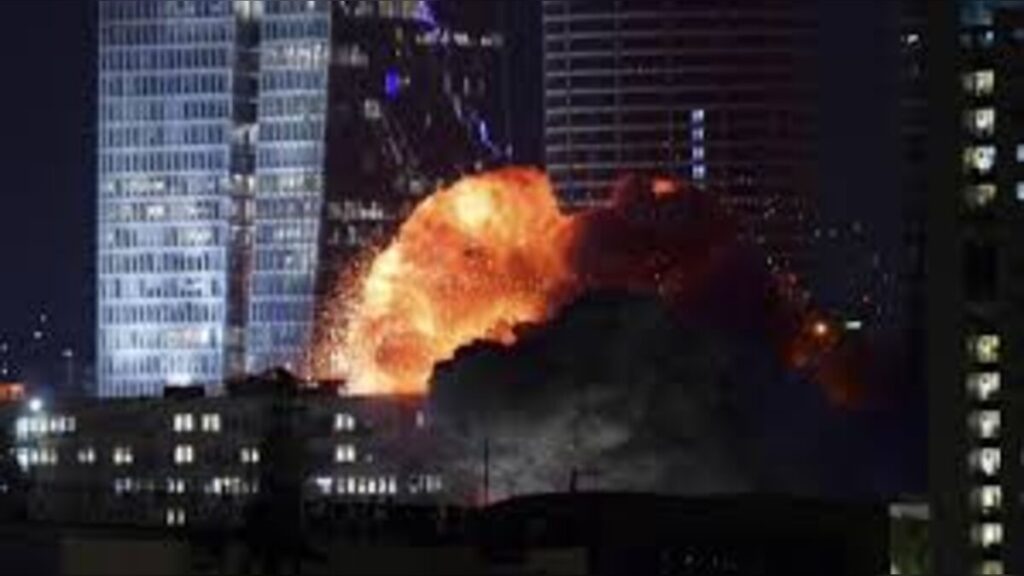
Overnight, Israel confirmed a sweeping series of airstrikes deep inside Tehran, describing the operation as a targeted assault on key government and military-linked infrastructure.
At nearly the same time, voices inside Iran are growing louder — and more aggressive — about the country’s nuclear ambitions.
What was once quietly debated behind closed doors is now being openly pushed in state-aligned media.
Inside Iran: Power Shift Fuels Hardline Thinking
The internal dynamics of Iran’s leadership appear to be shifting rapidly.
Following the reported death of Ali Khamenei, the balance of influence has tilted toward the Islamic Revolutionary Guard Corps (IRGC), a powerful military force long associated with hardline policies.
With that shift has come renewed calls for Iran to reconsider its long-standing stance on nuclear weapons.
For years, Iranian officials insisted their program was peaceful, even citing religious rulings against nuclear arms.
Now, insiders suggest that position is being questioned — and possibly abandoned.
There are also growing discussions about withdrawing from the Treaty on the Non-Proliferation of Nuclear Weapons (NPT), a move that would send shockwaves across global diplomacy.
Israel’s Deep Strike: A Message Beyond the Battlefield
Israel’s latest strikes weren’t just symbolic — they were strategic.
Military officials said the operation targeted missile facilities, launch systems, and air defence networks believed to be linked to weapons production.
Explosions reportedly echoed across Tehran as air defence systems scrambled to respond.
The scale of the attack signals a shift from shadow conflict to something far more direct and visible.
This isn’t the first time Israel has targeted Iranian-linked assets, but striking the capital so openly raises the stakes significantly.
Washington’s Next Move: Troops and Mixed Signals
In Washington, Donald Trump is walking a tightrope between diplomacy and escalation.
Reports suggest he is preparing to deploy an additional 10,000 troops to the region, even as he publicly insists that negotiations with Iran are progressing.
The messaging has left analysts and investors uncertain.


On one hand, there are threats of military action; on the other, repeated claims that talks are “going well.”
This dual approach is contributing to confusion — not just politically, but economically.
Oil Markets React — But Without Confidence
Global markets initially reacted with optimism after Trump delayed a key deadline tied to reopening the Strait of Hormuz, one of the world’s most critical oil routes.
But that optimism didn’t last.
Oil prices, which have already surged dramatically since the conflict intensified in late February, showed mixed movement.
Brent crude remains sharply elevated, reflecting the market’s underlying anxiety.
Investors appear unconvinced that the delay represents real progress.
Instead, many see it as a temporary pause in an unpredictable situation.
Rising Threats Across the Region
The conflict is no longer confined to rhetoric and airstrikes — it is spilling into civilian and commercial spaces.
Iranian military officials have warned that hotels housing U.S. personnel could be considered legitimate targets.
Meanwhile, officials including Abbas Araghchi have accused American forces of blending into civilian areas.
Elsewhere, instability is spreading:
- Kuwait reported drone attacks on a major port, causing material damage
- A Thai cargo vessel was abandoned after being struck near the Strait of Hormuz
- Regional shipping routes are becoming increasingly dangerous
These developments highlight how quickly the conflict is expanding beyond traditional military zones.
Gulf Nations Step In — Carefully
The United Arab Emirates is now pushing for a multinational effort to secure the Strait of Hormuz.
The proposal includes escorting commercial vessels and protecting the vital shipping lane from further attacks.
However, not all allies are eager to jump in.
Several Western nations have hesitated, signaling concerns about being drawn into a broader war.
Even France, which has held discussions with multiple countries, appears cautious — suggesting action may only come after the conflict subsides.
Missile Fears Reach Beyond the Region
Adding another layer of concern, Pete Hegseth warned that Iran’s missile capabilities may extend much farther than previously believed — potentially as far as London.
While UK officials have downplayed the likelihood of such a threat, the claim underscores growing fears about the global reach of the conflict.
Impact and Consequences
The implications of these developments are far-reaching:
- Global security risks are rising, with more countries potentially being pulled into the conflict
- Oil prices remain volatile, threatening economic stability worldwide
- Civilian areas are increasingly exposed, blurring the line between military and non-military targets
- Diplomatic frameworks are weakening, especially if Iran exits nuclear agreements
In short, what began as a regional standoff is evolving into a broader geopolitical crisis.
What’s Next?
Several paths could unfold in the coming days:
- Continued Israeli strikes may provoke a stronger Iranian retaliation
- The U.S. troop deployment could either deter escalation — or accelerate it
- Talks between Washington and Tehran might collapse if tensions keep rising
- International coalitions could form to secure shipping routes, especially around Hormuz
Much depends on whether diplomacy can keep pace with events on the ground.
Summary
The situation is moving fast — and in multiple directions at once.
Israel has intensified its military campaign, Iran’s internal politics are shifting toward a harder stance, and the United States is balancing between negotiation and military buildup.
Meanwhile, global markets and regional security are feeling the strain, with no clear resolution in sight.
Bulleted Takeaways
- Israel launched major strikes targeting infrastructure in Tehran
- Iranian hardliners are increasingly pushing for nuclear weapons
- Power within Iran appears to be shifting toward the IRGC
- The U.S. may send 10,000 additional troops to the Middle East
- Oil markets remain unstable despite a temporary deadline extension
- Shipping routes near the Strait of Hormuz are under threat
- Gulf nations are considering a joint security response
- Concerns are growing about Iran’s long-range missile capabilities

