
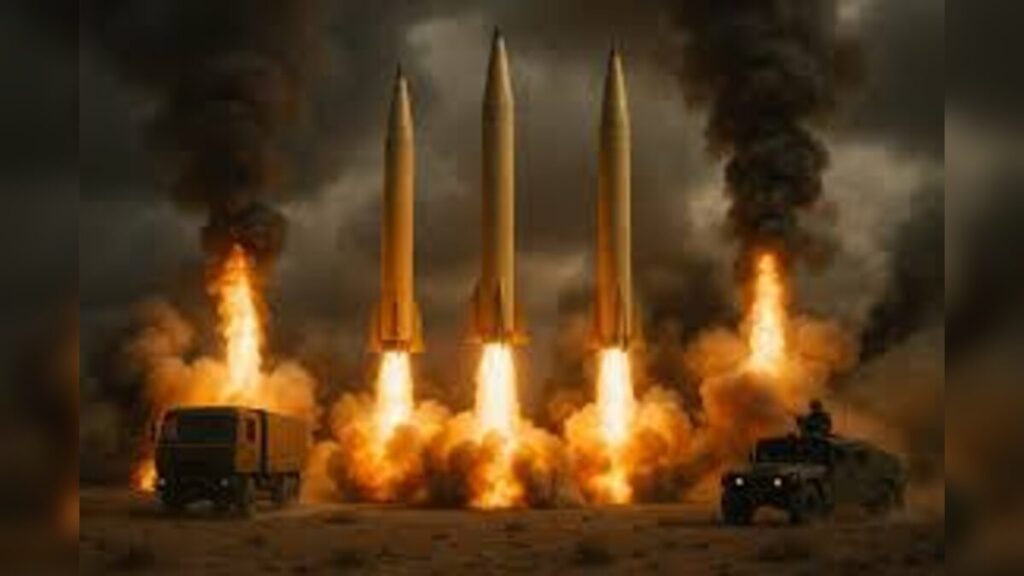
Deep in central Yazd, far from the coastline it ultimately sought to influence, a highly strategic military facility operated with a singular focus—developing the tools of modern naval warfare.
While the city itself is better known for its ancient windcatchers and desert architecture, this particular site had a far more contemporary and consequential role.
Reports indicate that the facility functioned as a core production and coordination center for advanced missile systems and sea mines under the authority of the Iranian regime.
Its purpose stretched beyond simple manufacturing—it was a hub where ideas became weapons.
More Than Just Manufacturing
This wasn’t a typical industrial site.
It played a multi-layered role in military development.
Engineers and military planners reportedly used the facility for:
- Designing next-generation missile systems
- Assembling complex components for deployment
- Testing and refining targeting capabilities
- Storing finished weapons ready for operational use
What made it particularly significant was its specialization in weapons designed for maritime warfare.
These weren’t generic missiles—they were tailored for launch from cruise platforms, submarines, and even helicopters, allowing flexibility in how and where they could be deployed.
Weapons Built for the Sea
The systems developed here were intended to strike both moving and fixed targets at sea.



That includes commercial shipping routes, naval vessels, and strategic maritime infrastructure.
In an era where control of waterways is critical to global trade and military dominance, such capabilities carry serious weight.
Sea mines, in particular, are often underestimated.
They are relatively low-cost but highly disruptive, capable of damaging or sinking ships and creating long-term hazards in key shipping lanes.
Combined with precision-guided missiles, they form a layered threat that’s difficult to counter.
Why This Location Matters
Placing such a facility in inland Yazd may seem unusual at first glance, but it offers strategic advantages.
Being far from coastlines reduces vulnerability to naval surveillance and attack, while still allowing easy transport of weapons to deployment zones when needed.
It also reflects a broader doctrine—developing military capabilities away from immediate conflict zones to preserve them in the event of escalation.
Impact and Consequences
The targeting or disruption of a site like this carries both immediate and long-term implications:
- Military setback: Interrupting production slows the supply of advanced weapons.
- Operational disruption: Planned deployments or upgrades may be delayed.
- Strategic signaling: It sends a message about vulnerabilities within critical defense infrastructure.
- Regional tension: Any strike or exposure of such a facility risks escalating already fragile geopolitical dynamics in the Middle East.
On a broader scale, reducing the output of maritime-focused weapons could temporarily ease threats to shipping lanes, particularly in sensitive regions like the Strait of Hormuz.
What’s Next?
The future likely unfolds along a few possible lines.
The Iranian regime may attempt to:
- Relocate operations to more secure or undisclosed sites
- Accelerate production elsewhere to compensate for losses
- Strengthen defenses around similar facilities
- Increase reliance on asymmetric tactics, including proxy forces
Meanwhile, international observers will be watching closely for signs of retaliation, escalation, or shifts in military strategy.
Summary
A seemingly unremarkable desert location in Yazd has been revealed as a critical node in modern maritime warfare development.
Far from the sea, it quietly powered capabilities designed to influence it—through missiles, mines, and strategic planning.
Its disruption marks more than just a tactical hit; it touches on broader questions of security, deterrence, and regional stability.
Bulleted Takeaways
- A key military facility in Yazd focused on missile and sea mine production has been struck or exposed
- The site handled everything from design to storage of advanced maritime weapons
- Weapons developed there targeted both moving and stationary naval assets
- Inland positioning provided strategic protection and secrecy
- Disruption could slow military capabilities but raise regional tensions
- The next phase may involve relocation, retaliation, or strategic adaptation

