
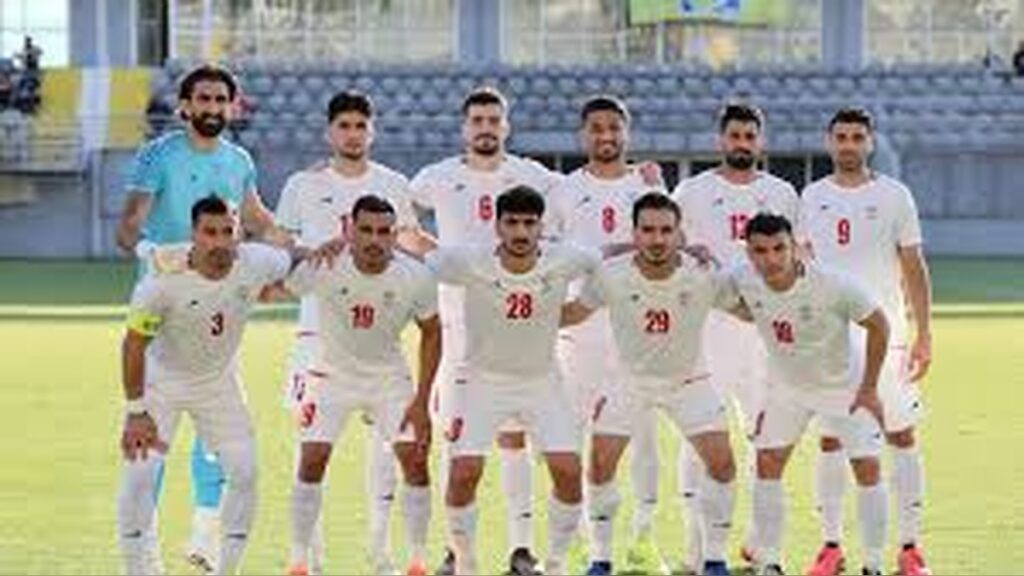
The Iranian national football team has arrived in Mexico ahead of the 2026 FIFA World Cup, stepping into a politically charged tournament buildup marked by a deepening diplomatic dispute with the United States over visa denials for team staff.
The squad landed early Sunday in the border city of Tijuana after departing their training base in Turkey, where they had spent nearly three weeks preparing and attempting to secure travel documentation for North American entry.
Training Camp in Turkey Ends With Uncertainty Over Travel Access
The team’s final preparations took place in Antalya, Turkey, where players and officials waited as visa applications were processed for entry into Mexico, Canada, and the United States—the three co-host nations of the tournament.
While players were ultimately granted entry permission for the United States, Iranian officials confirmed that several members of the team’s support and administrative staff were denied visas, intensifying tensions between Tehran and Washington.
Iranian sports authorities described the move as discriminatory, accusing the United States of targeting key personnel essential to team operations and accusing it of politicising the tournament.
Support Staff Denied Entry Sparks Accusations of Political Interference
Iran’s football federation sharply criticised the decision, claiming that around 15 staff members—including administrative and managerial personnel—were blocked from obtaining visas.
The federation described the situation as “vindictive behaviour” and accused US authorities of escalating restrictions against the national side just days before their opening match.
Officials went further, calling on FIFA to intervene and hold the United States accountable for what they described as violations of tournament regulations and the principle of sporting neutrality.
Conflicting Accounts Over Match Travel Restrictions
Further controversy emerged after Iran’s ambassador to Mexico stated that the squad had been informed of strict conditions requiring them to enter and leave US territory on the same day as matches.




According to the ambassador, this arrangement would significantly restrict the team’s movement during the group stage, all of which is scheduled to take place in the United States despite Mexico serving as their base.
However, this account appeared to contradict statements from Iranian team officials, who said they had received multiple-entry visas allowing them to arrive in advance of matches and remain in accordance with FIFA requirements.
US Response Defends Visa Decisions Amid Security Concerns
A US administration official confirmed that visas required for players and necessary personnel had been issued, but did not directly address the denied applications for some support staff.
The official defended the screening process, stating that the United States would not allow its visa system to be misused to admit individuals posing security risks.
Earlier remarks from US Secretary of State Marco Rubio had suggested that concerns centred not on athletes themselves, but on associated personnel, some of whom were alleged to have links to Iran’s Islamic Revolutionary Guard Corps.
FIFA Regulations and Tournament Pressure Intensify Dispute
Under FIFA rules, national team coaches are required to attend pre-match media briefings in the city where matches are held, raising further questions about logistical compliance if travel restrictions are enforced as described.
Iranian officials have argued that any limitations on movement or staffing undermine both competitive fairness and tournament integrity.
The federation has labelled the situation “political interference in sport in its worst form,” warning that it could set a troubling precedent for international competitions.
Fan Support and Arrival in Tijuana Amid Tension
Despite the diplomatic friction, the team was greeted by supporters upon arrival in Mexico, with fans gathering at the airport to welcome the squad ahead of their tournament base setup.
Players appeared in positive spirits as they transitioned into their North American training base, even as uncertainty continues to surround aspects of their tournament logistics.
Iran is scheduled to compete in Group G, facing New Zealand and Belgium in Los Angeles before concluding their group stage against Egypt in Seattle.
Wider Regional Conflict Adds to Tournament Backdrop
The visa dispute unfolds against the backdrop of heightened geopolitical tension following recent conflict involving Iran, the United States, and Israel, which escalated earlier this year before a fragile ceasefire was reached.
While the ceasefire has largely held, sporadic exchanges have kept tensions elevated, adding an additional layer of complexity to Iran’s participation in a tournament hosted in part by the United States.
As the World Cup approaches, attention is now focused not only on performance on the pitch, but also on whether diplomatic disputes will continue to shape the tournament off it.

