
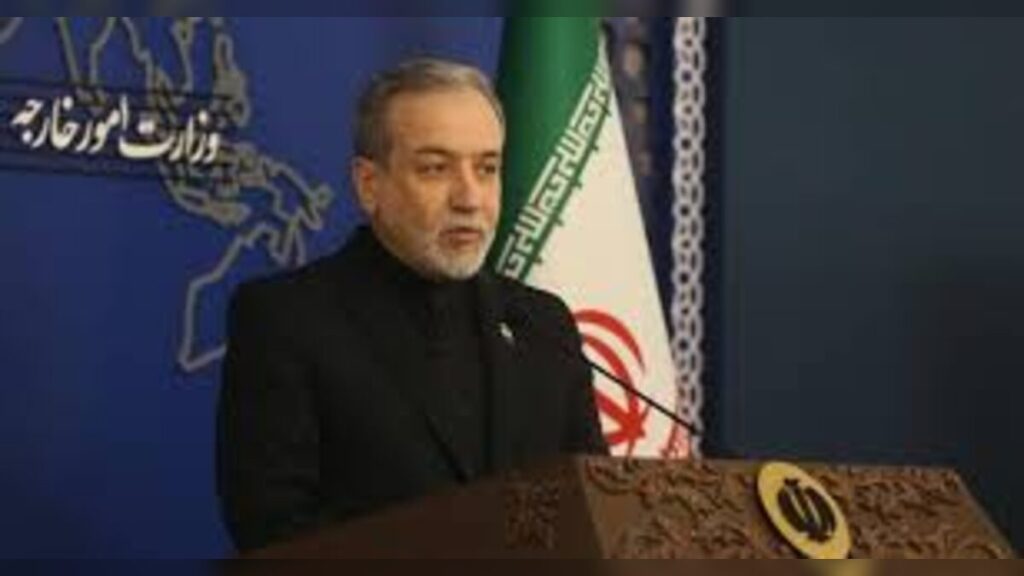
Iran’s Abbas Araghchi recently leveled a sharp critique at the United States, claiming that American involvement in the Middle East conflict was sparked by Benjamin Netanyahu.
“The Americans were drawn into this war by Netanyahu,” Araghchi said, arguing that the entire situation stemmed from a miscalculation.
He added that Washington now finds itself in a “difficult situation,” highlighting Tehran’s narrative that the U.S. has been manipulated into confrontation.
This statement reflects a broader Iranian perspective that external actors, rather than Iran itself, are responsible for escalating tensions.
The timing of these comments coincides with other displays of military capability, underscoring Iran’s strategic messaging.
Haj Qasem Missile Reveal Signals Military Advancements
For the first time, Iran publicly showcased the launch of its Haj Qasem ballistic missile.
Analysts note that this missile features a maneuverable warhead capable of reaching speeds of approximately Mach 12, designed specifically to evade advanced interceptor systems such as the U.S.-operated THAAD and Israel’s Arrow missile system.
The unveiling serves multiple purposes: it sends a deterrent message to potential adversaries, showcases Iran’s growing missile technology, and emphasizes the country’s ability to bypass even the most sophisticated defense systems.
Videos of the missile in flight circulated widely on social media, amplifying Iran’s strategic communications campaign.
Escalating Rhetoric and Regional Implications
The combination of verbal accusations and military demonstrations is raising alarm among U.S., Israeli, and European officials.
By attributing U.S. involvement to Israel while revealing advanced weaponry, Iran is reinforcing a narrative of self-defense while signaling readiness to counter external threats.
Observers suggest that these statements and demonstrations could influence negotiations or heighten the risk of miscalculations in the volatile region.



The rhetoric also intersects with domestic messaging, portraying the government as both strong and vigilant in the face of international pressure.
Impact and Consequences
Iran’s missile demonstration, coupled with its pointed political statements, could heighten tensions across the Middle East.
Allies of the U.S. may feel pressure to reinforce missile defense systems, while Tehran’s neighbors may recalibrate their own security postures.
In addition, the narrative blaming Israel for drawing the U.S. into conflict may deepen diplomatic divisions, making consensus on de-escalation more challenging.
Global markets could also react, particularly energy markets, as fears of regional instability influence oil and gas prices.
What’s Next?
Diplomatic and military observers will closely watch Iran’s next moves.
Further missile tests or additional public statements may signal Tehran’s intentions and potential escalation paths.
International stakeholders may seek back-channel discussions or multilateral talks to manage both military and political tensions.
Monitoring missile trajectories and defense responses in real time will become increasingly critical to prevent miscalculation.
Summary
Iran is combining pointed political rhetoric with military displays to frame itself as strong, defiant, and prepared.
Abbas Araghchi’s accusations against the U.S. and Israel, paired with the unveiling of the Haj Qasem missile, underscore the volatile mix of diplomacy and deterrence shaping the region today.
Bulleted Takeaways
-
Iran’s Foreign Minister Abbas Araghchi claims U.S. involvement in the Middle East was prompted by Israel
-
Tehran frames the conflict as a miscalculation by external powers, placing blame on Netanyahu
-
Haj Qasem ballistic missile demonstrated publicly for the first time, capable of Mach 12 speeds
-
Missile designed to bypass advanced defense systems including THAAD and Israel’s Arrow system
-
The display serves both domestic messaging and international deterrence purposes
-
Regional tensions are likely to rise, impacting diplomacy and security planning
-
Potential economic implications exist, particularly for global energy markets
-
Close monitoring of missile activity and political statements will be critical in the coming weeks

