
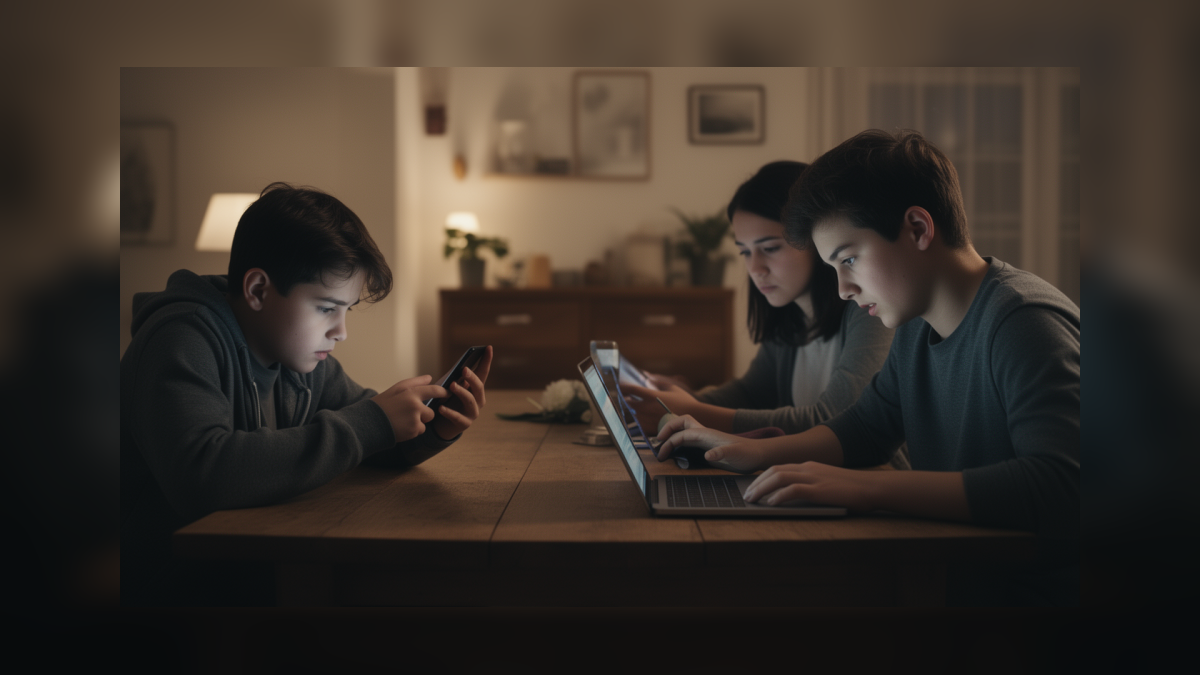
India is considering new rules that could prevent people under 18 from independently creating social media accounts, shifting the issue from platform-level age policies to a statutory requirement.
Solicitor General Tushar Mehta told the Supreme Court that the government would examine the issue after the court asked the Centre to consider using the Information Technology Rules to require digital platforms to comply with Indian law governing minors.
The development follows a public interest litigation filed by the Just Rights for Children Alliance, which has sought stronger safeguards for children using social media and other digital platforms.
Supreme Court Questions How Minors Can Accept Platform Terms
At the heart of the case is a legal question involving the ability of minors to enter contracts.
The petition argues that children below 18 are legally incapable of independently entering binding contracts under Section 11 of the Indian Contract Act, yet many social media services allow users from around the age of 13 to create accounts by accepting terms and conditions.
The Supreme Court has asked the government to consider whether this conflict can be addressed through statutory rules requiring platforms to bring their systems into conformity with Indian law.
Court Wants Platforms to Adapt Their Systems
Justice Joymalya Bagchi said the requirement should have a statutory basis rather than remaining merely a guideline.
The three-judge bench, headed by Chief Justice Surya Kant and also comprising Justices Bagchi and V. Mohana, was considering the petition seeking restrictions on minors independently creating and operating social media accounts.
The court’s approach could require platforms to make changes to the way users are registered and their ages are verified if the government introduces the proposed rules.
Parental Consent Could Become Part of the System
The proceedings have also raised the possibility of requiring verified parental or guardian consent for children to access certain digital services.




The petition seeks safeguards under which minors would not independently accept platform terms, while educational material could remain available through accounts controlled or authorised by parents or guardians.
Age verification and mechanisms for establishing parental authority are therefore likely to form part of any regulatory framework that emerges from the case.
Child Safety Is Central to the Legal Challenge
The Just Rights for Children Alliance has pointed to a range of risks associated with unrestricted access to social media by children.
Among the concerns raised in the litigation are online grooming, sexual exploitation, cyberbullying, trafficking, misuse of personal information and exposure to content that may not be suitable for children.
The Supreme Court has previously dealt with concerns involving child sexual exploitation material on digital platforms and has stressed that intermediaries have obligations under India’s child-protection laws.
Government Has Also Been Considering Data Protection Rules
The debate comes as India develops its broader framework for protecting children’s data online.
During the latest hearing, the Solicitor General indicated that the issue may overlap with provisions of the Digital Personal Data Protection Act, although the petitioner pointed out that the relevant framework is not yet fully operational.
The court has given the government time to examine the legal position, with the matter expected to return for further consideration.
A Potential Shift From Platform Policies to National Regulation
Social media companies have traditionally relied on their own age requirements and terms of service, with many major platforms setting minimum ages around 13.
The Indian proceedings could establish a different regulatory approach by requiring platforms operating in the country to follow a government-mandated minimum age threshold and potentially verify both age and parental authority.
Such a change would place greater responsibility on technology companies to ensure that their registration systems reflect India’s legal requirements.
What Happens Next
The Supreme Court has not itself enacted a nationwide ban on under-18 social media accounts. Instead, it has asked the Centre to consider statutory measures and bring the issue within the existing legal framework.
The government is now examining how the Information Technology Rules and other relevant laws could be used to address the concerns raised in the case.
The outcome could have significant implications for social media companies, parents and young users if India ultimately introduces an enforceable 18-year minimum for independently creating social media accounts.

