
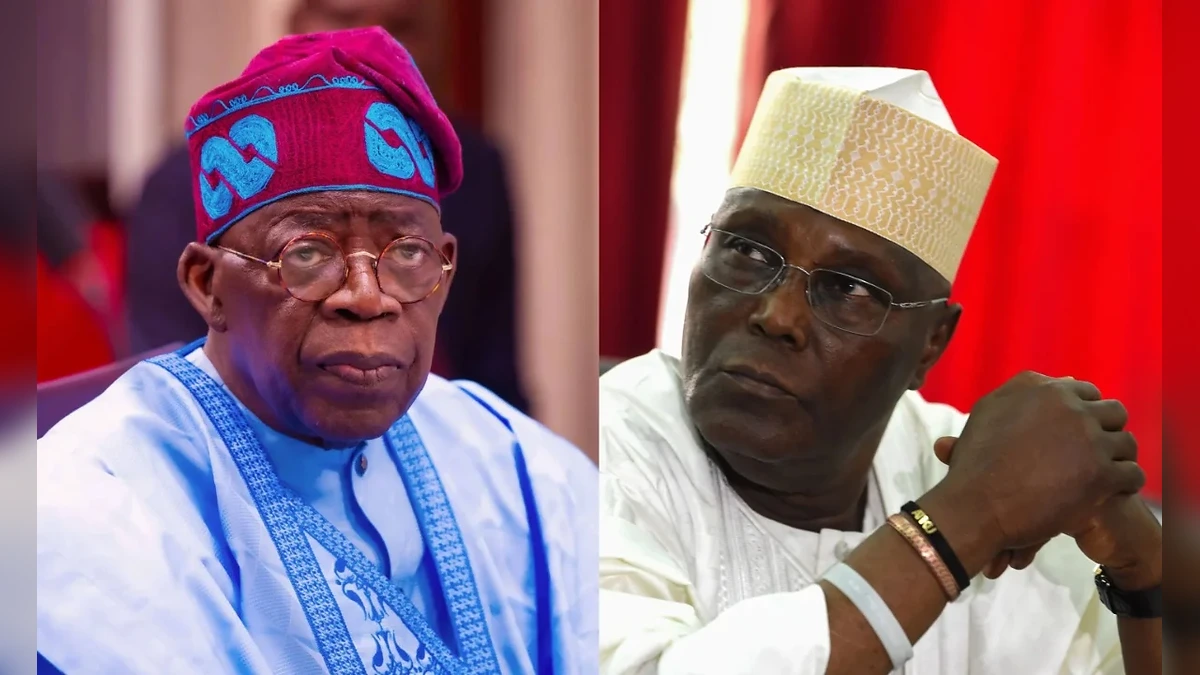
African Democratic Congress presidential candidate Atiku Abubakar has challenged President Bola Tinubu’s administration to provide a detailed account of Nigeria’s existing debt before proceeding with plans to secure another $1.5 billion from the World Bank.
Atiku’s demand follows the emergence of World Bank documents showing that the Federal Government is considering three separate $500 million financing facilities targeting climate resilience, social protection and early childhood development.
Nigeria’s Public Debt Climbs to ₦166.79 Trillion
The proposed borrowing comes as Nigeria’s public debt continues to rise. Data from the Debt Management Office show that total public debt stood at ₦166.79 trillion as of June 30, 2026.
That represents an increase of ₦14.39 trillion, or 9.44 per cent, compared with the ₦152.40 trillion recorded at the end of June 2025.
Against that backdrop, Atiku argued that Nigerians deserve greater transparency over how previous loans have been spent and what tangible benefits they have produced.
Atiku Questions Continued Borrowing
In a statement issued on Monday by his Director of Strategic Communications, Phrank Shaibu, the former vice president questioned why public borrowing continues to increase despite government claims of stronger revenues and savings following the removal of the petrol subsidy.
“If more money is coming in, why does the debt keep climbing? If Nigerians have sacrificed so much, where are the results?” Atiku asked.
He said the government should publish details of the projects expected to be financed, the communities and Nigerians who would benefit, the targets attached to each programme, the borrowing terms and the disbursement schedules.
World Bank Weighs Three $500 Million Facilities
The proposed $1.5 billion financing package is divided into three separate facilities, although they are at different stages of preparation.
The most advanced proposal is an additional $500 million for the Agro-Climatic Resilience in Semi-Arid Landscapes project, commonly known as ACReSAL. The World Bank has scheduled October 29, 2026, for consideration of the financing by its board.
If approved, the additional funding would take ACReSAL’s total financing to $1.2 billion, up from $700 million.
Two other proposed $500 million facilities are focused on early childhood development and social protection. The Nigeria Early Childhood Development programme and the Household Prosperity and Empowerment–Social Protection Project are currently projected for consideration in March 2027.



Proposed Loans Target Major Development Challenges
The programmes being considered by the World Bank address several challenges confronting vulnerable Nigerians.
The proposed ACReSAL funding is aimed at issues such as land degradation, water insecurity, erosion, flooding and climate vulnerability. Its coverage extends across 19 northern states and the Federal Capital Territory.
The World Bank has also placed greater emphasis on early childhood development and social protection as part of its current country programme for Nigeria.
Its April 2026 Nigeria Development Update noted that household incomes had not fully recovered and that poverty remained high, while highlighting the importance of targeted assistance and greater investment in human capital.
Atiku Says Development Goals Are Not Enough
While acknowledging the importance of the proposed programmes, Atiku said their objectives should not replace accountability for funds Nigeria has already borrowed.
He argued that Nigerians should be able to identify measurable outcomes from every major borrowing programme.
“Climate resilience must mean identifiable land restored, irrigation delivered and communities protected from flooding,” he said.
According to Atiku, social protection programmes should clearly establish who receives assistance and when, while early childhood initiatives should demonstrate measurable improvements in nutrition, healthcare and learning.
Calls for Disclosure of Previous Loans
Atiku also demanded a comprehensive explanation of how earlier loans obtained by the government were used.
“Show us the money already received. Show us what it built. Show us who benefited. Account for the debt already on Nigeria’s books before borrowing another dollar,” he said.
His comments come after the World Bank approved substantial financing for Nigeria during the Tinubu administration.
In June 2024, the bank approved a $1.5 billion Development Policy Financing programme, alongside another $750 million programme designed to support resource mobilisation and economic reforms.
The World Bank said those facilities were intended to support economic stabilisation, protect vulnerable Nigerians and strengthen domestic revenue generation.
Fresh $1.5 Billion Loan Is Yet to Be Approved
The latest proposals should not, however, be confused with funds that have already been released to the Federal Government.
The three facilities remain subject to the World Bank’s approval process, with the ACReSAL financing scheduled for consideration earlier than the other two proposals.
The debate therefore centres not only on whether Nigeria needs additional financing, but also on whether existing borrowing has produced sufficient and verifiable results.
Debt Transparency Takes Centre Stage
Atiku’s intervention puts pressure on the Federal Government to demonstrate how previous borrowing has translated into infrastructure, social support and economic opportunities as it seeks additional international financing.
For the opposition figure, the key measure should not simply be the number of programmes announced or loans secured, but whether Nigerians can clearly see, use and independently verify the results of the money already borrowed.
- Madlanga Commission Hears Shocking Claims of R100,000 Monthly Protection Fee
- Ivanka and Melania Trump Turn Heads With Contrasting Looks as Donald Trump Rolls Out Red Carpet for Xi Jinping
- Fikile Mbalula to Face Criminal Prosecution Over Remarks Linking Former Bergview Principal to Cwecwe Case
- Trump Weighs Massive Iran Strikes as He Considers Three Paths to End US-Iran Conflict
- Trump Announces Landmark Greenland Deal Giving US Permanent Security Control as Military Expansion Begins
- UK Explores Membership of New Global Defence Bank as Military Funding Pressures Mount

