
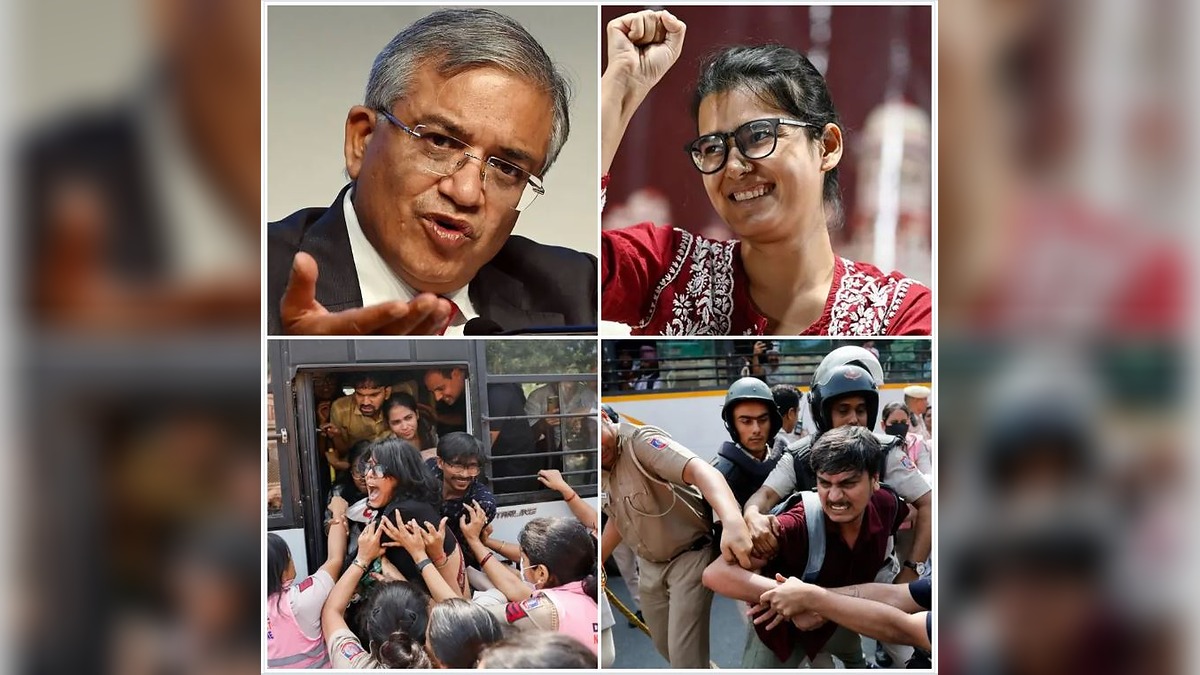
Hundreds of protesters have reportedly been detained in India’s capital, Delhi, during a demonstration organised by the Gen-Z-led Cockroach Janta Party (CJP), which is demanding electoral reforms and the resignation of the country’s chief election commissioner.
The protest took place amid a major security operation, with tens of thousands of security personnel deployed and roads barricaded to prevent demonstrators from gathering at Jantar Mantar, a prominent protest site in the capital.
The movement said its founder, Abhijeet Dipke, and two other leaders were detained after arriving in Delhi from Mumbai on Saturday. Police had not publicly commented on the reported arrests at the time of the report.
Protest Leaders Detained Before Demonstration
Dipke, who launched the movement in May, was reportedly detained alongside Saurav Das and Ashutosh Ranka while travelling on a flight from Mumbai to Delhi.
The CJP said the three men had been taken to an undisclosed location, raising concerns among supporters preparing to join the demonstration.
Before travelling to the capital, Dipke warned that threats of imprisonment would not prevent the movement from mobilising.
“If you think you can stop us by threatening us with jail or trying to intimidate us with the fear of imprisonment, you are mistaken,” he said.
The group, which is not registered as a political party in India, had vowed to proceed with its protest despite authorities refusing permission for a gathering at Jantar Mantar.
Heavy Security Blocks Access to Jantar Mantar
Delhi was placed under extensive security arrangements ahead of the demonstration, with roadblocks and restrictions preventing many protesters from reaching the intended gathering point.
Authorities also announced transport disruptions, including the cancellation of several trains serving major Delhi stations and the closure of dozens of metro stations from Friday night.
Buses carrying detained demonstrators were seen leaving the protest area, while public announcements across the city urged residents to cooperate with police.
Despite the restrictions, CJP supporters maintained that the demonstration would continue wherever authorities attempted to stop them.
Ajinkya Shinde, designated to lead the movement while its other leaders remained in detention, released a video encouraging protesters not to abandon their efforts.
“If Delhi Police tries to stop you, wherever they stop you will become your Jantar Mantar,” he said.
Student activist Neha Bora, who was also reportedly detained, urged demonstrators to “hold the line”.
Protesters Say They Are Defending Indian Democracy
The scale of the security operation did little to discourage some demonstrators from attempting to participate.
One protester, Sabika Muzaffar, told the BBC that she and her mother expected to be detained while travelling to the demonstration.
She said they had prepared for the possibility of arrest by memorising their lawyer’s telephone number instead of following their usual practice of reciting hymns and verses on the journey.




Muzaffar described attending the protest as her way of defending India’s democracy. She was taken away by police shortly after speaking to the BBC.
The reported detentions and restrictions on movement have added to tensions surrounding a demonstration focused on electoral accountability and public confidence in the country’s voting system.
Electoral Roll Changes at Centre of Dispute
The CJP is demanding the resignation of Chief Election Commissioner Gyanesh Kumar over allegations that the updating of electoral rolls has unfairly affected voters.
Under Kumar’s leadership, the Election Commission has undertaken a nationwide exercise to revise voter lists. The commission has described the process as a routine measure intended to remove the names of people who have died, duplicate registrations and individuals who are no longer eligible to vote.
However, the exercise has become controversial in several states, where tens of thousands of people have alleged that their names were wrongly removed from electoral rolls.
The CJP and opposition parties accuse the election authorities of favouring Prime Minister Narendra Modi’s Bharatiya Janata Party (BJP) through the way the revisions are being conducted.
Both the Election Commission and the BJP have denied the allegations.
The dispute has gained significance as India approaches important state elections, with the protesters arguing that electoral processes must be transparent and fair.
Movement Grew From Anger Over Unemployment and Education
The Cockroach Janta Party emerged as a significant youth protest movement following demonstrations over education reforms and demands for the resignation of Education Minister Dharmendra Pradhan.
Its name originated from a remark attributed to India’s Chief Justice, Surya Kant, who likened some unemployed young people to “cockroaches”. He later said his comments had been misinterpreted.
Dipke, who previously worked with the opposition Aam Aadmi Party (AAP), responded to the controversy with a post on X in May asking: “What if all cockroaches come together?”
The message went viral and helped inspire the movement, which subsequently attracted young people frustrated by unemployment, examination paper leaks and concerns about government accountability.
The group gained further momentum during a five-week protest over education issues during the summer.
Education Minister’s Resignation Boosted the Movement
The CJP’s profile rose significantly during the education protests, which ended in celebration in July following the resignation of Dharmendra Pradhan.
Dipke watched from the stage as demonstrators marked the conclusion of the five-week campaign.
The outcome strengthened the movement’s standing among supporters who viewed the resignation as evidence that sustained public pressure could produce political consequences.
The latest demonstration represents an expansion of the group’s demands, shifting its focus towards electoral reforms and accountability within the Election Commission.
Electoral Controversy Adds Pressure Ahead of State Elections
The dispute over voter registration has placed the Election Commission under increased scrutiny, with protesters questioning whether the nationwide revisions could undermine eligible voters’ participation.
The commission maintains that the exercise is intended to improve the accuracy of electoral rolls, while critics say the reported removals require greater transparency and accountability.
The allegations of political favouritism remain disputed, with the BJP and election authorities rejecting claims that the process is designed to benefit the governing party.
The CJP’s demonstration has brought those competing positions into sharper focus, as young activists seek changes they believe are necessary to protect democratic participation.
Delhi Protests Highlight Growing Youth Activism
The latest detentions mark another confrontation between the CJP and authorities since the movement first gained prominence earlier in the year.
Its supporters have mobilised around issues extending beyond education, including unemployment, government accountability and electoral integrity.
With its senior leaders reportedly in detention and access to the planned protest site restricted, the movement has attempted to maintain momentum through messages urging supporters to continue demonstrating.
The situation has also raised questions about how authorities will manage public demonstrations as political tensions increase ahead of the coming state elections.
For the CJP, the immediate challenge is to sustain its campaign while pursuing its demands for electoral reform and the resignation of Chief Election Commissioner Gyanesh Kumar.

