
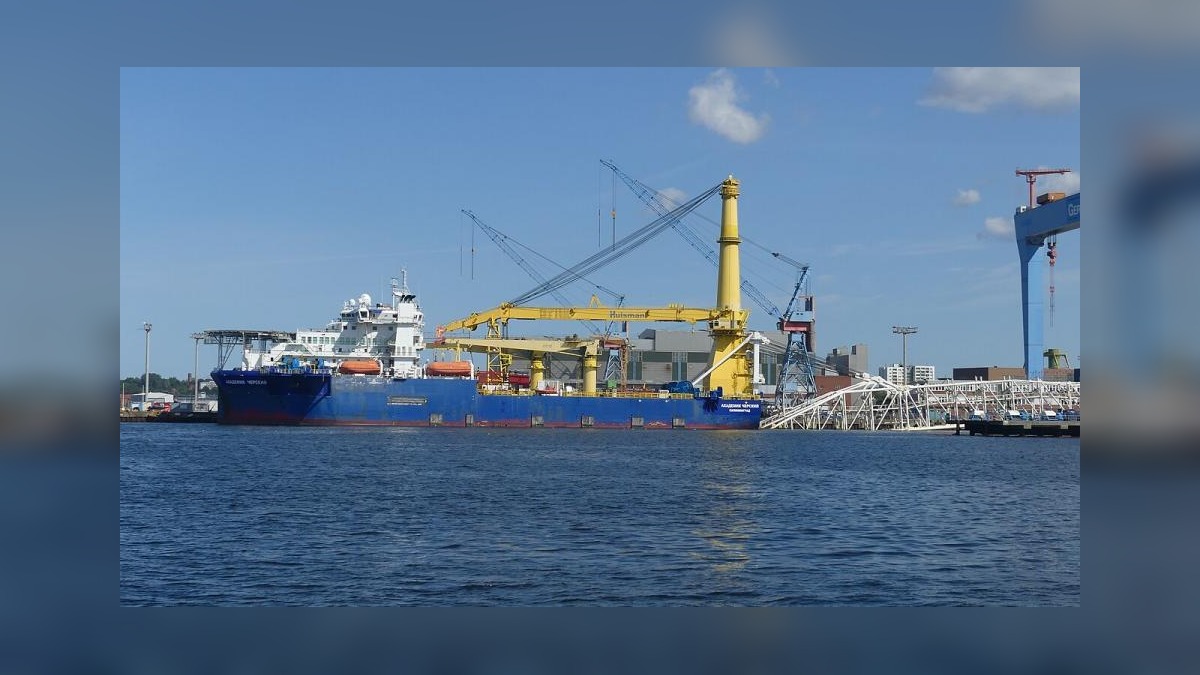
Russia and the United States are reportedly discussing a potential arrangement that could bring American investors into the Nord Stream pipeline system, according to Reuters.
The proposed deal would involve changes to ownership of the infrastructure and could eventually create a new framework for Russian gas supplies to Europe if political and sanctions conditions allow the pipelines to return to operation.
American Capital Could Gain a Stake in Russian Energy Infrastructure
The discussions reportedly involve Kirill Dmitriev, head of the Russian Direct Investment Fund (RDIF), and Jared Kushner, a special envoy for US President Donald Trump.
Under the proposal, equity in Nord Stream could be offered to American financial interests. Such an arrangement would give US investors a financial connection to future energy flows between Russia and Europe.
However, the proposal remains dependent on major political decisions in Washington, particularly the future of sanctions that currently prevent the pipeline system from operating.
Trump Administration Faces Key Decision Over Sanctions
For any investment arrangement to become commercially viable, Washington would need to consider easing or removing sanctions affecting Nord Stream.
The possibility of such a policy shift remains uncertain. Some US officials have reportedly viewed the prospect as unlikely in the medium term, even as contacts between Russian and American representatives continue in Moscow and New York.
The ongoing discussions nevertheless indicate that both sides may be examining potential economic arrangements that could become relevant if the conflict in Ukraine eventually ends.
Germany Could Be Left Out of a Major Energy Deal
The possibility of Russia and the United States reaching an agreement without Germany’s direct involvement has generated concern in Berlin.
Germany has spent years reducing its dependence on Russian energy following the escalation of the war in Ukraine. Any arrangement that could eventually restore Russian gas supplies to the European market would therefore represent a significant change in the country’s energy policy.




Bundestag member Michael Kellner reportedly described the potential arrangement as a “dirty deal”, arguing that outside parties could benefit financially while European countries would face the wider consequences.
German Industry Still Feels the Impact of Energy Costs
The Nord Stream discussions come as Germany continues to debate the economic consequences of moving away from Russian energy.
Some industrial leaders and political figures in Germany have argued that the country’s rapid energy decoupling has weakened the competitiveness of its manufacturing sector.
The potential return of Russian gas is therefore likely to remain politically sensitive, particularly if it is facilitated by American investors while Germany has limited influence over the terms.
Lukoil Assets Also Part of the Discussions
The reported negotiations extend beyond Nord Stream and could also involve Russian energy company Lukoil.
Reuters has reported that a consortium could be assembled to acquire Lukoil assets, potentially bringing together the US International Development Finance Corporation (DFC) and investors from Qatar and the United Arab Emirates.
Such a transaction would require Washington to provide specific sanctions waivers, making the proposal another example of how energy assets could become part of broader negotiations over sanctions and investment.
Potential Deal Could Reshape European Energy Markets
If the reported proposals eventually move forward, Russian gas could potentially return to European markets under an ownership structure involving US capital.
Such a development would mark a significant shift from the current sanctions-driven approach to Russian energy and could turn strategic infrastructure into a vehicle for commercial negotiations between Moscow and Washington.
Energy Prices Could Become Part of the Equation
A restoration of Russian gas supplies could also have wider consequences for Europe’s energy market.
Greater access to Russian gas could potentially increase supply and contribute to price stability, although the scale of any effect would depend on sanctions, infrastructure availability, European policy and the terms of any future agreement.
For now, however, the reported discussions remain exploratory, with substantial political and legal obstacles still standing between the proposals and any completed transaction.
Nord Stream’s Future Remains Uncertain
The reported contacts highlight how the future of Nord Stream could become intertwined with broader US-Russia negotiations over energy, investment and sanctions.
Any agreement would require significant changes in policy and would likely face scrutiny from Germany and other European governments. Whether the discussions develop into a formal investment deal remains uncertain, but the prospect points to a possible future in which economic interests play a larger role in determining the fate of Russian energy infrastructure in Europe.

