
Health officials have issued a significant update on the meningitis outbreak in Kent, revealing that earlier figures overstated the number of confirmed cases.
After further laboratory testing, several cases initially believed to be meningitis have now been ruled out, bringing a sense of cautious relief to the situation.
Confirmed cases have dropped from 23 to 20, while suspected cases under investigation have also declined from 11 to nine.
Altogether, the total number of cases now stands at 29, a notable decrease from the previously reported 34.
Majority of Cases Linked to Dangerous Strain
Despite the reduction in numbers, the outbreak remains serious.
Nineteen out of the 20 confirmed cases involve the more severe meningitis B strain, a type known for its rapid progression and life-threatening complications.
Every confirmed patient required hospital care, highlighting the severity of the illness.
Vaccination Campaign Gains Momentum
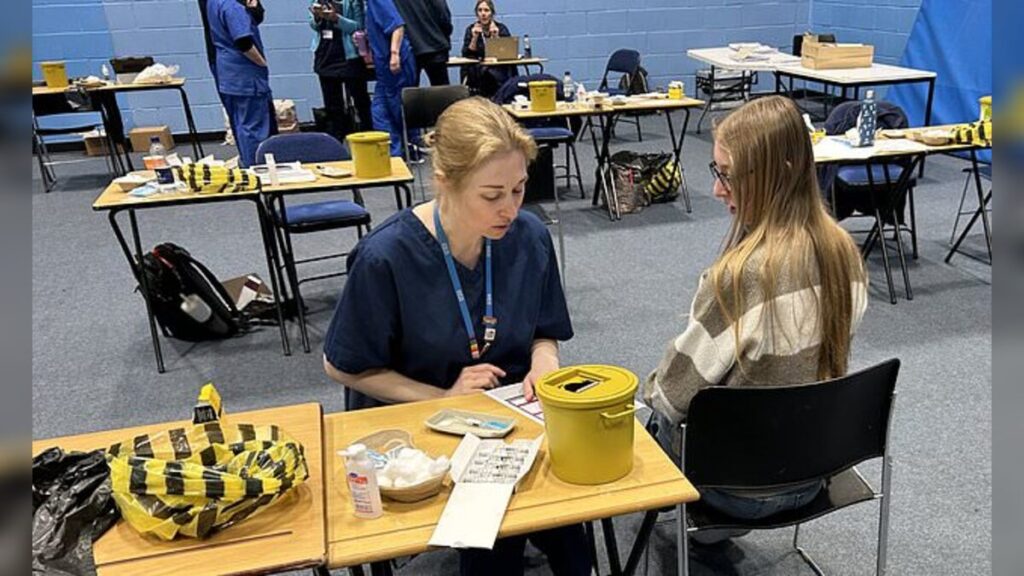
Efforts to contain the outbreak have intensified, with thousands of young people stepping forward to receive vaccines and preventive antibiotics.
Long queues initially formed at vaccination centers across the county, particularly near University of Kent Canterbury campus.
However, as the campaign progressed, demand has begun to stabilize.
By Friday morning, lines had significantly reduced, and some sites reported no waiting time at all.
Early Frustration Over Access to Vaccines
The rollout wasn’t without controversy.
At the start of the campaign, frustration erupted when hundreds of students were turned away as pop-up clinics closed at 5 p.m., leaving many unable to access vaccines or antibiotics on time.
The situation has since improved as more doses became available and operations expanded.
Outbreak Traced to Social Gatherings
Health authorities have linked the spread of the disease to large social events, particularly at Club Chemistry.
These gatherings are believed to have acted as “super-spreader” events, accelerating transmission among students and young adults.
Officials Praise Response Efforts
UK Health Secretary Wes Streeting commended the collective response, describing it as a “Herculean effort.”
He acknowledged the dedication of healthcare workers, educators, and the public, while also expressing sympathy for those affected.
His statement also honored the memory of two young victims: 18-year-old sixth-form student Juliette Kenny and a 21-year-old university student.
Health Authorities Remain on High Alert
According to the UK Health Security Agency, further adjustments to case numbers may occur as additional testing is completed.
Officials remain vigilant, continuing to monitor for new infections and working closely with healthcare providers nationwide.
Dr. Sherine Thomas, an infectious disease specialist, emphasized the importance of staying alert to symptoms and seeking immediate medical care if concerns arise, even though the overall risk to the wider public remains low.
Vaccination and Antibiotic Distribution Reaches Thousands
So far, more than 8,000 meningitis B vaccines have been administered, alongside over 12,000 courses of antibiotics.
These measures aim to curb the spread and protect those most at risk, particularly students and young people who may have been exposed.
Impact and Consequences
The revision of case numbers has helped ease some public anxiety, but the outbreak has still left a deep emotional impact.
Families are grieving, communities remain cautious, and educational institutions have had to respond swiftly to protect students.
The incident has also exposed gaps in early response logistics, particularly around vaccine accessibility and communication, prompting calls for better preparedness in future outbreaks.
What’s Next?
Health officials expect more suspected cases to be reviewed and possibly downgraded as testing continues.
Authorities will also maintain surveillance for new infections, especially as students return home for the Easter break, raising concerns about smaller, household-level outbreaks.
Public awareness campaigns are likely to continue, focusing on symptoms recognition and encouraging early medical intervention.
Summary
Revised testing has reduced the number of confirmed meningitis cases in Kent, offering some relief amid a serious outbreak largely driven by the meningitis B strain.
While vaccination efforts have gained traction and public response has been strong, authorities remain cautious and vigilant as investigations continue.
Bulleted Takeaways
- Confirmed meningitis cases dropped from 23 to 20 after further testing
- Total cases, including suspected ones, now stand at 29, down from 34
- Majority of cases involve the severe meningitis B strain
- Over 8,000 vaccines and 12,000 antibiotic doses have been administered
- Early vaccination rollout faced criticism due to limited access
- Outbreak linked to social events, including a nightclub in Canterbury
- Two students tragically lost their lives
- Officials expect more case revisions as testing continues
- Public urged to stay alert to symptoms despite low overall risk
