
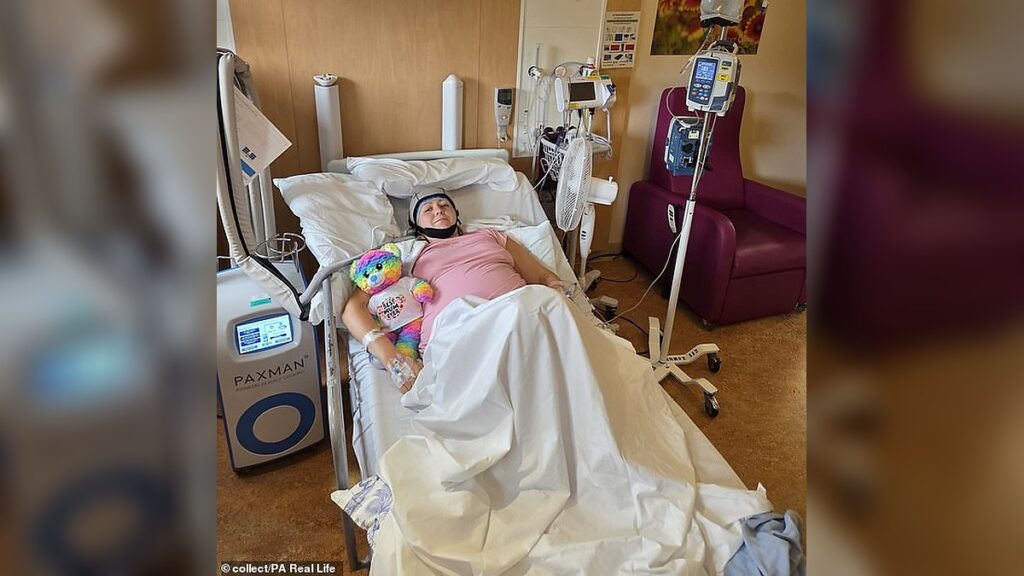
A 33-year-old mother from Hampshire is urging women to seek further medical advice if persistent symptoms are dismissed after she says repeated visits to doctors failed to identify the warning signs of ovarian cancer.
Becky Small, a logistics manager and mother of three, was eventually diagnosed with stage four metastatic ovarian cancer after attending hospital, weeks after initially seeking medical help for severe abdominal bloating and pain.
Symptoms Were Initially Attributed to Other Conditions
Ms Small first noticed severe bloating and pain on the right side of her back in April. Having previously been diagnosed with polycystic ovaries as a teenager, she initially believed the symptoms were related to that condition.
As her abdomen became increasingly swollen and painful, she struggled to sleep, experienced discomfort while moving, and found her clothing no longer fit comfortably.
During her first visit to a GP on April 27, she underwent a urine test and was prescribed medication for inflammation.
After her symptoms failed to improve, she sought a second opinion at another surgery three days later. According to Ms Small, she was prescribed medication for suspected gastroenteritis without further examination or additional testing.
Hospital Visit Revealed Serious Underlying Illness
By May 5, Ms Small’s condition had deteriorated significantly, prompting her to attend the emergency department.
She described her abdomen as being so swollen that she appeared “nine months pregnant” and said the discomfort had progressed to the point where she struggled to breathe and walk normally.
At hospital, doctors carried out blood tests, a physical examination and a CT scan. The imaging identified two lesions on her ovaries and another on her kidney, raising immediate concerns about cancer.
Ms Small recalled hospital doctors expressing surprise that more comprehensive investigations had not been carried out during her earlier consultations.




Diagnosis Confirmed Advanced Ovarian Cancer
A biopsy performed on May 20 confirmed the diagnosis, and nine days later doctors informed her she had stage four metastatic cancer.
On June 1, specialists confirmed the disease had originated in her ovaries before spreading elsewhere. She began chemotherapy on June 5.
Her treatment plan includes four additional chemotherapy cycles through September, followed by a full hysterectomy in August.
Family Faces Emotional Challenge
Receiving the diagnosis brought fears about the future, particularly for her three children.
Ms Small and her husband, Paul, spoke openly with their two eldest children, Logan, 10, and Harley, 8, about her illness, describing it as the most difficult conversation they have ever had.
Their youngest daughter, Iris, 4, understands that her mother is unwell but is too young to fully comprehend the seriousness of cancer.
Ms Small said one of her greatest concerns is missing important family milestones, including watching Iris begin school.
Raising Awareness of Ovarian Cancer Symptoms
Ovarian cancer remains one of the deadliest cancers affecting women in the UK, with approximately 7,000 new cases and around 4,000 deaths recorded each year.
Early diagnosis significantly improves survival rates, but the disease is often detected late because symptoms—including persistent bloating, abdominal or pelvic pain, loss of appetite, frequent urination and back pain—can resemble those of more common conditions such as irritable bowel syndrome or digestive illnesses.
Health experts advise anyone experiencing persistent or unusual symptoms to seek medical assessment, particularly if symptoms continue or worsen.
Speaking Out to Help Others
Although undergoing intensive treatment, Ms Small says she has chosen not to ask doctors about her long-term prognosis, preferring to focus on spending meaningful time with her family.
A fundraising campaign has been launched to help ease financial pressures while she receives treatment and to allow the family to create lasting memories together.
Reflecting on her experience, Ms Small encouraged others to continue seeking answers if they feel something is wrong.
She believes additional investigations earlier in the process might have led to an earlier diagnosis and hopes sharing her story will encourage greater awareness of ovarian cancer symptoms and the importance of persistent medical follow-up when symptoms do not improve.
