
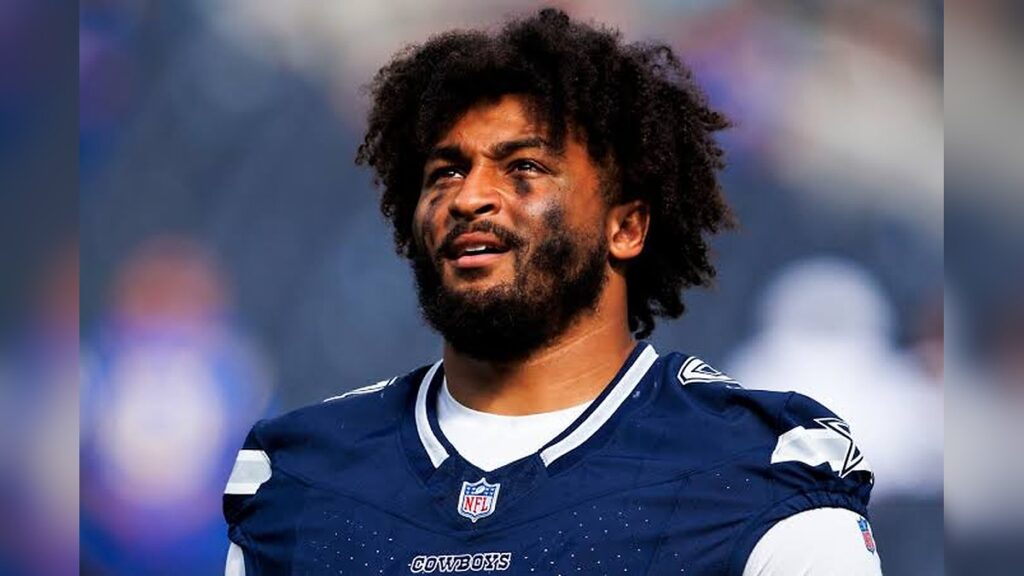
Researchers have confirmed that former Dallas Cowboys player Marshawn Kneeland was suffering from Stage 1 chronic traumatic encephalopathy (CTE) at the time of his death, according to findings released by the Boston University CTE Center.
The diagnosis was announced with the support of Kneeland’s family, who agreed to donate his brain for scientific research after his death in November last year.
The findings have renewed concerns about the long-term neurological effects associated with repeated head impacts in football.
Tragic Death Followed High-Speed Police Pursuit
Kneeland died by suicide at the age of 24 after a police chase through suburban Dallas on November 6.
Authorities said the incident began when officers attempted to stop his vehicle for a traffic violation in Frisco, Texas.
After reportedly refusing to pull over, Kneeland led police on a pursuit that ended in nearby Plano, where he was later found dead from a self-inflicted gunshot wound inside a portable toilet.
His death shocked both the football community and fans across the country.




Boston University Experts Discuss the Findings
Following an examination of Kneeland’s brain tissue, researchers at the Boston University CTE Center diagnosed him with Stage 1 CTE, the earliest identified stage of the degenerative brain disease linked to repetitive head trauma.
Dr. Ann McKee, director of the center, said the diagnosis, while tragic, was not unexpected given the growing number of young athletes found to have developed the condition.
She noted that researchers have identified CTE in nearly half of the athletes under the age of 30 whose brains have been examined as part of the center’s ongoing research.
Experts Warn Current Safety Measures May Not Be Enough
The findings have also prompted renewed calls for stronger measures to reduce repeated head impacts in contact sports.
Dr. Chris Nowinski, chief executive of the Concussion Legacy Foundation, said Kneeland played during an era when concussion protocols and helmet technology had improved significantly.
However, he stressed that those measures alone do not eliminate the risk of developing CTE.
According to Nowinski, the disease is associated with repeated impacts to the head rather than diagnosed concussions alone, meaning athletes may remain vulnerable even under modern safety guidelines.
Calls for Greater Prevention Across Football
Medical experts involved in the research argue that reducing the frequency and force of head impacts should become a priority at every level of football, from youth leagues to the professional game.
They say additional prevention strategies are needed beyond concussion management if the sport hopes to lower the long-term risk of CTE among players.
The latest findings add to the growing body of research examining the relationship between contact sports and degenerative brain disease, while highlighting ongoing efforts to better understand how repeated head trauma affects athletes over time.
