
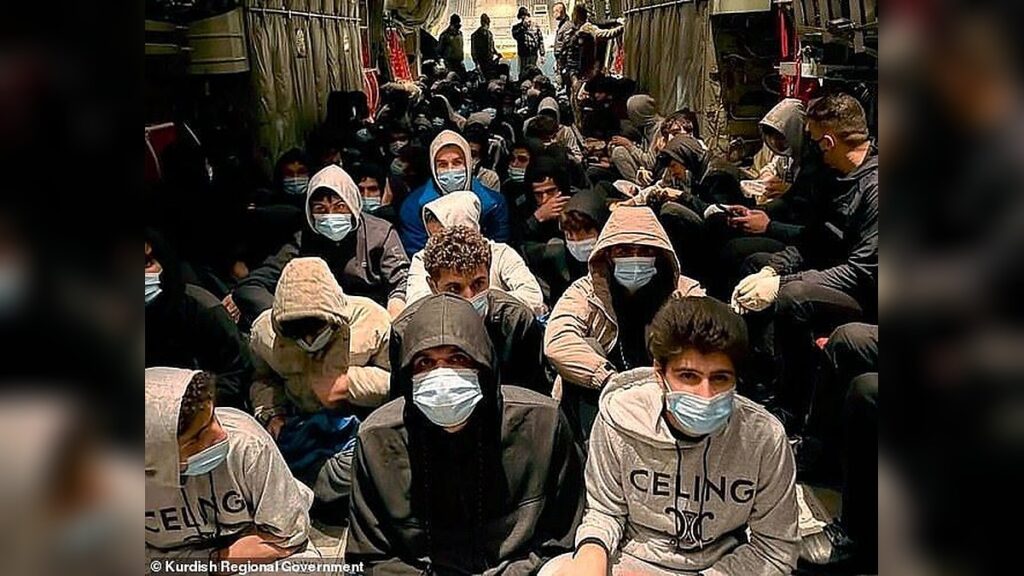
A sweeping investigation has revealed a brutal kidnapping operation in Libya involving more than 300 migrants who were attempting to reach the United Kingdom.
The victims, mainly young men from Iraqi Kurdistan, were reportedly seized, detained, and subjected to extreme abuse while being held for ransom by an armed militia.
The findings, reported by the BBC, point to a coordinated system of exploitation operating along migration routes through North Africa, where lawlessness and armed groups continue to control key territories.
Smuggling Deal Turns Violent Inside Libya’s Militia-Controlled Territory
The migrants’ journey began with promises of safe passage arranged by smugglers identified as Noah Aaron and Kardo Jaf.
However, tensions reportedly escalated once the group entered Libya, a country where rival militias maintain significant control over transit corridors used by migrants heading toward Europe.
According to testimony from relatives of victims, a dispute over payments between smugglers and a local armed group led to the migrants being diverted to a heavily guarded detention compound instead of being taken to the Mediterranean coast.
Families were later told that ransom payments of around $5,000 (£3,700) per person were required for release, with the militia claiming the smugglers owed them money tied to earlier arrangements.
Kidnappers Allegedly Threatened Organ Removal to Force Payments
Former captives described a campaign of psychological terror designed to extract money from families abroad.
Militants reportedly sent graphic videos showing detainees being threatened with forced kidney removal if payments were not made quickly.
In several cases, families were warned that failure to comply would result in “medical procedures” carried out on their relatives.
The threats were reinforced with violent footage intended to intensify pressure on relatives to pay.




Some families did send money.
One father from Ranya confirmed he paid the demanded ransom to secure the release of his son, who was among a group later evacuated to safety on an Iraqi government-chartered flight in January.
However, concerns remain over physical evidence seen in photographs shared from captivity.
Some images showed scars that relatives feared could indicate surgical procedures carried out during detention.
Harsh Detention Conditions and Widespread Torture Reported
Survivors who eventually escaped or were released described severe abuse inside the militia compound. Accounts include beatings, burns, starvation tactics, and overcrowded cells holding hundreds of people.
One teenager said he was confined with 177 others in a cramped space for six months without daylight, while another survivor reported being burned on the leg as punishment.
Food was reportedly withheld unless additional payments were made, leaving many detainees surviving on minimal rations.
Reports also suggest that some hostages may still be missing, with concerns raised that a number of victims could have suffered organ removal while in captivity.
Authorities and Experts Warn of Expanding Criminal Migration Networks
Experts say the case reflects a wider pattern of kidnapping-for-ransom operations in Libya, where weak central authority allows armed groups to profit from migrant flows.
Human trafficking specialists warn that such networks have become increasingly organized and violent.
Anthony Dunkerley, a United Nations adviser who has studied trafficking routes in the region, noted that hostage-taking has become a recurring business model for militias operating in unstable zones.
Meanwhile, officials from the Kurdistan Regional Government, including interior ministry representative Hemn Merany, have urged survivors to speak publicly about their experiences.
They hope testimonies will discourage others from attempting the dangerous journey to Europe through Libya.
Continuing Flow of Migrants Despite Mounting Risks
Despite the scale of abuse uncovered, migration from Iraqi Kurdistan toward Europe has not stopped.
Many still attempt the journey, driven by economic hardship and limited opportunities at home, often relying on smugglers who promise access to the UK via complex and dangerous routes.
The investigation underscores the growing risks along Mediterranean migration corridors, where criminal networks, armed groups, and unstable governance continue to expose vulnerable migrants to extreme exploitation.
