
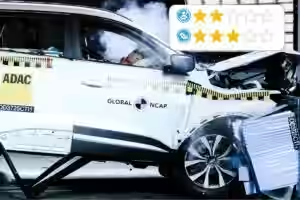
The Chery Tiggo 7 Pro, a widely sold Chinese SUV in South Africa, has come under heavy scrutiny after receiving a disappointing two-star rating for adult occupant protection.
The results were released under the Global NCAP #SaferCarsForAfrica program, which tests vehicles sold across the continent to give consumers independent safety insights.
While the SUV scored slightly better for child safety, earning three stars, the overall assessment raised serious questions about its structural integrity and protective features.
Key Safety Shortcomings Highlighted
Global NCAP identified several serious flaws in the Tiggo 7 Pro.
The footwell and bodyshell were found unstable, meaning they could fail under further load during a crash. Additionally, the SUV lacks standard side head protection for front and rear passengers, preventing a side pole impact test from being conducted.
Without proper side head protection, occupants are at a higher risk of severe injuries, even in low-speed side collisions.
Although Electronic Stability Control (ESC) and seatbelt reminders are standard, the reminders failed to meet Global NCAP’s strict requirements.
Child Occupant Protection Concerns
For children, the SUV performed slightly better but still revealed issues.
The Child Restraint System (CRS) could not be correctly installed in any front rearward-facing position.
Even more concerning, the passenger airbag cannot be disabled when placing a rear-facing child seat in the front seat, creating a potential safety hazard.




These shortcomings underscore that, despite the three-star rating, child safety in this model is far from optimal.
Criticism of Marketing Practices
Global NCAP also criticized Chery for promoting results from NCAP tests conducted in other regions, which do not accurately reflect the South African market models.
Richard Woods, CEO of Global NCAP, described the practice as misleading, stressing that crash test results are market-specific and should not be selectively applied.
The Automobile Association of South Africa (AA) echoed these concerns, pointing out that vehicles sold in Africa often deliver lower safety standards compared to other markets.
The AA called for stronger local regulations, emphasizing that no vehicle should lack side head protection for all seating positions.
Broader Implications for African Drivers
The Tiggo 7 Pro test highlights a wider issue for African motorists: many vehicles sold locally may not meet the same safety standards offered in Europe or Asia.
Programs like #SaferCarsForAfrica aim to fill that gap by providing independent, locally relevant safety information to help consumers make informed decisions.
What’s Next?
Chery has yet to comment on the South African crash test results, and there’s no word on whether the company plans design improvements to meet stricter safety criteria.
Meanwhile, Global NCAP and consumer safety advocates continue to push for tighter regulations and market-specific safety enforcement.
Prospective buyers are advised to carefully review independent safety data and consider the potential risks before purchasing SUVs like the Tiggo 7 Pro.
Regulators may also use these results to strengthen standards for new vehicles entering the South African market.
Summary
The Chery Tiggo 7 Pro has earned a poor two-star adult occupant safety rating and three stars for child protection in South Africa, revealing structural weaknesses, lack of side head protection, and child restraint system limitations.
Global NCAP criticized Chery’s misleading marketing claims referencing other markets, while the Automobile Association of South Africa called for stronger regulations.
The results highlight ongoing safety concerns for vehicles sold locally, emphasizing the need for stricter enforcement and informed consumer choice.

