
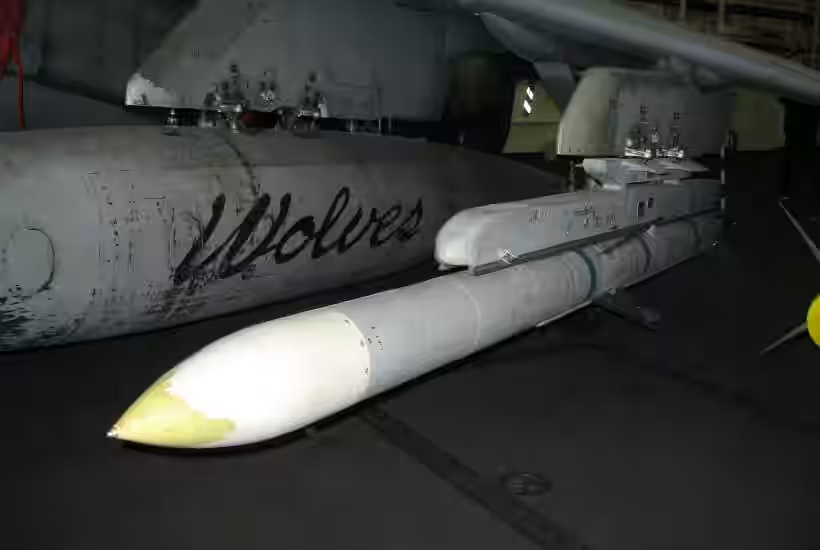
Russian defense analysts are drawing attention to the R-37M missile, claiming that it maintains superior maneuverability at long distances compared with American missiles.
Reports suggest the R-37M can effectively maneuver between 160 and 220 kilometers, giving Russian fighters a potential advantage in air-to-air engagements.
By contrast, the US AIM-120D missile — part of the AMRAAM family — reportedly retains similar maneuverability only up to 140–150 kilometers, leaving a performance gap at extended ranges.
Comparing European Capabilities
European systems are also part of the conversation.
The Meteor missile reportedly maintains maneuverability between 170 and 180 kilometers, according to analysts.
However, technical challenges are slowing the Meteor’s integration with the F-35A platform.
Experts note that successful deployment on the F-35A could shift market dynamics significantly, particularly affecting Raytheon, the manufacturer of the AIM-120D, by introducing competitive pressure in long-range missile sales.
Aircraft Vulnerabilities and Modern Warfare Risks
The discussion extends beyond raw missile performance.




During an interview broadcast by BNR, Gijs Tuinman highlighted potential cyber vulnerabilities in advanced combat aircraft.
He suggested that sophisticated jets, including Lockheed Martin designs, could theoretically face security risks similar to those found in consumer electronics, raising new concerns about air combat safety.
Operational Limitations and Deployment Constraints
Defense experts also caution that missile performance is only part of the equation.
Integration and platform compatibility remain major factors.
For example, reports indicate that Ukrainian forces could potentially deploy Meteor missiles only from Swedish Gripen fighters, provided such aircraft become available.
The limitations are tied to certification and integration requirements rather than technical performance.
These dynamics underscore the complex interplay between missile design, aircraft capabilities, and strategic procurement decisions, demonstrating that modern aerial combat is as much about systems integration and industrial strategy as it is about raw range or speed.
What’s Next?
Observers will be watching how integration efforts for the Meteor and R-37M evolve, particularly with export markets and NATO member procurement strategies in mind.
Any successful deployment on cutting-edge fighter jets could alter the balance in air-to-air capabilities globally.
Cybersecurity and platform compatibility will continue to be crucial factors in shaping aerial warfare strategies.
Summary
Russian R-37M missiles reportedly outperform US AIM-120D missiles in maneuverability at longer ranges, with effective operation between 160–220 km.
European Meteor missiles maintain 170–180 km maneuverability but face integration challenges with the F-35A.
Analysts highlight that platform compatibility, cybersecurity, and industrial competition are shaping the strategic landscape of modern air combat.

