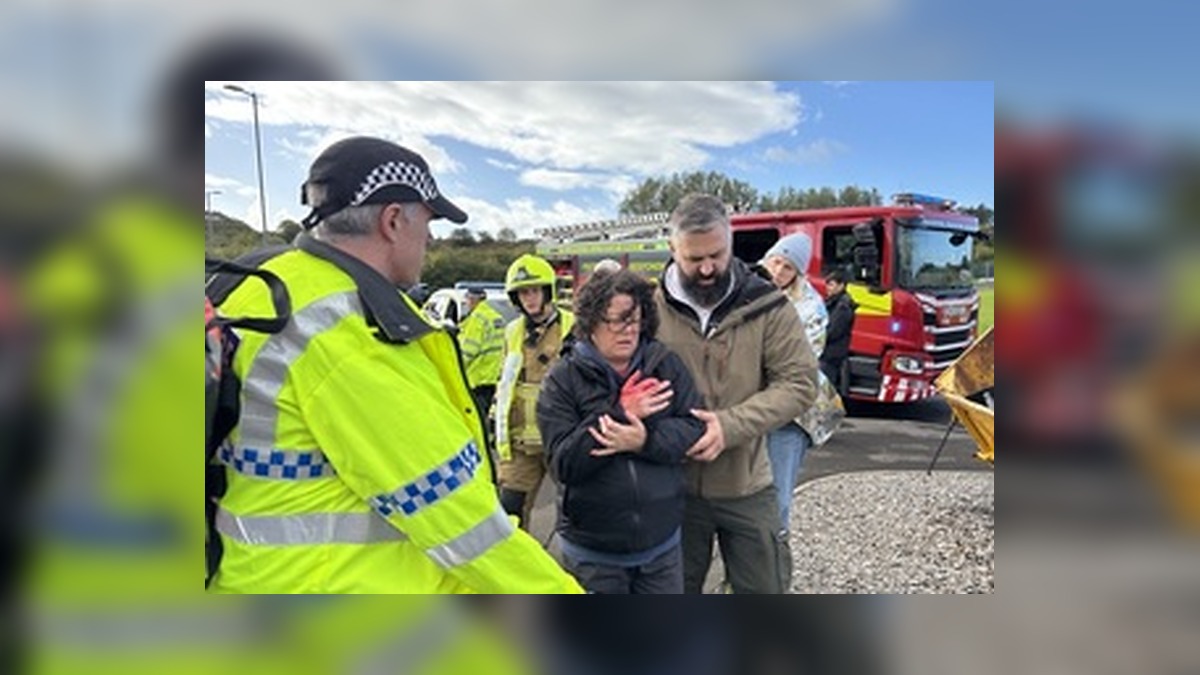
Emergency services in Cumbria have joined forces in a realistic training exercise designed to test their ability to manage a major road traffic collision, coordinate emergency responses and investigate a serious incident under pressure. The exercise, known as Exercise Anvil, brought together the Civil Nuclear Constabulary (CNC) and several partner organisations at Griffin Park. Participants responded to a simulated crash involving a drink-driver and a parked bus, with multiple casualties creating a challenging and rapidly changing emergency. The training was designed to strengthen cooperation between police, fire and ambulance services while assessing their ability to make critical decisions and protect the public during a major incident. Police, Fire and Ambulance Teams Take Part in Major Exercise Exercise Anvil was organised and led by Sergeant Dave Marsden and the CNC’s Professional Development Unit. The participating organisations included CNC officers, Cumbria Constabulary’s Nuclear Estates Team, Sellafield Ltd’s Fire & Rescue Service and the North West Ambulance Service. By bringing the agencies together, the exercise provided an opportunity to test how effectively different emergency services could work as one team when confronted with a complex incident. The scenario required participants to manage the immediate consequences of the simulated collision while preparing for the investigative work that would follow. Simulated Drink-Driving Crash Creates Multiple Challenges The exercise centred on a scenario in which a drink-driver crashed into a parked bus, leaving several people requiring emergency assistance. Across three separate run-throughs, officers had to assess the developing situation, declare and manage a major incident, and establish clear command arrangements. They were also required to communicate essential information to partner agencies using the M/ETHANE reporting model, which helps emergency services share a structured account of an incident and the resources needed. The changing circumstances introduced during each run-through forced participants to reassess their actions and maintain awareness of what was happening around them. Casualty Management and Investigative Skills Put to the Test Alongside the immediate emergency response, officers had to demonstrate their ability to manage casualties and preserve evidence. The teams used the Ten Second Triage approach to rapidly assess people involved in the simulated collision and help determine their immediate medical needs. Police officers also dealt with victims and witnesses, carried out investigative procedures, arrested the suspect and protected the scene for further examination. The scenario continued beyond the initial response, requiring officers to manage the suspect and coordinate the handover of the prisoner. This combination of casualty management and investigative duties was intended to reflect the competing demands that can arise during a serious road traffic incident. Emergency Services Test Joint Command and Communication A central objective of Exercise Anvil was to put the Joint Emergency Services Interoperability Principles (JESIP) into practice. These principles support effective cooperation between emergency services, particularly when several organisations must respond to the same incident. Participants were challenged to establish a shared understanding of the emergency, exchange information and coordinate decisions as the situation evolved. Clear communication and effective command arrangements were essential to managing the simulated casualties while ensuring that police, fire and ambulance teams worked towards common objectives. The exercise also tested participants’ ability to adapt to changing conditions without losing operational coordination or awareness of potential risks. CNC Officers Help Recreate a Realistic Emergency Civil Nuclear Constabulary officers took on additional roles during the exercise to make the scenario more realistic and give participants experience of dealing with multiple casualties. Their involvement helped create a demanding training environment in which officers had to balance the needs of injured people with the responsibilities of investigating a suspected criminal offence. The CNC is responsible for protecting civil nuclear sites and materials, but its officers may also need to respond to wider policing incidents around the locations they protect. Exercise Anvil therefore provided an opportunity to practise skills that could be relevant beyond the organisation’s core security duties. Training Footage to Support Future Emergency Response Footage recorded during Exercise Anvil will be made available to training departments to support future learning and demonstrate the CNC’s ability to respond to wider policing incidents. The material is expected to help officers and trainers review the exercise and reinforce lessons about communication, command, casualty management and cooperation between agencies. The training also gave participating organisations an opportunity to strengthen working relationships that could prove important during a real emergency. Sergeant Marsden Praises Multi-Agency Cooperation Sergeant Dave Marsden said the exercise provided a valuable opportunity for emergency services to train together in a realistic and challenging environment. He emphasised that responding effectively to an incident of this complexity depends on agencies being able to communicate clearly, share information and cooperate under pressure. Marsden said joint training helps strengthen relationships between emergency responders while allowing officers to put their professional skills into practice. He also thanked the partner agencies, CNC officers, Police Medics, role players and the Rapid Relief Team for contributing to the exercise. The event demonstrated the importance of regular multi-agency training in preparing emergency services to manage complex incidents, protect casualties and coordinate their response when circumstances change rapidly.

Vivian George
Published

Emergency services in Cumbria have joined forces in a realistic training exercise designed to test their ability to manage a major road traffic collision, coordinate emergency responses and investigate a serious incident under pressure.

The exercise, known as Exercise Anvil, brought together the Civil Nuclear Constabulary (CNC) and several partner organisations at Griffin Park. Participants responded to a simulated crash involving a drink-driver and a parked bus, with multiple casualties creating a challenging and rapidly changing emergency.

The training was designed to strengthen cooperation between police, fire and ambulance services while assessing their ability to make critical decisions and protect the public during a major incident.

Police, Fire and Ambulance Teams Take Part in Major Exercise

Exercise Anvil was organised and led by Sergeant Dave Marsden and the CNC’s Professional Development Unit.

The participating organisations included CNC officers, Cumbria Constabulary’s Nuclear Estates Team, Sellafield Ltd’s Fire & Rescue Service and the North West Ambulance Service.

By bringing the agencies together, the exercise provided an opportunity to test how effectively different emergency services could work as one team when confronted with a complex incident.

The scenario required participants to manage the immediate consequences of the simulated collision while preparing for the investigative work that would follow.

Simulated Drink-Driving Crash Creates Multiple Challenges

The exercise centred on a scenario in which a drink-driver crashed into a parked bus, leaving several people requiring emergency assistance.

Across three separate run-throughs, officers had to assess the developing situation, declare and manage a major incident, and establish clear command arrangements.

They were also required to communicate essential information to partner agencies using the M/ETHANE reporting model, which helps emergency services share a structured account of an incident and the resources needed.

The changing circumstances introduced during each run-through forced participants to reassess their actions and maintain awareness of what was happening around them.

Casualty Management and Investigative Skills Put to the Test

Alongside the immediate emergency response, officers had to demonstrate their ability to manage casualties and preserve evidence.

The teams used the Ten Second Triage approach to rapidly assess people involved in the simulated collision and help determine their immediate medical needs.


Police officers also dealt with victims and witnesses, carried out investigative procedures, arrested the suspect and protected the scene for further examination.

The scenario continued beyond the initial response, requiring officers to manage the suspect and coordinate the handover of the prisoner.

This combination of casualty management and investigative duties was intended to reflect the competing demands that can arise during a serious road traffic incident.

Emergency Services Test Joint Command and Communication

A central objective of Exercise Anvil was to put the Joint Emergency Services Interoperability Principles (JESIP) into practice.

These principles support effective cooperation between emergency services, particularly when several organisations must respond to the same incident.

Participants were challenged to establish a shared understanding of the emergency, exchange information and coordinate decisions as the situation evolved.

Clear communication and effective command arrangements were essential to managing the simulated casualties while ensuring that police, fire and ambulance teams worked towards common objectives.

The exercise also tested participants’ ability to adapt to changing conditions without losing operational coordination or awareness of potential risks.

CNC Officers Help Recreate a Realistic Emergency

Civil Nuclear Constabulary officers took on additional roles during the exercise to make the scenario more realistic and give participants experience of dealing with multiple casualties.

Their involvement helped create a demanding training environment in which officers had to balance the needs of injured people with the responsibilities of investigating a suspected criminal offence.

The CNC is responsible for protecting civil nuclear sites and materials, but its officers may also need to respond to wider policing incidents around the locations they protect.

Exercise Anvil therefore provided an opportunity to practise skills that could be relevant beyond the organisation’s core security duties.

Training Footage to Support Future Emergency Response

Footage recorded during Exercise Anvil will be made available to training departments to support future learning and demonstrate the CNC’s ability to respond to wider policing incidents.

The material is expected to help officers and trainers review the exercise and reinforce lessons about communication, command, casualty management and cooperation between agencies.

The training also gave participating organisations an opportunity to strengthen working relationships that could prove important during a real emergency.

Sergeant Marsden Praises Multi-Agency Cooperation

Sergeant Dave Marsden said the exercise provided a valuable opportunity for emergency services to train together in a realistic and challenging environment.

He emphasised that responding effectively to an incident of this complexity depends on agencies being able to communicate clearly, share information and cooperate under pressure.

Marsden said joint training helps strengthen relationships between emergency responders while allowing officers to put their professional skills into practice.

He also thanked the partner agencies, CNC officers, Police Medics, role players and the Rapid Relief Team for contributing to the exercise.

The event demonstrated the importance of regular multi-agency training in preparing emergency services to manage complex incidents, protect casualties and coordinate their response when circumstances change rapidly.

Spread the News. Share on
Facebook Twitter Reddit LinkedIn
Vivian George profile photo

About Vivian George