
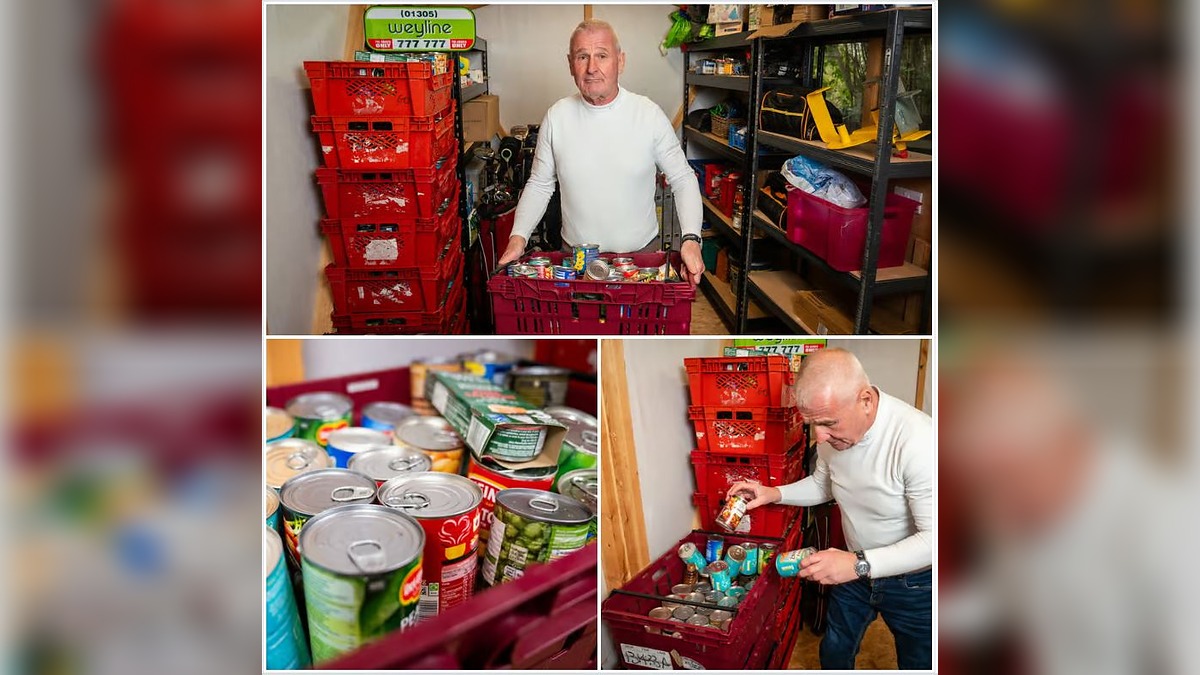
A 71-year-old pensioner in Weymouth, Dorset, has transformed his garden shed into an emergency food storage facility, accumulating 600 tins of food and a range of survival equipment in preparation for a possible national crisis.
Ian Ferguson began building his emergency supplies in 2022 following Russia’s invasion of Ukraine. Four years later, his collection has expanded to 13 large storage boxes containing food and essential equipment.
The stockpile includes soups, stews, beans, curries, rice pudding and tinned fruit. Ferguson estimates that the food could sustain him for more than 100 days.
Ferguson Warns of Possible Food Shortages and Social Unrest
The former British Army serviceman, who also owns a taxi company, believes widespread shortages could quickly create serious problems if supermarkets run out of essential supplies.
He referred to the expression that there are “nine meals between mankind and anarchy”, explaining that three days without food could have significant consequences.
Ferguson estimates that six tins of food a day would provide enough for his own needs. However, he said his preparations are intended to help protect friends, relatives and members of the wider community rather than simply provide for himself.
Survival Equipment Includes Radios, Stoves and Water Filters
Food is only one part of Ferguson’s emergency preparations. His equipment includes wind-up radios, camping stoves, sleeping bags and water filtration equipment.
He has also gathered tools such as an axe and a saw, alongside other items he considers necessary during an emergency.




Ferguson is particularly concerned about the possibility of cyberattacks disrupting essential services and supply chains.
He warned that attacks on digital systems could prevent supermarkets from operating normally, leaving consumers unable to obtain food and other necessities.
Cyberattacks and Payment System Failures Among His Concerns
Ferguson believes physical cash could become important if electronic payment systems stop working during a major disruption.
He said money would have limited value if supermarket shelves were empty, while access to physical currency could still be useful if digital transactions became unavailable.
He also believes solar panels and shared community resources could help households cope with interruptions to normal services.
Regarding food expiry dates, Ferguson said he was less concerned about the warnings, arguing that people are selective about which expiry information they take seriously.
Pensioner Says Preparations Are About Helping Others
Despite the scale of his stockpile, Ferguson said he was not certain a national emergency would happen.
He described his approach as hoping for the best while preparing for the worst, adding that having supplies available made him feel more comfortable.
His preparations come as the Government promotes its Be Ready campaign, which encourages households to make arrangements for possible disruptions to everyday services.
Unused Food Could Be Given to Birds
Ferguson has also considered what he would do if the emergency he anticipates never occurs.
He said he would open the tins, give the food to birds and return to his normal life rather than allow the supplies to go unused.
His stockpile currently includes 600 tins of food stored alongside emergency equipment in his Dorset garden shed.
