
Disney has launched a legal challenge against the Federal Communications Commission, accusing the Trump administration of using the agency to retaliate against ABC over programming and commentary critical of the president.
The lawsuit, filed Tuesday in the US District Court for the District of Columbia, argues that the administration’s actions violate Disney’s First Amendment rights by targeting speech it finds politically objectionable.
Disney claims the FCC’s actions form part of a broader campaign against ABC, including an accelerated review of the broadcast licenses held by the network’s eight owned stations and an investigation involving The View.
ABC Stations Face Early License Reviews
The dispute intensified in April when ABC’s eight owned stations were instructed to submit license-renewal applications years earlier than originally required.
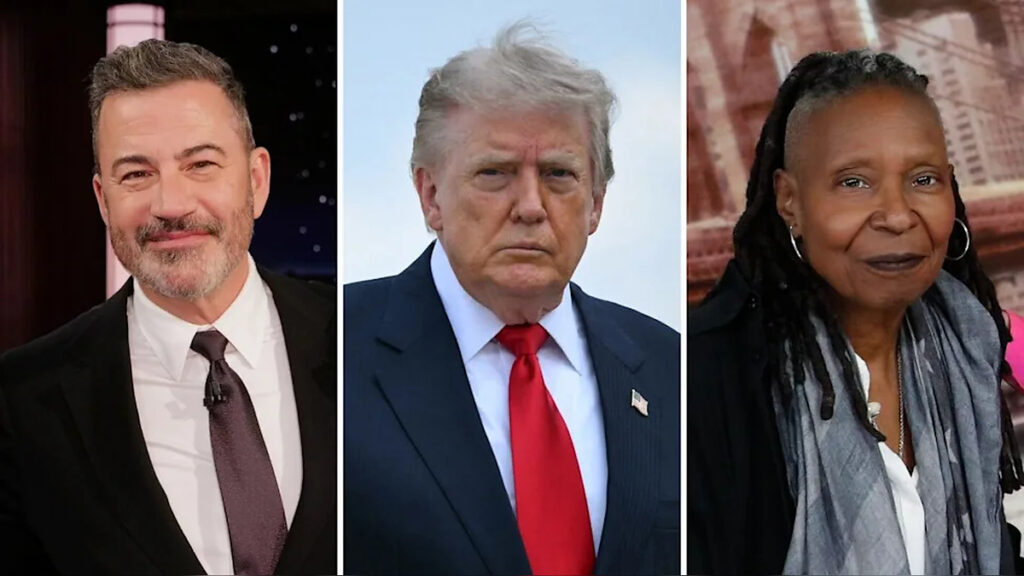
Disney says the accelerated process came amid pressure from Trump after Jimmy Kimmel made jokes and remarks critical of the president.
Trump subsequently called for Kimmel to be removed from the air.
The company is now seeking a temporary restraining order and preliminary injunction to stop the FCC’s accelerated license-renewal proceedings while the legal dispute moves through the courts.
Disney Says Political Speech Is Being Targeted
In its lawsuit, Disney argues that the FCC’s actions cannot be separated from the administration’s objections to ABC’s coverage and programming.
The company maintains that the government is attempting to use regulatory authority as leverage against a broadcaster because of opinions expressed on its programs.
Disney also alleges that an earlier FCC investigation into the company’s diversity, equity and inclusion policies was connected to criticism directed at Kimmel’s program and The View.
The company contends that the cumulative pressure creates an environment in which broadcasters could feel compelled to change their editorial decisions to avoid government retaliation.
The View Becomes Part of the FCC Dispute
A separate FCC investigation is focused on The View and whether the daytime program should continue receiving an exemption from federal equal-time requirements.




Broadcasters are generally required to provide opposing political candidates with equal airtime when one candidate is given qualifying broadcast exposure.
However, programs considered bona fide news programming can receive an exemption.
The View currently benefits from that exemption.
Disney argues that losing the status could create significant complications for the program when it invites political candidates to appear, because competing candidates could potentially demand equivalent airtime.
Trump Has Repeatedly Attacked ABC
Trump has repeatedly criticized ABC and its hosts and has publicly called for the network’s broadcast licenses to be revoked.
His dispute with Kimmel escalated after the late-night host mocked the president’s age and made a joke involving first lady Melania Trump.
The administration’s scrutiny of ABC has since expanded beyond Kimmel, with regulatory attention also focused on The View and Disney’s corporate policies.
FCC Chairman Rejects Free Speech Allegations
FCC Chairman Brendan Carr has rejected the argument that the agency is targeting ABC because of its editorial content.
Carr has said the license review concerns Disney’s DEI initiatives rather than political speech.
He has also defended the investigation into The View as an effort to apply existing congressional requirements governing political programming.
The FCC’s position puts the agency directly at odds with Disney’s claim that regulatory proceedings are being used to intimidate the company and influence its journalism.
Disney Warns of Threat to Media Independence
Disney argues that an unfavorable outcome in an FCC licensing hearing is effectively predetermined and describes the regulatory pressure as a threat extending beyond ABC.
The company says the possibility of government action against broadcast licenses could have a chilling effect on other media organizations that criticize political leaders.
License revocations based on programming have historically been extremely uncommon.
The last prominent case occurred in 1969, when a Jackson, Mississippi, television station lost its license after using its broadcasts to defend segregation.
Disney CEO Vows to Defend Editorial Independence
Disney CEO Josh D’Amaro recently reaffirmed the company’s position during an appearance on CNBC, saying Disney would continue to stand behind its journalistic standards.
D’Amaro made clear that the company does not intend to allow outside political pressure to dictate how its news and entertainment operations are managed.
The lawsuit now places the dispute between Disney and the Trump administration before a federal court, setting up a major legal battle over the boundaries between government regulation, broadcast licensing and First Amendment protections.
