
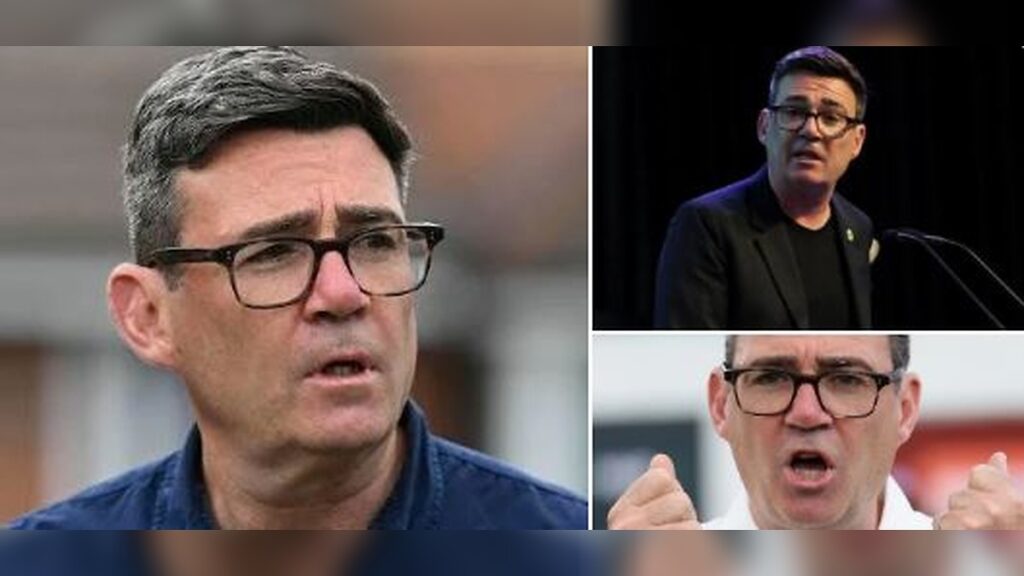
Andy Burnham has reportedly been deceived by an individual pretending to be Susie Wiles, Donald Trump’s chief of staff, in a hoax that has raised fresh questions about communications security at the highest levels of government.
The incident allegedly occurred around the time Burnham took office, with the Prime Minister believing he was exchanging messages directly with Wiles before and after entering Downing Street.
The deception was eventually identified after the British embassy in Washington alerted the White House that Burnham had been communicating with an impostor.
Only a Handful of Messages Exchanged
Sources familiar with the incident said the exchange was limited to several messages and that no telephone conversation took place.
The messages were reportedly not of major significance, and officials moved quickly to notify the relevant authorities once concerns about the identity of the sender emerged.
However, the episode has prompted concern among security specialists because the apparent deception involved a senior British political figure communicating with someone he believed to be one of Trump’s closest advisers.
Downing Street declined to provide details, saying only that it did not comment on national security matters.
Security Experts Warn of Serious Risks
Professor Anthony Glees, a security and intelligence expert at the University of Buckingham, described the incident as potentially serious rather than a harmless prank.
He argued that communication between a prime minister and a foreign leader’s chief of staff could reasonably be expected to involve sensitive political or diplomatic matters.
Glees also questioned why greater caution had not been exercised given that Wiles had previously been targeted by cybercriminals.
He said the episode raised questions not only about Burnham’s judgment but also about the security arrangements surrounding senior British officials.
Wiles Has Previously Been Targeted
The impersonation is particularly notable because Wiles herself has previously been the victim of attempts to compromise her communications.
Last year, an impersonator reportedly obtained access to her personal contacts and contacted senior American officials while pretending to be the White House chief of staff.
The incident reportedly included attempts to use artificial intelligence to imitate Wiles’ voice during calls with prominent Republicans.




Wiles has also previously been targeted by a cyber-espionage operation associated with Iran’s Revolutionary Guard, while her email was reportedly compromised shortly before the 2024 US presidential election.
Her communications were subsequently subjected to additional security measures, including changes to her contact details.
Trump Dismisses the Episode as a Miscommunication
Donald Trump was asked about the incident during an Oval Office press conference but appeared to play down concerns surrounding Burnham’s decision to engage with the apparent impostor.
The president characterized the episode as a “miscommunication” rather than directly criticizing the British prime minister.
The White House separately stated that the incident was unrelated to the previous hacking of Wiles’ devices.
Government Ministers Also Exposed to Risk
The controversy emerged as concerns grew over the availability of personal contact information belonging to British government ministers.
Personal mobile numbers reportedly belonging to Defence Secretary Wes Streeting, Justice Secretary Alex Norris and Northern Ireland Secretary Chris Bryant were found online.
The numbers were subsequently removed after the issue was raised.
Former Defence Secretary Ben Wallace, who himself was deceived by a hoax caller in 2022, warned politicians that they should assume their mobile communications could be compromised.
“If you are a government minister, always, always assume your mobile phone is compromised,” Wallace said.
AI Makes Impersonation Increasingly Difficult to Detect
Cybersecurity specialists have warned that advances in artificial intelligence are making it increasingly difficult to establish someone’s identity simply through a familiar voice, video call or digital message.
Prerana Joshi of the RUSI think tank said an exposed telephone number could allow criminals or other malicious actors to target officials through a range of techniques.
Andrew Bud, founder of deepfake security company iProov, similarly warned that AI can now reproduce faces and voices convincingly enough that conventional assumptions about identity are becoming unreliable.
The technology means even highly recognizable public figures can no longer necessarily rely on a voice call or video interaction as proof that they are communicating with the person they expect.
Senior Figures Have Fallen for Hoaxes Before
Burnham is not the first prominent political or royal figure to be caught by an impersonator.
David Cameron was previously deceived by someone posing as former Ukrainian President Petro Poroshenko during his time as foreign secretary. Cameron also faced a separate hoax call while serving as prime minister, when a caller claimed to be GCHQ chief Robert Hannigan.
Prince Harry was similarly targeted by Russian pranksters posing as climate activist Greta Thunberg and her father. During the conversations, he made controversial comments about the Royal Family and Donald Trump.
Former prime minister Tony Blair was also contacted by comedian Jon Culshaw, who impersonated then-Conservative leader William Hague. Blair reportedly recognized the imitation and responded that it was a convincing one.
Former US vice-presidential candidate Sarah Palin was another high-profile victim, remaining on the phone for several minutes with Canadian pranksters pretending to be French President Nicolas Sarkozy.
Security Questions Now Hang Over Downing Street
Although sources have emphasized that no sensitive conversation took place during Burnham’s exchange with the impostor, the incident has nevertheless exposed the vulnerabilities facing senior politicians in an era of increasingly sophisticated social engineering and AI-generated impersonation.
The episode is expected to prompt renewed scrutiny of how senior British officials verify the identity of people contacting them, particularly when communications involve foreign governments and senior national security figures.
For critics, the central concern is not simply that a hoaxer managed to fool a prime minister, but that the deception reportedly continued for several days before being detected.
