
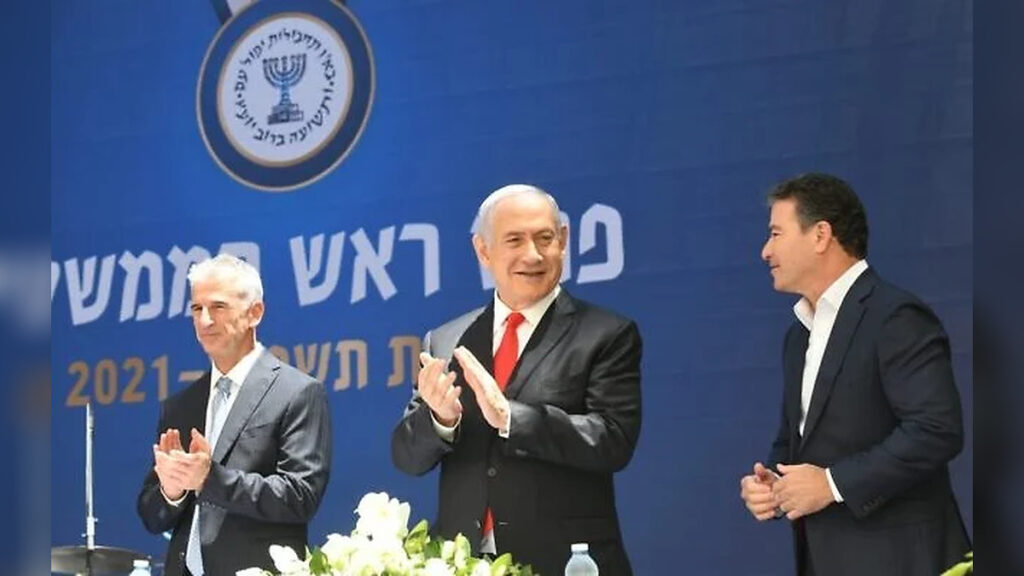
David Barnea has concluded a landmark five-year term as head of Israel’s Mossad, stepping down after a period widely seen as one of the most operationally intense and strategically consequential in the agency’s history.
Under his leadership, the intelligence service evolved from a traditionally covert, limited-operation structure into a globally influential apparatus capable of simultaneous action across multiple Middle Eastern arenas.
His tenure is marked by expanded operational reach stretching from Iran to Lebanon and beyond, with intelligence officials crediting him with reshaping how Israel projects clandestine power in both wartime and peacetime environments.
Expansion of Mossad Reach Across Iran, Lebanon, and Beyond
During Barnea’s leadership, Mossad operations reportedly expanded in scale and ambition, shifting toward a model built on parallel missions rather than isolated covert actions.
This transformation allowed Israel to pursue coordinated pressure campaigns across several fronts at once, including Iran’s nuclear infrastructure and Hezbollah’s military command structure in Lebanon.
Officials close to the agency describe this era as one in which intelligence operations became deeply integrated with broader military planning, blurring traditional lines between espionage and battlefield strategy.
Lebanon Operation and the Killing of Hassan Nasrallah
One of the most consequential episodes attributed to this period was the September 27, 2024 strike in Beirut that killed Hezbollah leader Hassan Nasrallah.
The operation followed days of escalating conflict, including the detonation of explosive devices earlier in the month that already had destabilized Hezbollah’s internal command structure.
According to accounts tied to Israeli defence sources, dozens of F-15I aircraft struck Hezbollah’s underground headquarters in the Dahiya district, dropping approximately 85 bombs in a coordinated assault that also killed senior commanders, including Ali Karaki.
The strike was reportedly enabled by a decade of intelligence gathering involving both Israeli operatives and local recruits, some of them Lebanese nationals working covertly for Mossad.
Local Operatives and High-Risk Battlefield Intelligence Work
Emerging details suggest that many of the agents involved in preparing the Beirut operation were not Israeli nationals but locally recruited operatives.
These individuals reportedly operated in extreme conditions, often moving through areas still under bombardment or moments after Israeli airstrikes had concluded.
Their tasks included battlefield assessments and placement of intelligence-supporting devices in highly dangerous zones.
Coordination between Mossad leadership and the Israeli Air Force was described as continuous and dynamic, requiring rapid adjustments to avoid friendly casualties while maintaining operational momentum.
Officials familiar with the operation say agents worked under constant threat from both aerial strikes and Hezbollah counterintelligence units.




Controversial Kurdish Strategy in Iran Regime Scenario
Beyond Lebanon, Barnea’s tenure was also associated with ambitious plans targeting Iran’s internal stability.
One of the most debated proposals involved leveraging Kurdish groups in Iraq and Iran as a potential ground force capable of pressuring the Iranian regime from within.
The concept drew comparisons to Kurdish participation in the 2003 Iraq invasion, though the newer plan was considered significantly more complex and politically sensitive.
Reports suggest the strategy included potential air support and logistical backing from both Israel and the United States.
However, the proposal was ultimately blocked amid disagreements within the US administration and concerns raised by regional actors, including Turkey.
Disputes Over Feasibility of Iran Operations
Within Israeli defence circles, there was significant disagreement over the scale and feasibility of proposed operations against Iran’s nuclear infrastructure.
Some officials argued that reliance on local operatives carried too high a risk of exposure, while others believed such concerns underestimated Mossad’s evolving capabilities.
Barnea and his allies reportedly pushed back against scepticism, pointing to previous covert successes inside Iran as evidence that large-scale clandestine networks could be sustained without major compromise.
Still, portions of the broader operational plan were never fully activated, particularly those tied to coordinating large-scale internal uprisings with minority groups.
Nuclear Tensions and the “Pickaxe Mountain” Facility Debate
A key strategic concern during this period was Iran’s deeply buried nuclear infrastructure, including the heavily fortified “Pickaxe Mountain” facility.
Intelligence assessments suggested the site may be beyond the reach of even advanced bunker-busting munitions, raising fears of a so-called “zone of immunity.”
While the United States has favoured diplomatic containment and sanctions pressure, Israeli officials reportedly debated more direct approaches, including covert sabotage and potential ground-based intervention.
However, such options were ultimately not pursued due to operational risks and resource constraints.
Internal Mossad Debate Over Large-Scale Nuclear Sabotage
Barnea also oversaw internal discussions about an unprecedented multi-target sabotage operation aimed at Iran’s nuclear programme.
The plan envisioned simultaneous strikes across multiple facilities, potentially involving hundreds of operatives.
The proposal was eventually shelved after senior defence leaders raised concerns about feasibility, intelligence exposure risks, and Israel’s limited ability to provide sustained military cover during execution.
Some within Mossad argued that rejecting the plan reflected excessive caution, while critics insisted it underestimated the operational complexity involved.
Leadership Transition and Institutional Direction
Barnea’s departure comes as Mossad undergoes another leadership transition, with Maj. Gen. Roman Gofman stepping into the role.
Despite earlier internal opposition to Gofman’s appointment, Barnea has since publicly supported a unified handover process, urging continuity within the agency.
Officials suggest that major structural changes initiated under Barnea—particularly the increased reliance on local operatives and simultaneous multi-front operations—are likely to remain central to Mossad doctrine.
Legacy of a High-Intensity Intelligence Era
As Barnea exits office, Israeli intelligence circles are reflecting on a period defined by rapid escalation, expanded covert warfare, and increasingly complex regional entanglements.
His supporters argue that he fundamentally redefined Mossad’s operational identity, while critics warn that the scale of activity increased exposure risks and long-term strategic uncertainty.
What remains undisputed is that his tenure coincided with some of the most volatile developments in recent Middle Eastern history, placing Mossad at the centre of conflicts spanning Lebanon, Iran, and beyond.

