
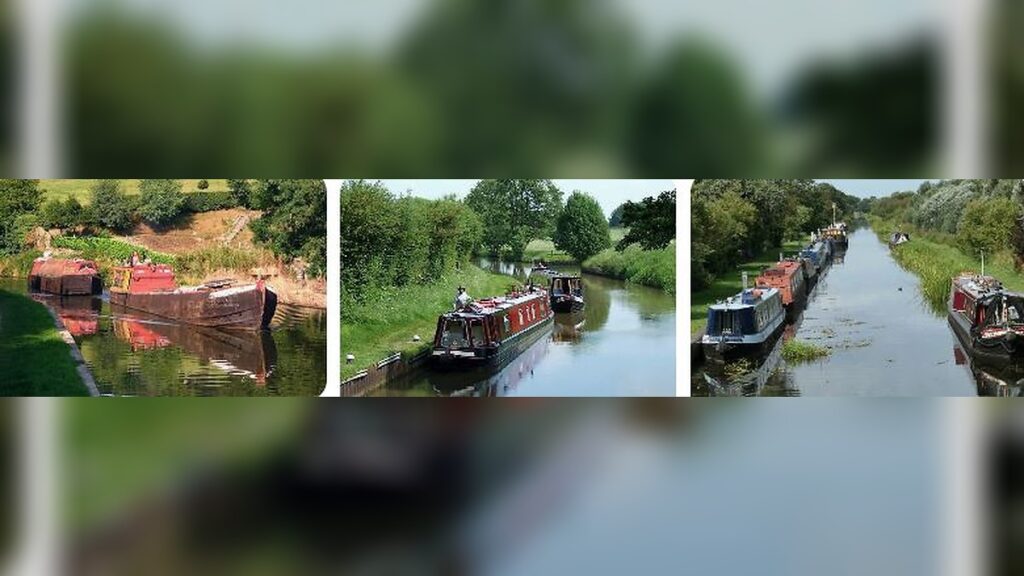
More than 30 sections of England and Wales’ extensive canal network have been closed to navigation as exceptionally hot and dry conditions cause water levels to fall sharply across the country.
The Canal and River Trust, which manages much of Britain’s roughly 2,000-mile canal network, has introduced restrictions to protect dwindling water supplies as temperatures continue to climb.
Drought Leaves Canals Barely Navigable
Some stretches have become completely impassable, while others have exposed sections of their canal beds.
The Montgomery Canal at Llanymynech and the Grantham Canal near Cotgrave in Nottinghamshire are among the waterways affected. Parts of the Grand Union Canal in Leicestershire have also seen the canal bed emerge as water levels fall.
The prolonged absence of meaningful rainfall has been compounded by rapid evaporation during successive periods of extreme heat.
More Closures Could Follow
The Canal and River Trust warned that additional sections could be closed if conditions deteriorate further.
The organisation said it was actively managing its available water resources, including temporarily closing waterways or reducing their opening hours where necessary.
It has urged boaters to postpone non-essential journeys and share locks wherever possible to reduce the amount of water being lost from the system.
Boating Restrictions Relaxed to Conserve Water
In an unusual measure aimed at preserving water supplies, the trust has temporarily suspended restrictions that normally prevent boaters from remaining moored in one location for more than two weeks.
The organisation acknowledged that the measures could cause difficulties for boaters and canal-related businesses but said the restrictions were necessary to keep the waterways functioning for as long as possible.
July Was the Driest on Record
The crisis follows what has been described as the driest July since records began in 1836.
The combination of exceptionally low rainfall and persistent heat has left rivers, reservoirs and other water sources under severe pressure.
Around 45 million people across England are now understood to be living in areas affected by drought conditions, while approximately 27 million customers are subject to hosepipe restrictions.
Parts of Hampshire and West Sussex have reportedly gone around 60 days without significant rainfall.




Britain Faces Another Extreme Heat Surge
The worsening water crisis comes as the country prepares for another potentially record-breaking spell of heat.
The Met Office has warned that 2026 could ultimately surpass the summer of 1976, which currently holds the record for the highest average daily maximum temperature over a British summer.
A rare amber extreme heat warning has been issued for southern and central England, while the UK Health Security Agency has placed the whole of England under an amber heat-health alert.
Health authorities have warned of an increased risk of deaths as temperatures rise.
Temperatures Could Reach 38C
Forecasters expect temperatures to reach around 33C before potentially climbing to 38C the following day.
A temperature of 38C would rank among Britain’s hottest days on record and match the country’s current 2026 high, recorded in Norfolk on June 26.
If the remainder of August stays unusually warm, 2026 could ultimately become Britain’s hottest summer on record.
Water Companies Warn of Further Shortages
The pressure is also being felt by water companies.
Southern Water has warned that more than 100,000 people in Hampshire could face shortages unless further restrictions are introduced, including measures targeting the filling of public swimming pools and other non-essential uses of water.
The warnings come after weeks of hosepipe restrictions across Britain, limiting activities such as watering gardens, filling paddling pools and washing cars.
Wildfire Risk Adds to National Emergency
The extreme conditions are also creating serious risks for firefighters and emergency services.
A senior firefighter union official warned that Britain faces a potential “national emergency” as wildfires continue to threaten areas affected by prolonged heat and drought.
The combination of dry vegetation, high temperatures and strong demand for emergency services has increased pressure on firefighting resources.
Rail Passengers Warned of Disruption
The heat is also beginning to affect Britain’s transport network.
Several rail operators have warned passengers to avoid non-essential travel during the peak of the extreme weather. East Midlands Railway and Chiltern Railways advised customers to travel only when necessary, while reduced services were announced by operators including c2c, CrossCountry, Great Western Railway, Northern, Transport for Wales and West Midlands Railway.
The restrictions reflect concerns about how extreme temperatures can affect railway infrastructure and operations.
Government Calls Emergency Cobra Meeting
The escalating situation has prompted the government to convene an emergency Cobra meeting to coordinate its response to the heatwave.
Ministers from the environment, home affairs and health departments are expected to participate, alongside the Environment Agency and other agencies.
It is the second Cobra meeting focused on heatwaves this year, following another emergency meeting during a similar spell of extreme weather in June.
Government Faces Growing Pressure
The government is simultaneously dealing with challenges involving the NHS, farmers, firefighters, water supplies and transport.
Officials are also considering additional measures to reduce fire risks. The government has indicated that restrictions on disposable barbecues could be considered as the heatwave continues.
With water levels falling, canals closing and temperatures approaching potentially historic levels, Britain’s latest heatwave is increasingly becoming a national infrastructure and public-safety challenge rather than simply a period of unusually hot weather.

