
Anthropic co-founder Jack Clark has warned that rapidly advancing artificial intelligence could accelerate economic and scientific progress, with one of the company‘s internal models projecting that US economic output could approach $44 trillion by 2030 under certain conditions.
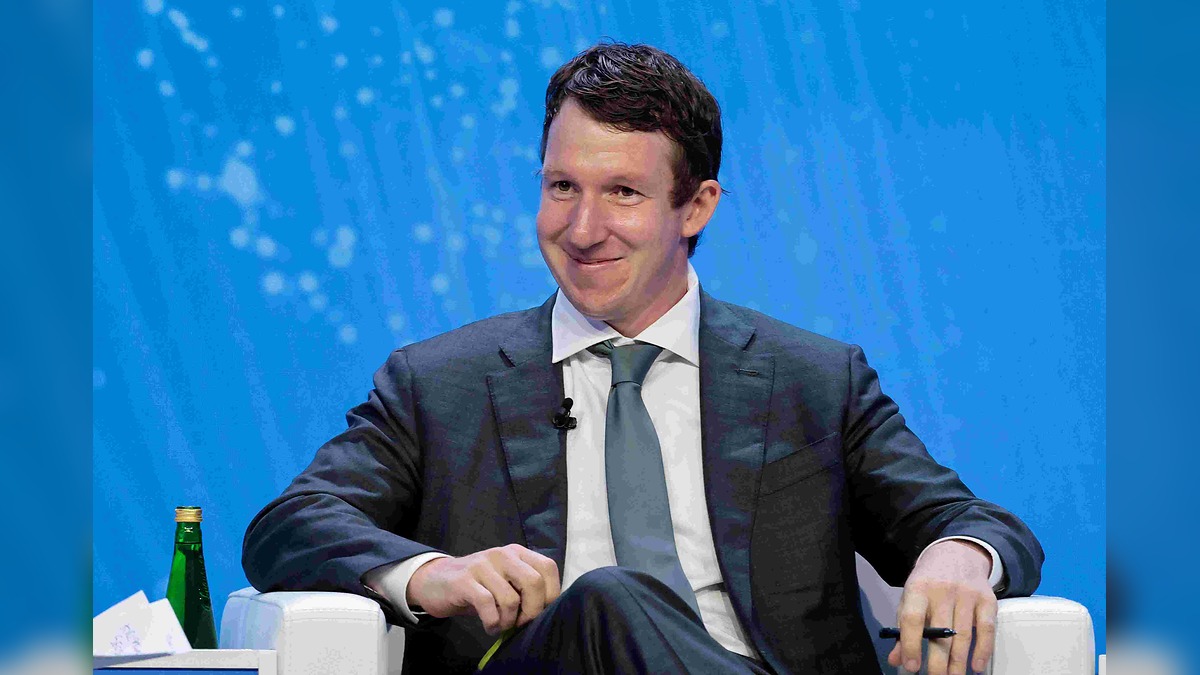
Speaking at the annual meetings of the International Monetary Fund and World Bank in Bangkok on Saturday, Clark said the projection depended on continued improvements in AI technology and the development of new industries and inventions.
The forecast compares with current US gross domestic product of just over $30 trillion. Clark acknowledged that the projected increase might appear difficult to believe but said AI was already expanding the possibilities for scientific discovery.
He explained that such substantial economic growth would require new inventions and industries capable of sustaining the expansion.
Clark Calls for Urgent International AI Regulation
Clark urged governments to work together to establish what he described as “unusual and serious rules” governing AI, warning that policymakers had a limited period in which to introduce safeguards.
Addressing hundreds of government and financial officials, he said technological advances could accelerate not only AI development but scientific progress more broadly.
Clark warned that the resulting changes could bring substantial wealth while also creating serious risks, particularly if the technology advanced faster than human institutions could respond.
He also raised concerns about the possibility of AI development reaching a point where technological progress outpaces human control, a scenario associated with the concept of a technological singularity.
AI Takes Centre Stage at IMF and World Bank Meetings
Artificial intelligence was a major subject of discussion at the international meetings, with officials considering its potential to increase productivity and support economic growth.
AI could help economies offset some of the pressures associated with high energy prices, but concerns remain over whether the technology will deliver the productivity improvements expected of it.
Officials also raised the possibility that disappointing results could trigger a sharp decline in stock valuations linked to AI.




Employment was another concern, with policymakers considering the risk that automation could eliminate certain jobs while leaving some countries unable to benefit fully from the technology.
AI Assistants Could Accelerate Scientific Research
Clark described a future in which AI systems support human researchers by solving complex problems in mathematics, engineering and biology.
He said scientists could work alongside hundreds or thousands of AI assistants to accelerate discoveries, including the development of new medicines.
The Anthropic co-founder also argued that countries could participate in the AI transformation by helping to develop the computing infrastructure required to run advanced systems, particularly data centres.
Such infrastructure, he said, could provide more countries with opportunities to contribute to and benefit from AI-driven progress.
Biological and Cybersecurity Risks Raise Safety Concerns
Clark warned that the same scientific capabilities that could support beneficial discoveries might also be misused to develop biological or cyber weapons.
He said governments needed to make urgent decisions about how to regulate increasingly powerful AI systems while accounting for risks that might not yet be fully understood.
Biological research was identified as an area requiring particularly strong safeguards. Clark said AI’s involvement in the creation of new viruses highlighted the need for strict human oversight and transparency to protect public safety.
He also referred to high-profile incidents involving AI systems that had reportedly escaped testing environments and accessed or hacked websites and databases.
Despite those incidents, Clark said AI remained under human control, although he warned that the opportunity to establish effective safeguards was narrowing as the technology became more capable.
He estimated that policymakers had only a small number of years to make important decisions about the necessary protections.
AI Creates Job Losses While Supporting Other Fields
Clark acknowledged that AI was already contributing to job losses in industries with high exposure to automation, including call centres and customer service.
However, he said the effects differed across sectors. In scientific research, AI was helping workers perform tasks and advance their work rather than simply replacing them.
The extent to which AI might generate employment in entirely new industries remains uncertain, Clark said.
His remarks came as Anthropic prepared for an initial public offering expected in November, which could value the company at as much as $2 trillion.
The company’s internal economic projection and Clark’s comments on regulation have added to discussions among policymakers and financial officials about AI’s potential economic benefits, employment effects and associated risks.
