
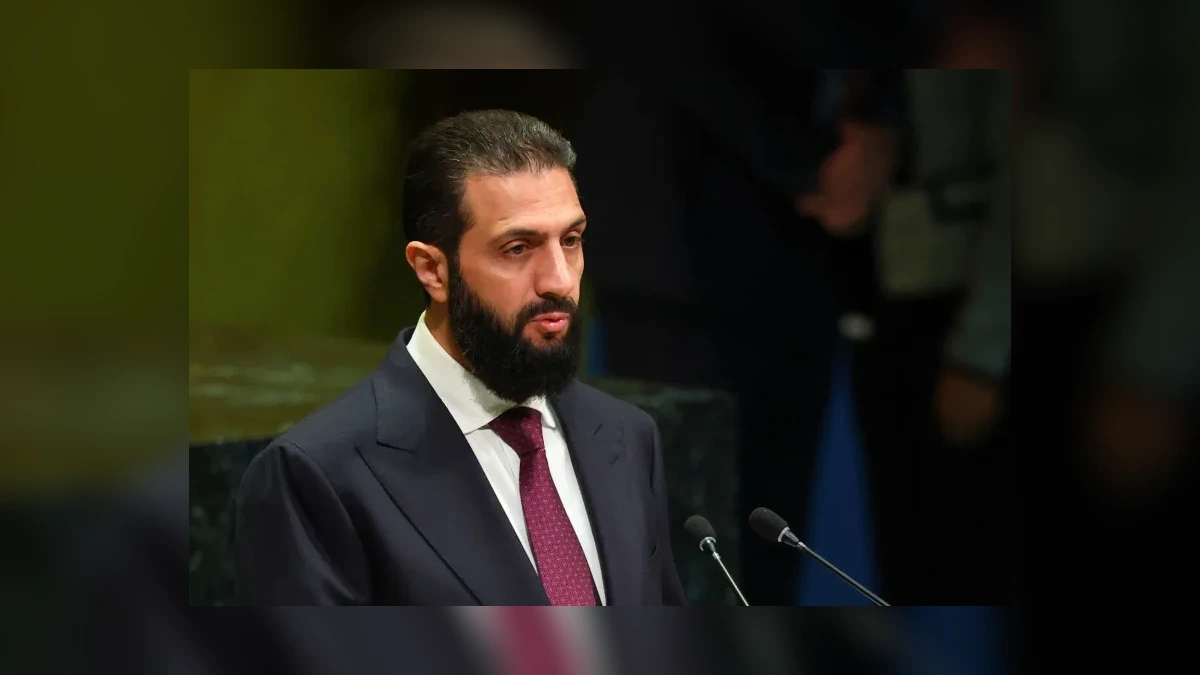
Israeli Prime Minister Benjamin Netanyahu has claimed that a direct conversation with Syrian President Ahmed al-Sharaa helped stop massacres targeting members of Syria’s Druze community in 2025.
Speaking on Thursday at a conference attended by representatives of the Druze community, Netanyahu described the exchange as brief but decisive, while acknowledging that further efforts were still needed to protect the minority group.
“It was a very short, very sharp conversation, and the massacre was stopped,” Netanyahu said.
He added that there was more to the matter than he could publicly disclose, signalling that discussions and security concerns surrounding the Druze remained unresolved.
Netanyahu also reiterated his commitment to protecting the community, describing the issue as a deeply personal responsibility.
Israeli Leader Cites Military Strikes as Part of His Response
Netanyahu linked his account of the conversation with Sharaa to Israeli military operations carried out in Damascus during the violence.
He said Israel had struck Syria’s Defence Ministry headquarters and a military target near the presidential palace before he contacted the Syrian leader.
According to Netanyahu, the actions were intended to stop the attacks and demonstrate Israel’s determination to intervene if the Druze were threatened.
He also called for displaced members of the community to be allowed to return to their homes, promising that Israel would do what was necessary to prevent another massacre.
His remarks did not provide further details about the conversation with Sharaa or independently establish the extent to which the exchange directly influenced events on the ground.
Katz Warns of Possible Renewed Attacks if Netanyahu Loses Election
Israeli Defence Minister Israel Katz issued a separate warning at the conference, claiming that Syria was preparing to resume attacks on the Druze if Netanyahu failed to secure re-election.
Katz alleged that Sharaa had prepared Arab tribal groups, internal security forces and the Syrian army for further action against the community.
He claimed that the Syrian president was waiting to see the outcome of Israel’s election before deciding whether to continue the campaign.
The remarks amount to a serious allegation about Syria’s intentions, although the conference statements did not present independent evidence establishing that a renewed offensive had been planned.
Sweida Violence in 2025 Triggered International Concern
The latest statements revisit the deadly violence that engulfed Sweida, a predominantly Druze city in southern Syria, in July 2025.
Clashes escalated into reports of killings, abuses and humiliation directed at members of the Druze community. Images and videos circulated on social media, intensifying concerns about the safety of civilians.
One widely shared clip showed armed men forcibly shaving the moustache of Mirhaj Shaheen, an 80-year-old Druze man, at his home in Sweida. In the footage, Shaheen appeared to plead with the men to stop.




Members of the Druze community in Israel subsequently claimed that Shaheen had been killed, although the account in the original report did not independently establish the circumstances of his reported death.
The violence heightened fears among Druze communities inside Syria and across the border in Israel, where the events prompted calls for greater protection.
Israeli Druze Gathered at the Syrian Border
As reports of violence spread, the Israel Defense Forces reinforced its positions along the Syrian border amid concerns that anger over the attacks could trigger further unrest.
Hundreds of Israeli Druze gathered near the border fence, with some attempting to cross into Syria to assist members of their community.
Dozens had already crossed into Syrian territory, prompting Israeli forces to prepare for further attempts.
The events demonstrated the cross-border dimension of the crisis, as members of the Druze community in Israel sought to respond to the suffering of their relatives and fellow Druze in Syria.
The situation also placed Israel’s military response at the centre of a wider debate over the protection of minorities and the consequences of foreign intervention in Syria.
Israeli Strikes on Damascus Deepened Tensions with Sharaa’s Government
During the July 2025 crisis, Israeli forces struck the Syrian regime’s General Staff headquarters in Damascus. The Israeli military said the facility was being used to manage operations and coordinate the deployment of forces to Sweida.
Israel also targeted a military site near the Syrian presidential palace.
The strikes drew a sharp response from Sharaa, who accused Israel of undermining Syria’s stability and encouraging division within the country.
He argued that Israeli actions were threatening national unity and making it harder for Syria to pursue reconstruction following years of conflict.
The exchange highlighted the competing positions of the two governments: Israel presented its intervention as a response to threats against the Druze, while Sharaa portrayed the strikes as an attempt to destabilise Syria.
Druze Leaders Divided Over Foreign Intervention
The crisis also exposed differences within Syria’s Druze community over how best to secure its future.
While some welcomed outside pressure aimed at stopping attacks, other figures opposed military intervention and questioned whether Israel’s involvement would ultimately improve the situation.
A senior figure in a Druze militia aligned with the Syrian regime criticised the idea of external military protection, arguing that the community did not need outside forces to defend it.
His comments reflected concerns that foreign intervention could deepen divisions within Syria or complicate relations between Druze groups and the new authorities.
The differing positions illustrate the challenges facing the community as it weighs immediate security needs against the longer-term consequences of aligning with external powers.
Sharaa Reaffirms Syria’s Claim to the Golan Heights
Relations between Israel and Syria have remained tense over territory, security and the future political relationship between the two countries.
During an address to the United Nations General Assembly in September 2025, Sharaa reiterated that the Golan Heights remained Syrian territory. He also accused Israel of carrying out approximately 500 airstrikes in Syria and reaffirmed his country’s commitment to the 1974 Disengagement Agreement.
Sharaa rejected what he described as Israeli aggression, maintaining that the strikes threatened Syria’s sovereignty.
His remarks underscored the continuing dispute over the Golan Heights, which Israel captured from Syria in 1967 and later annexed in a move not internationally recognised by most countries.
Direct Communications Have Raised Questions About Future Relations
Sharaa has also discussed communications between Syria and Israel during a panel hosted by the Atlantic Council in New York.
The discussions touched on direct contact between the two countries, the future of the Golan Heights and the effect of the October 7, 2023, Hamas-led attack on Israel’s approach to Syrian security.
Despite the possibility of communication between officials, the two sides remain divided over territory, military operations and the broader regional security situation.
Netanyahu’s latest account of his conversation with Sharaa therefore comes against a backdrop of fragile relations and competing claims about responsibility for the violence in southern Syria.
His remarks reaffirm Israel’s stated commitment to protecting the Druze, while Katz’s warning has raised further questions about the possibility of renewed conflict and the role Israel may play if tensions escalate again.
