
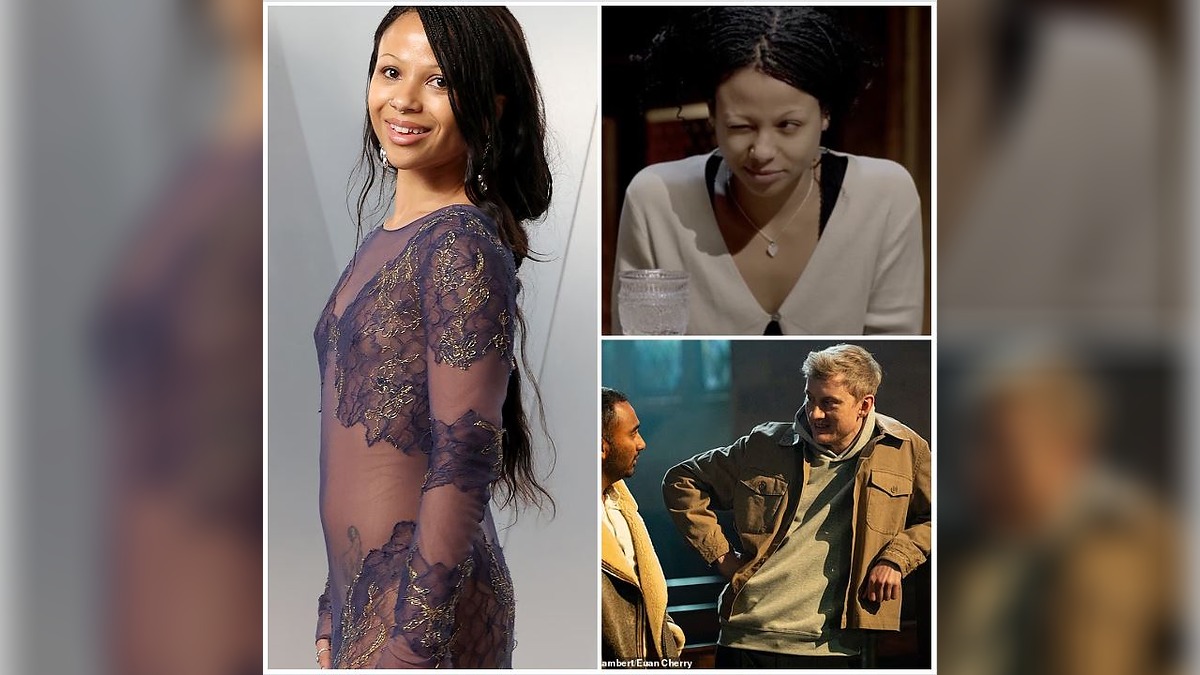
The BBC’s hit reality series The Celebrity Traitors has come under scrutiny after actress Myha’la raised concerns about unconscious racial and cultural bias following her early elimination from the competition.
The American actress, best known for her role in the BBC drama Industry, became the second celebrity to be banished from the show last week. Her departure prompted an online debate about whether racial perceptions could influence how contestants judge one another.
The controversy has emerged despite the programme attracting strong viewing figures. Last Thursday’s episode reportedly drew 10.3 million viewers, underlining the show’s popularity.
BBC insiders have rejected suggestions that racism is influencing the competition, while a source connected to the production insisted that the game remained focused on identifying and eliminating the Traitors.
Actress Acknowledges Her Own Mistakes but Raises Concerns About Bias
Myha’la addressed the controversy on Instagram after thanking viewers for her experience on the programme.
One commenter claimed that she had been banished because she was Black, describing the show as consistently racist. In response, the actress accepted responsibility for decisions that may have contributed to her exit but also raised concerns about how cultural differences could affect perceptions of contestants.
“I sealed my own fate!” she wrote, acknowledging that she had given the other players reasons to suspect her.
However, she added that unconscious racial and cultural bias could influence how people interpreted her behaviour, particularly when they were unfamiliar with people from backgrounds like hers.
Myha’la stressed that she did not believe her fellow contestants had deliberately treated her differently because of her race.
Her concerns centred on the possibility that her honesty, authenticity and manner of expressing herself had been interpreted as suspicious.
A Wink at Richard E. Grant Becomes a Talking Point
Myha’la’s conduct during the round-table discussions has been cited as a possible explanation for her elimination.
She had previously defended actor Richard E. Grant, who was secretly playing as a Traitor, during an earlier discussion. However, she subsequently changed her position and voted against him, giving him a wink as she did so.
Grant later revealed his identity as a Traitor, but the incident had already raised questions about Myha’la’s own loyalties.
In the competition, the Faithfuls must identify the Traitors and banish them before the end of the game. The Traitors, meanwhile, attempt to remain undetected while eliminating other players.
A source connected to the programme argued that Myha’la’s actions had made her intentions too obvious, suggesting that the incident, rather than racial bias, explained why she became a target.
BBC Insiders Reject Allegations of Racism
BBC insiders have pushed back against the suggestion that race played a role in Myha’la’s departure.
They reportedly argued that the celebrities were accustomed to working with people from a wide range of backgrounds and that race was not a factor in their decisions about whom to eliminate.
A source associated with the show also pointed to the presence of non-white contestants who were still competing, arguing that their progress demonstrated that the game was not predetermined by race.
The debate has nevertheless placed the programme’s casting and elimination history under renewed scrutiny.
Amol Rajan Was the First Celebrity to Leave
Myha’la was not the first non-white contestant to leave the current celebrity series.
Former BBC Radio 4 Today presenter Amol Rajan was the first celebrity to depart after a decision involving comedians James Acaster and the Traitors.
The pair were competing for recruitment into the Traitors’ group, and Acaster was selected. Rajan was subsequently murdered in the game.
Although Rajan is Asian, the decision did not generate the same accusations of racism.




A source familiar with the production argued that the outcome reflected the mechanics of the competition rather than racial considerations, noting that Maya Jama was among those involved in the decision to eliminate him.
Previous Series Also Face Questions Over Representation
The controversy has revived discussion about the wider history of The Traitors, including its civilian and celebrity editions.
An analysis published by the Daily Mail reported that non-white contestants had been eliminated during the early stages of every series examined.
Among those cited were Aisha Birley, the first contestant murdered in the opening series in 2022; Kyra Johnson, who left during the second series; and Yin Lu, who departed early in the following season.
The fourth series also saw contestants including Netty Osterberg, Judy Wilson, Ross Garshong and Marzook Bana leave at different stages.
The pattern has fuelled debate about whether the outcomes reflect the unpredictable nature of the game or broader social perceptions that may influence how people assess others.
However, early eliminations alone do not establish that racial bias caused those decisions.
Few Non-White Contestants Have Reached the Final
The debate also extends to how far non-white contestants have progressed in previous editions.
According to the report, only two non-white contestants in the civilian series had reached the final episode: Jaz Singh in the second series and Faraaz Noor in the fourth.
The celebrity edition has also yet to produce a non-white winner.
In the first celebrity series, YouTuber Niko Omilana was the second contestant to leave, while actress and comedian Tameka Empson departed fourth. Actor Nick Mohammed and historian David Olusoga, however, reached the final round table alongside eventual winner Alan Carr.
The figures have prompted questions about representation beyond the initial casting process, although they do not by themselves demonstrate why individual contestants were eliminated or why particular players reached the final.
Earlier Race Row Followed Judy and Ross’ Eliminations
The latest dispute follows criticism earlier this year from writer and comedian Athena Kugblenu, who accused the civilian version of The Traitors of reflecting racial bias after Judy Wilson and Ross Garshong were eliminated by contestants who suspected they were Traitors.
Kugblenu argued that the treatment of the pair echoed experiences in which Black people are perceived as suspicious, drawing a comparison with concerns about wrongful police stop-and-search practices.
Her comments reportedly upset people involved in making the programme.
A source close to the production said the team worked hard to create a show that appealed to a broad audience and that the accusations had been hurtful to those behind the scenes.
The debate has therefore extended beyond individual game decisions to questions about how audiences interpret representation and behaviour in reality television.
Familiarity Between Contestants May Have Influenced the Game
Sources close to the BBC have also suggested that Myha’la faced a disadvantage because she was less familiar with the British celebrity scene than many of her fellow contestants.
Several participants already knew one another through professional or social connections.
Comedians Romesh Ranganathan and Rob Beckett have worked together on television and appeared on each other’s podcasts for years. Grant and model Jerry Hall had lived close to one another in Richmond, south-west London, for more than two decades.
Jama and former Little Mix singer Leigh-Anne Pinnock knew each other through the entertainment industry, while Jama had also appeared in videos featuring YouTuber King Kenny.
Ranganathan and actress Julie Hesmondhalgh had crossed paths on the BBC quiz show The Weakest Link. Comedians Joe Lycett, Joanne McNally and Acaster had also encountered one another through their work.
A source suggested that these existing relationships may have helped contestants interpret one another’s behaviour, making Myha’la’s relative unfamiliarity with the group a possible disadvantage.
A friend of one contestant also rejected the suggestion that the cast was unfamiliar with Black women, describing the accusation as unfair.
Celebrity Traitors’ Inclusive Line-Up Faces Renewed Scrutiny
The current celebrity cast was reportedly regarded by BBC executives as a successful combination of established stars and personalities from different areas of entertainment.
Alongside Jama, Grant and Hall, the line-up includes Ranganathan, Pinnock, Myha’la, King Kenny, Rajan and actor Bella Ramsey, who identifies as non-binary.
The casting was also seen as addressing longstanding criticism that BBC entertainment programmes had featured too many white men. The group has an almost equal gender split and includes contestants with varied professional and cultural backgrounds.
Nevertheless, the controversy has raised a distinction between the diversity of a cast and the way contestants are treated once the competition begins.
Next Eliminations Could Intensify the Debate
The row could continue as the series progresses, with further eliminations potentially prompting fresh discussion about the contestants’ experiences.
At the time of the report, Ranganathan, Pinnock, Rob Beckett and Ross Kemp were among those facing potential danger in the game. Pinnock had protection from a shield for that episode, preventing her elimination.
Another departure by a non-white contestant could renew scrutiny of the series, although the outcome alone would not establish whether racial bias was involved.
A source close to the programme maintained that Myha’la’s wink to Grant had been central to her downfall and expressed frustration that the discussion about racism had overshadowed the strategic mistakes that led to her exit.
The dispute leaves The Celebrity Traitors facing questions about whether its elimination patterns reflect ordinary gameplay, the influence of existing relationships, unconscious assumptions or a combination of factors.
For now, Myha’la has acknowledged her own role in the outcome while arguing that cultural differences can shape how people are perceived. The BBC and those associated with the programme have rejected the suggestion that racism drove her banishment, leaving the debate unresolved.
