
Tropical Storm Bertha brought dangerous weather to the Gulf Coast on Wednesday after making landfall in St. Bernard Parish, Louisiana, roughly 40 miles east of New Orleans.
The storm arrived with sustained winds of approximately 45 mph, producing heavy rainfall, coastal flooding, and hazardous conditions that affected communities across several southern states.
The storm’s wind field stretched nearly 160 miles from its center, causing scattered damage well beyond Louisiana.
In Panama City Beach, Florida, strong gusts toppled a Waffle House sign onto a vehicle, highlighting the storm’s broad reach.
Storm Warnings Expanded as Bertha Moves West
Meteorologists forecast Bertha to retain tropical storm strength as it travels toward the upper Texas coast on Thursday.
In response, the National Hurricane Center expanded Tropical Storm Warnings from Cameron, Louisiana, westward to Sargent, Texas.
Warnings also remained active along the Alabama-Mississippi border and across metropolitan New Orleans, where parks, piers, and other public spaces stayed closed because of flooding concerns.
Flood watches extended farther inland across eastern Tennessee, Virginia, and North Carolina as forecasters warned of additional heavy rainfall.
West Virginia Faces Severe Flood Emergency
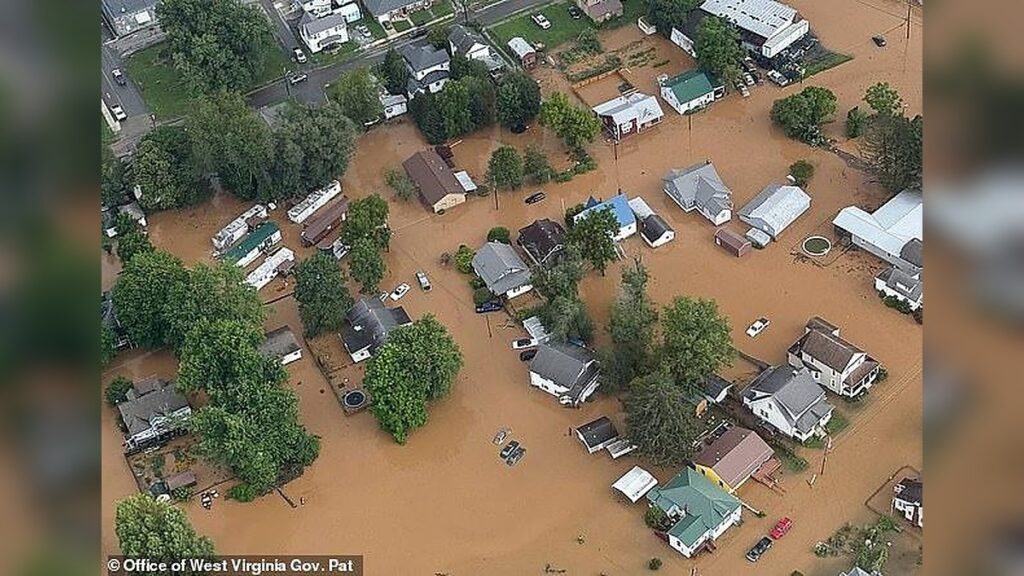
While the Gulf Coast dealt with Bertha’s landfall, West Virginia experienced catastrophic flooding after intense rainfall overwhelmed rivers, creeks, and drainage systems.
Governor Patrick Morrisey declared a statewide emergency covering all 55 counties and deployed hundreds of National Guard personnel to the hardest-hit areas in northern West Virginia.
Emergency officials reported that the Division of Natural Resources had already carried out 85 rescue operations, while 19 National Guard and state police helicopters were conducting rescue flights or remaining on standby.
More than 100 displaced residents sought shelter in emergency facilities established across the affected region.
Officials Warn of Possible Loss of Life
State leaders acknowledged that the full extent of the disaster had yet to emerge. Governor Morrisey said authorities were concerned about potential fatalities but could not immediately confirm how many people might still be missing.
Calling for statewide unity, he urged residents to support affected communities during what is expected to be a lengthy recovery effort, emphasizing that rebuilding would require assistance in the coming weeks.
Extraordinary Rainfall Overwhelms Communities
Forecasters estimated that some parts of West Virginia received as much as seven inches of rain, while Morrisey noted that one location recorded approximately 4.5 inches in only 37 minutes.



The rapid downpour overwhelmed waterways, leaving floodwaters with nowhere to drain.
Roads disappeared beneath rising water, neighborhoods became isolated, and emergency responders struggled to reach some stranded residents because floodwaters blocked access routes.
Several major transportation corridors, including sections of Interstate 79, U.S. Route 48, and numerous secondary roads, were closed because of flooding.
Floodwaters Damage Businesses and Homes
Images shared by residents showed submerged vehicles, flooded parking lots, and businesses inundated with muddy water.
A Walmart in Weston experienced floodwaters pushing deep into the building, while a nearby hotel saw its ground floor overtaken by rising water.
Emergency crews rescued dozens of motorists trapped inside flooded vehicles, although some rescue missions were delayed because high water cut off access to affected neighborhoods.
Coastal Communities Also Feel Bertha’s Impact
Elsewhere along the Gulf Coast, rising tides and rough surf created additional hazards.
On Alabama’s Dauphin Island, several vehicles became trapped in sand as rapidly rising water surrounded them overnight.
Bystanders attempted to free one stranded SUV by digging around its tires with shovels while waves continued crashing onto the shoreline.
Louisiana communities also experienced coastal flooding, with storm surge pushing seawater into residential streets and low-lying neighborhoods.
Tennessee Farmers Count Heavy Losses
Flooding also caused significant agricultural damage in Tennessee.
In Maynardville, Ailor Gap Farms owner Dan Woodcock said flash flooding destroyed the remainder of this year’s harvest after a nearby creek surged over its banks.
Woodcock estimated crop losses between $8,000 and $10,000, describing the event as unlike anything he had witnessed in more than three decades except for one previous flood.
He explained that fast-moving debris carried downstream caused far greater destruction than the water itself, uprooting trees and devastating his farmland.
Although he expects the family farm to finish the season several thousand dollars in debt, Woodcock said he intends to plant another crop rather than seek donations.
Instead, he encouraged supporters to assist local farmers by purchasing their products and helping with cleanup efforts.
Severe Weather Extends Beyond the Gulf
The weather system responsible for Bertha also generated widespread severe weather across the eastern United States.
Heavy rain and reports of tornadoes stretched from the Cincinnati region through New Jersey and into the suburbs surrounding New York City.
In West Virginia, authorities also investigated damage near St. Marys and Belmont believed to have been caused by a possible tornado.
Bertha Expected to Weaken as Another Hurricane Builds in the Pacific
Forecasters expect Bertha, the Atlantic hurricane season’s second named tropical storm after Tropical Storm Arthur, to weaken after moving inland across Texas, with dissipation anticipated by Friday.
Meanwhile, attention is also turning to the eastern Pacific, where Hurricane Fausto continues to strengthen west-southwest of Baja California.
The hurricane is expected to intensify further while generating dangerous surf and rip currents along parts of the Baja California coastline.
