
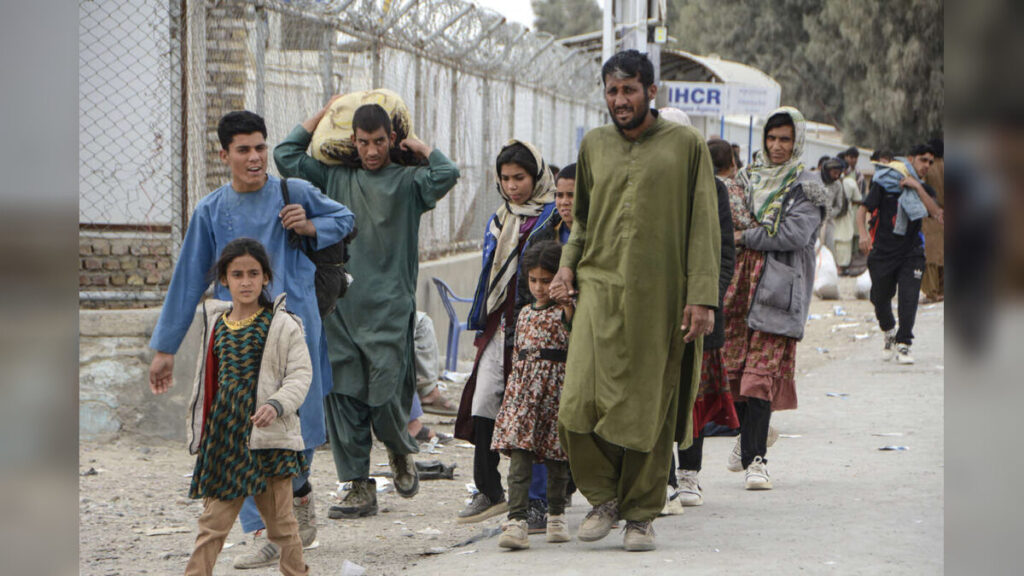
Exhausted Afghan migrants are reportedly making their way back into Afghanistan from Iran, braving extreme conditions including sandstorms, scorching heat, and limited access to food and water.
Many are leaving Iran not because they want to, but because survival has become nearly impossible in a country struggling with economic hardship and strict border policies.
This migration highlights the dire circumstances faced by Afghans who fled years of conflict at home.
Returning to a country still grappling with instability, many migrants are forced to choose between two dangerous options: endure harsh conditions abroad or face uncertain prospects at home.
Iran Restricts Strait of Hormuz Access
Meanwhile, Iran has taken a bold step on the international stage by announcing a selective list of countries allowed to navigate the Strait of Hormuz, one of the world’s most strategically vital shipping lanes.
Only China, India, Pakistan, and Turkey are officially permitted, turning the waterway into what some are calling a “VIP shipping lane.”
Russia, which also has significant interests in global energy and trade, reportedly wants inclusion on this list, creating further tension in the region.
By controlling access, Iran effectively becomes a gatekeeper of global oil exports and shipping routes, wielding influence over markets and international diplomacy.
Impact and Consequences
The dual crises carry serious regional implications:
-
For Afghan migrants: Extreme conditions during the return journey could lead to humanitarian emergencies, including illness, dehydration, and fatalities.
-
For Iran: Restricting Strait of Hormuz access may strain relationships with excluded countries and increase geopolitical tension.
Suggested Readings (News continues below) -
For global trade: Limiting navigation in the Strait could disrupt oil shipments, raise energy prices, and spark uncertainty in international markets.




This situation illustrates the interconnection of humanitarian and geopolitical crises: internal economic and political instability fuels migration, while external strategic maneuvers affect global trade and security.
What’s Next?
For Afghan migrants:
-
Humanitarian aid groups may need to scale up efforts along border regions to provide food, water, and shelter.
-
International organizations could pressure neighboring countries to create safer return pathways or temporary protections.
For Iran and the Strait of Hormuz:
-
Diplomatic negotiations may emerge as excluded nations push for access.
-
Global energy markets will monitor shipping and oil flow closely, with potential for price volatility.
Summary
Afghans are facing punishing conditions as they cross back from Iran, while Iran consolidates control over the Strait of Hormuz, allowing only a select few countries access.
Both events underscore the fragile humanitarian and geopolitical balance in the region, affecting local populations and global economic stability alike.
Bulleted Takeaways
-
Exhausted Afghan migrants are returning from Iran amid sandstorms and harsh conditions.
-
Many Afghans face a choice between survival abroad and instability at home.
-
Iran restricts Strait of Hormuz access to China, India, Pakistan, and Turkey.
-
Russia seeks inclusion, potentially raising geopolitical tensions.
-
Restricted access could disrupt global oil shipments and energy markets.
-
Humanitarian aid along the Afghanistan-Iran border is critical.
-
Both crises highlight the link between migration pressures and strategic geopolitical control.

