
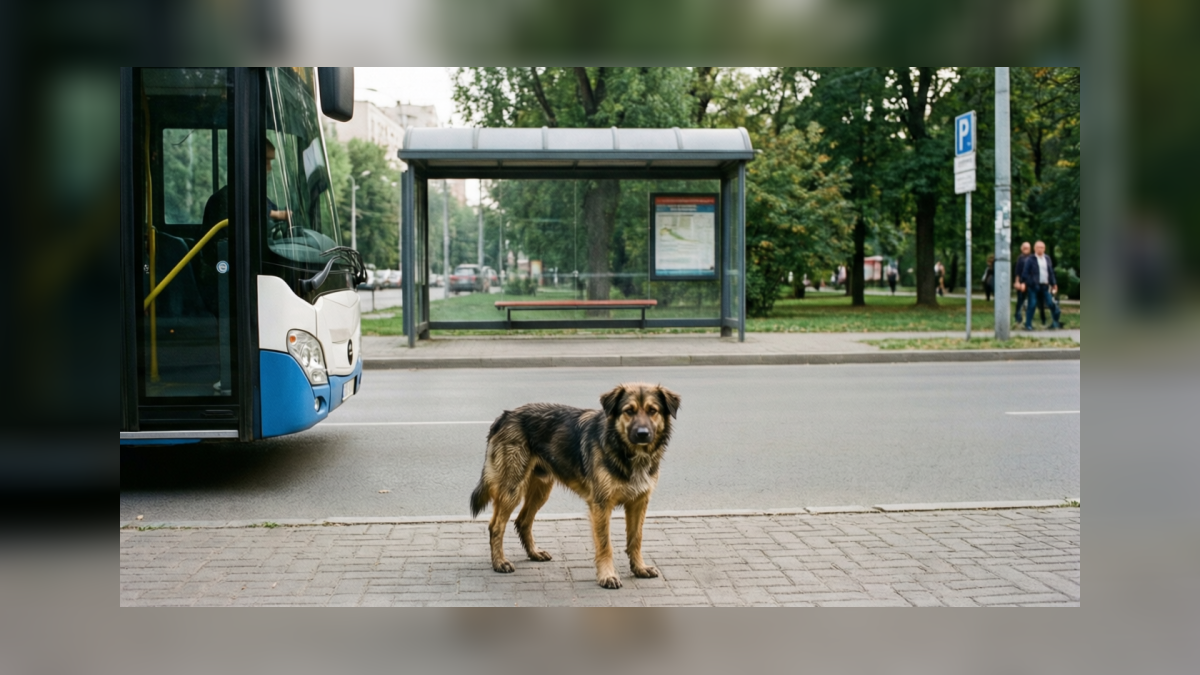
A dog abandoned by its owners during a family move remained in the same place for days, refusing to leave the familiar location despite being hungry and alone.
Rather than searching for food elsewhere or exploring its surroundings, the animal stayed close to the spot where it had been left. Its behaviour became a central feature of the case, highlighting how a dog may respond when suddenly separated from the people it depends on.
The dog’s reluctance to move was not an indication of spite or defiance. Instead, its response reflected the distress and uncertainty it experienced after losing contact with its familiar caregivers.
Fear Made It Difficult for the Dog to Accept Help
When a passerby began offering the dog food, the animal initially refused to accept it or fled whenever the person approached too closely.
The dog also avoided contact with unfamiliar people and sometimes hid beneath parked cars. These reactions were consistent with an animal experiencing significant fear after being left without its usual source of security.
Although people might interpret such behaviour as stubbornness, the dog was responding cautiously to an unfamiliar situation.
The passerby continued leaving food at a distance rather than attempting to force contact. Over time, the dog gradually became more comfortable with the person’s presence, allowing the distance between them to decrease.
It took approximately six weeks of consistent interaction before the animal began lowering its guard.




Dog Attempts to Escape After Moving to a New Home
After eventually accepting a leash, the dog was taken to a new home. However, the change in surroundings was followed by an attempt to escape.
The behaviour occurred after the animal had spent an extended period living outside and remaining alert to its surroundings.
The unfamiliar smells, sounds and environment of its new home represented another significant change. Although the dog had been removed from the streets, it still needed time to adjust to the new setting.
The animal eventually returned to the rescue worker’s home, indicating that it was beginning to become comfortable in the unfamiliar environment.
Rebuilding Trust Required Patience and Consistency
The dog’s experience showed how its response to abandonment continued even after it had been offered food, shelter and a safe place to stay.
Its initial refusal to accept food, avoidance of people and later attempt to escape were signs that it had not yet adjusted to its changed circumstances.
The rescue process involved repeated, low-pressure interactions that allowed the animal to become familiar with the person helping it without being forced into contact.
Over time, the dog became calmer and more secure in its new surroundings. Its progress followed months of consistent care and gradual adjustment.
Understanding the Dog’s Behaviour After Abandonment
The case illustrates how dogs may respond to sudden separation from their owners and the familiar environments on which they rely.
An animal that hides, refuses food or attempts to escape may still be experiencing fear and uncertainty rather than rejecting the person offering help.
The dog’s eventual adjustment came through repeated positive interactions and the opportunity to become comfortable at its own pace.
Its experience highlights the importance of recognising behavioural signs of distress when caring for an abandoned animal and allowing time for trust to develop.

