
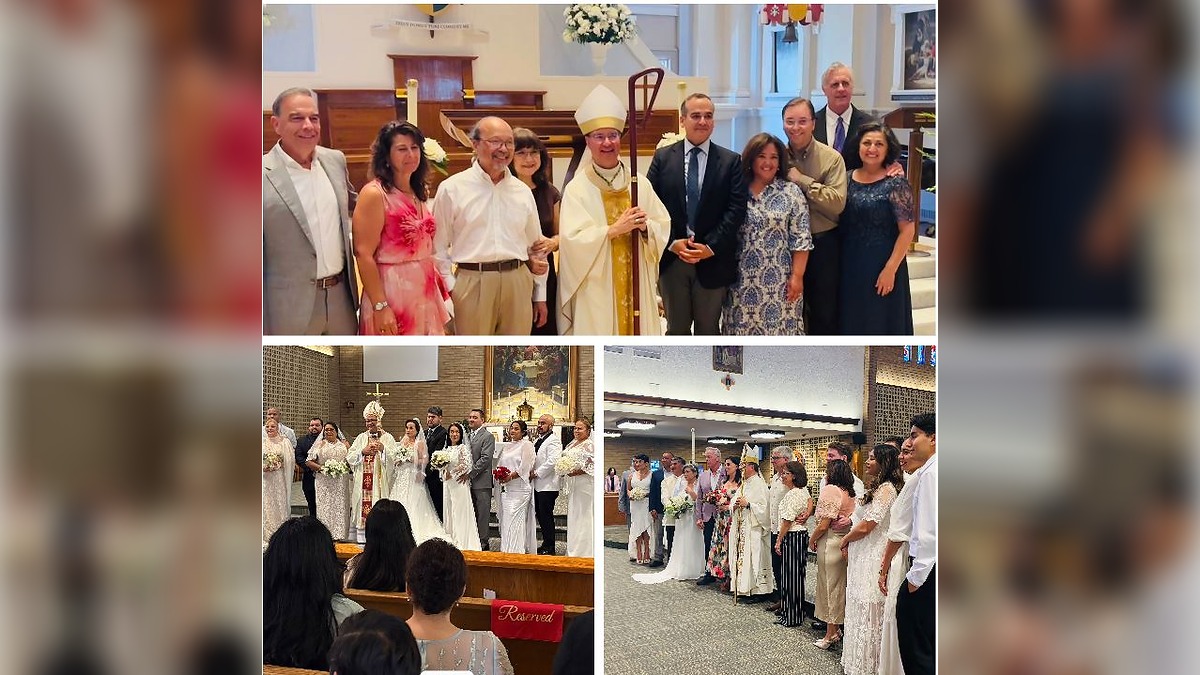
Dozens of couples in California have taken steps to have their civil marriages recognised as sacramental marriages in the Catholic Church through a growing initiative in the Diocese of San Jose.
The programme, launched under the California bishops’ “Radiate Love” campaign, was designed to help couples who were already married civilly enter into the sacrament of matrimony and participate more fully in the sacramental life of the Church.
What began as a modest pilot programme quickly expanded after an unexpectedly large number of couples expressed interest.
A Small Pilot Quickly Became a Major Diocesan Initiative
Jose Soto, director of Adult Spirituality and Family Life for the Diocese of San Jose, said the idea developed after he noticed a recurring situation among families attending Mass.
Some couples would arrive at Sunday Mass with their children but refrain from receiving Communion because of their marital circumstances.
The observation prompted Soto and members of a newly established Radiate Love task force to consider how the Church could accompany such couples rather than leave them without a clear path forward.
Organisers initially expected to work with between 12 and 15 couples. Instead, 102 couples registered after word of the initiative spread through local parishes.
Couples Were Offered Guidance Rather Than a Single Ceremony
The large response required the diocese to expand the programme beyond its original plans.
Convalidation celebrations were held during communal Masses on July 25, Aug. 1 and Sept. 26, with diocesan bishops presiding. Couples who preferred a private celebration were also given that option.
The approach was not limited to the wedding ceremony itself. Participants were offered marriage preparation and pastoral accompaniment intended to help them understand the meaning of sacramental marriage.
Mentor Couples Played a Central Role
The diocese used the Witness to Love marriage preparation programme, pairing couples seeking convalidation with experienced married couples who could accompany them throughout the process.
Among the volunteers were Veronica and Richard Wildanger, who had their own civil marriage convalidated 22 years ago.
Their personal experience gave them a particular connection to couples going through the process.
Veronica said the diocesan initiative felt like an invitation for couples to accept guidance and take the next steps towards placing their marriage within the life of the Church.




One Couple Wanted Their Marriage to Be Lived Before God
For Mireya Aristizábal and Juan David Díaz, the decision to pursue convalidation came from a desire to deepen the spiritual dimension of their marriage.
The couple, originally from Colombia, had married civilly three years after moving to the United States. Aristizábal said she continued to feel a strong desire to live her marriage as a sacrament.
Her husband supported the decision, explaining that he also believed in God and valued the Catholic Church.
The preparation process subsequently became an opportunity for the couple to develop their faith together while establishing connections with their Catholic community.
The Programme Emphasised Sacramental Marriage
Organisers presented convalidation as more than a formal change to a marriage’s status.
Soto and the programme’s mentors emphasised the Catholic understanding of marriage as a sacramental covenant in which spouses make a lifelong commitment before God.
Richard Wildanger explained that the presence of God changes the way spouses understand their responsibilities to one another, including the spiritual responsibility they have toward each other.
For Soto, bringing a civil marriage into sacramental life gives couples an opportunity to place their relationship and family life more deliberately within their faith.
Returning to Communion Was Emotional for Some Couples
For participating couples, one of the most significant moments came when they were able to receive the Eucharist after years of abstaining.
Veronica Wildanger said some couples had spent more than three decades married only civilly before completing the process, making the celebrations particularly emotional.
The communal ceremonies also gave couples the opportunity to experience the sacrament alongside others who had followed a similar journey.
Couples Saw the Group Celebration as a Sign of Church Unity
Aristizábal said celebrating alongside other couples reinforced her understanding of the Church as a community united by faith and marriage.
Rather than viewing the communal ceremonies simply as a practical response to the number of participants, she described the experience as evidence that the Church continues to place importance on marriage and family life.
The celebrations therefore became both personal milestones for individual couples and collective occasions for the wider Catholic community.
The Diocese Says the Door Remains Open
Not every couple who expressed interest was able to complete the process during the initiative.
Soto said some faced challenges involving documentation, limited time or personal concerns that prevented them from moving forward immediately.
His message to those couples was that they should not feel discouraged.
He said the Church remains ready to accompany couples whenever they decide they want to pursue marriage within the Catholic sacramental tradition.
A Programme That Revealed an Unmet Pastoral Need
The response to Radiate Love has demonstrated to organisers that there is significant interest among civilly married Catholic couples in pursuing convalidation.
What started as a plan for a small group ultimately brought 102 couples into the programme, prompting the Diocese of San Jose to organise multiple celebrations.
For the couples who participated, the initiative represented an opportunity to deepen their marriages through Catholic sacramental life while reconnecting their family relationships with their faith.

