
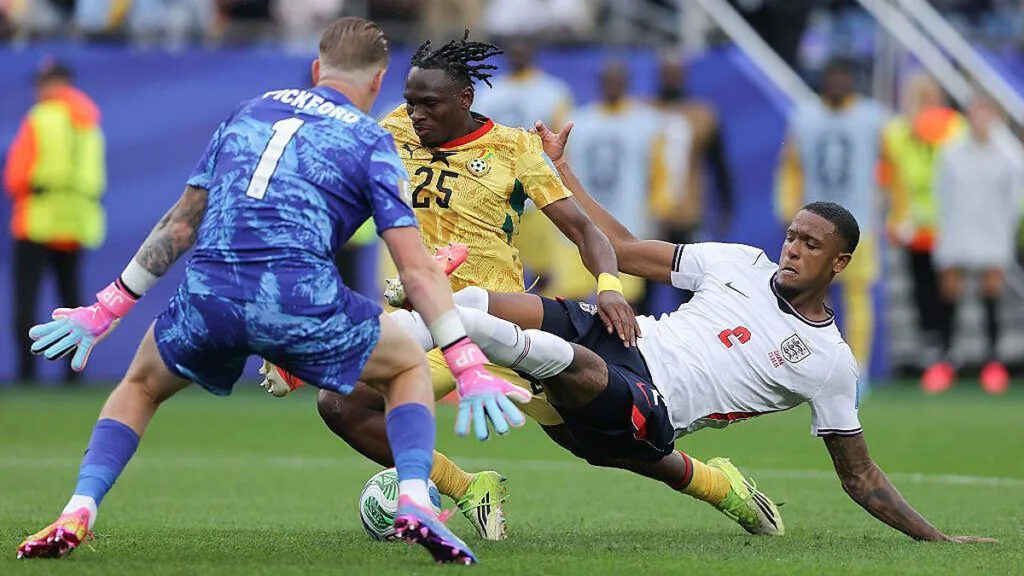
Ghana earned a hard-fought 0-0 draw against England in their World Cup clash, but the result was overshadowed by a controversial refereeing decision that left the African side feeling aggrieved.
While the Black Stars secured a valuable point against one of the tournament favorites, attention quickly shifted to a late incident inside England’s penalty area that Ghana believed should have changed the outcome of the match.
Queiroz Voices Frustration Over VAR Silence
Ghana coach Carlo Queiroz did not hide his disappointment after the final whistle, openly questioning why video assistant referees failed to intervene following a challenge involving Prince Kwabena Adu and England defender Ezri Konsa.
Adu appeared to be brought down as he burst into the penalty area during the closing stages of the contest.
Despite appeals from Ghanaian players, neither the referee nor the VAR team awarded a penalty.
Queiroz responded with a mix of frustration and sarcasm, suggesting that VAR officials may have missed the moment entirely.
The veteran coach argued that the challenge warranted both a penalty and a red card, insisting England benefited from a major slice of luck.
Replays Fuel Debate Over England Escape
Television replays added fuel to the controversy, with footage appearing to show Konsa making contact with Adu rather than the ball.
The incident immediately sparked discussion among analysts and supporters, many of whom believed Ghana had a legitimate case.
For England, the decision provided a significant reprieve as they sought to avoid a potentially costly setback late in the match.




Former England Stars Disagree With Officials
Several former England internationals working as television pundits suggested the challenge could easily have resulted in a penalty.
Wayne Rooney argued that Konsa took a considerable risk with his attempt to win the ball.
According to the former striker, the defender appeared to make contact with the attacker while failing to play the ball cleanly.
Micah Richards echoed that view, noting that England’s desire to push forward in search of a winner may have left them vulnerable defensively.
He felt the referee could just as easily have pointed to the spot under different circumstances.
Why VAR Stayed Out of the Decision
The biggest question after the match centered on why the video assistant referee did not recommend a review.
Unlike some domestic competitions, including the Premier League, FIFA has encouraged officials at this World Cup to maintain a higher threshold before overturning on-field decisions.
The objective has been to allow more physical challenges and reduce the number of interruptions caused by VAR reviews.
This philosophy may explain why the incident did not trigger a formal review despite the widespread debate surrounding it.
Former World Cup Official Believes Review Was Needed
Darren Cann, who served as an assistant referee during the 2010 World Cup final, was among those who felt the decision should have been revisited.
Although admitting he was pleased as an England supporter that no penalty was awarded, Cann maintained that the challenge met the criteria for further examination.
He pointed to Konsa’s lack of contact with the ball, his airborne position, and the collision with the attacker as reasons why VAR should have intervened.
Controversy Lingers Despite Goalless Draw
The final scoreline ensured both teams left the match with a point, but the debate surrounding the penalty appeal is unlikely to disappear anytime soon.
For Ghana, the result showcased defensive resilience and determination against elite opposition.
Yet there remains a lingering feeling that the Black Stars may have missed out on an opportunity to claim a famous World Cup victory had the decisive late challenge been judged differently.
