
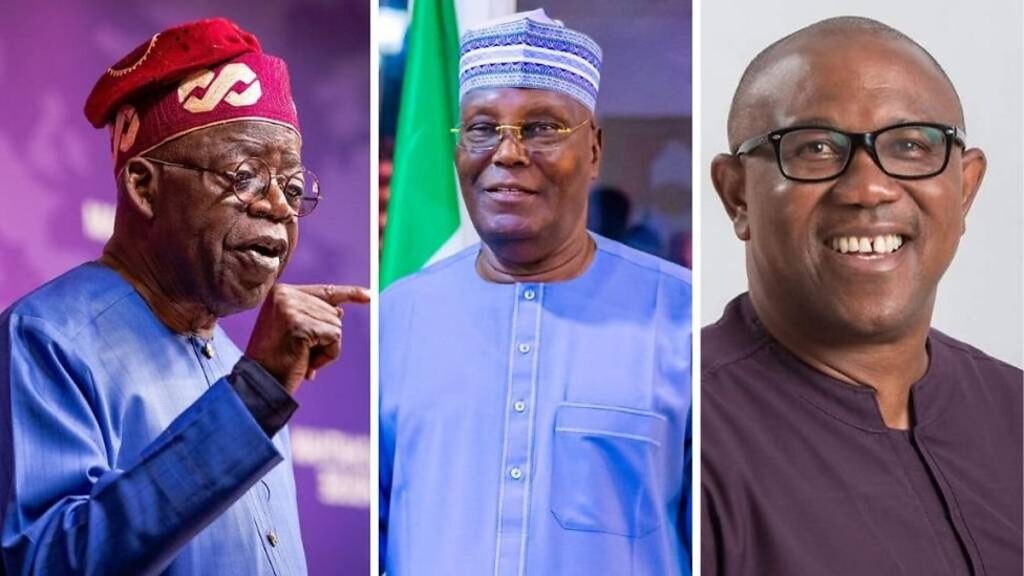
Federal Capital Territory Minister Nyesom Wike has launched a fresh attack on former Vice President Atiku Abubakar, accusing the presidential hopeful of changing his position on fuel subsidy for political reasons.
Speaking in Abuja on Thursday during an inspection of infrastructure projects across the FCT, Wike recalled that Atiku had campaigned in 2023 on a promise to remove fuel subsidy within his first 100 days if elected president.
The minister questioned why Atiku would now advocate a different approach and promise to restore the subsidy.
Wike argued that political leaders should maintain consistent positions on major economic policies rather than alter their views depending on the political climate.
Minister Defends Tinubu’s Subsidy Policy
Wike also used the occasion to defend President Bola Tinubu’s decision to end the fuel subsidy, arguing that the policy has increased the funds available to Nigeria’s three tiers of government.
According to the minister, the Federal Government has explained how the additional revenue generated after subsidy removal has been distributed.
He challenged state and local governments to account for how they have used the increased allocations they received.
Wike said the additional resources have also strengthened governments’ ability to meet salary and pension obligations, claiming that some of the financial pressures that previously made it difficult for governments to pay workers have eased.
Wike Questions How Subsidy Could Return
The FCT minister argued that restoring the subsidy would be difficult to reconcile with changes that have taken place in Nigeria’s petroleum industry.
He pointed specifically to the Petroleum Industry Act and the transformation of the Nigerian National Petroleum Corporation into NNPC Limited.
Wike said the reforms were designed to move the petroleum sector toward commercial operations and greater competition rather than continued government control of fuel prices.
He therefore questioned how a future administration led by Atiku would attempt to restore subsidies in an industry where privately owned refineries and commercially operated petroleum companies now play a larger role.
Dangote Refinery Raises Another Question
Wike specifically questioned whether the government would subsidise petrol produced by the Dangote Refinery if Atiku returned to power.
The minister argued that the issue demonstrated what he considered to be a contradiction in Atiku’s current position.
If subsidy had previously been described as fraudulent or unsustainable, Wike asked, why should a government seek to restore it years later?
He maintained that any politician calling for a return to subsidy should explain precisely how the policy would operate under Nigeria’s transformed petroleum market.
Minister Warns of Old Subsidy Problems
Wike also warned that reversing the current policy direction could recreate some of the economic problems associated with fuel subsidies.
He argued that government-controlled fuel prices could produce regulatory uncertainty and discourage investment in the petroleum sector.
According to the minister, subsidy regimes have historically been associated with smuggling, arbitrage, inefficiencies and opaque government spending.
He further argued that artificially low fuel prices can encourage consumption outside Nigeria’s borders, meaning that government resources intended to benefit Nigerians may effectively support fuel demand elsewhere.
Wike Wants Atiku to Explain the Alternative
Rather than simply criticising subsidy removal, Wike said Atiku should explain how the savings generated by the policy would be handled if he believes the subsidy should remain abolished.


The minister suggested that a stronger argument would involve accepting the policy while proposing how the resulting savings should be invested in infrastructure, social services and other areas that directly benefit Nigerians.
Instead, Wike accused Atiku of attempting to reshape his position to appeal to voters ahead of the 2027 election.
Wike Dismisses Atiku’s Electoral Prospects
The minister went further by rejecting the suggestion that Atiku is currently among the strongest contenders for the presidency in 2027.
Wike insisted that President Tinubu remains the dominant candidate and argued that Nigeria’s opposition parties are not sufficiently united to seriously challenge the ruling All Progressives Congress.
He claimed the opposition was in a stronger position during the 2023 election than it is today.
For Wike, the lack of unity among opposition groups means the political landscape heading into 2027 currently favours the ruling party.
Security Concerns in Abuja
Wike also addressed concerns about security in the Federal Capital Territory, rejecting claims that armed robbery has significantly increased across Abuja.
He acknowledged that isolated criminal incidents occur but said available security reports did not support the suggestion of a widespread increase.
The minister urged the media and the public to exercise caution when discussing security developments, arguing that inaccurate reporting could create unnecessary fear among residents.
Fake Security Officials Raise Concern
While disputing claims of a broad increase in armed robbery, Wike acknowledged that security agencies have been dealing with other criminal activities.
He referred to a case involving an individual allegedly impersonating security personnel and using fake materials to intimidate or harass residents.
According to the minister, the Department of State Services had tracked the suspect.
Wike maintained that acknowledging individual incidents was different from claiming that Abuja was experiencing a general surge in armed robbery.
Infrastructure Projects Show Progress
The minister’s comments came during an inspection of ongoing infrastructure projects across the capital.
Wike said he was satisfied with the progress made on several major projects and expressed confidence that a number of them would be completed before the end of the year.
He described some of the work as significant interventions capable of changing parts of the city’s infrastructure and praised contractors for the progress recorded.
Mpape and Garki Projects Address Urban Challenges
Wike also highlighted construction work around the Mpape bypass and the Garki axis.
According to the minister, the projects have helped reclaim land that had previously been affected by a major gully, while also improving connectivity in areas of the capital.
He said the progress demonstrated that commitments made to residents were being translated into physical projects.
Wike Distances Himself From Area Council Performance
The minister also refused to accept responsibility for complaints about the performance of some FCT Area Council chairmen.
Wike noted that the chairmen were elected directly by residents of their respective councils rather than appointed by him.
He therefore urged residents who were dissatisfied with their council administrations to hold the elected officials accountable.
However, Wike stopped short of saying that every council was performing poorly, acknowledging that some administrations may have areas requiring improvement.
Drawing on his own experience as a former council chairman, he said it would be unfair to conclude that Area Council administrations were doing nothing simply because some councils faced criticism.
Political Fight Over 2027 Intensifies
Wike’s comments bring several major issues together as political attention increasingly turns toward the 2027 presidential election.
His defence of subsidy removal, criticism of Atiku and confidence in Tinubu’s electoral position reflect the increasingly heated debate over Nigeria’s economic direction and the strength of the opposition.
At the same time, his remarks on Abuja’s security and infrastructure show that the FCT administration is seeking to highlight both the government’s development agenda and its response to concerns affecting residents.
What Comes Next
The debate over fuel subsidy is likely to remain a major political issue as parties prepare for the 2027 election.
For Atiku and other opposition figures, the challenge will be to explain how they would manage fuel prices, petroleum-sector reforms and the revenues generated from subsidy changes.
For the Tinubu administration and its supporters, the focus will be on demonstrating that the savings from subsidy removal are producing tangible benefits for Nigerians.
Meanwhile, Wike’s continued criticism of opposition figures suggests that the political contest is already intensifying well before the next presidential campaign reaches its peak.

