
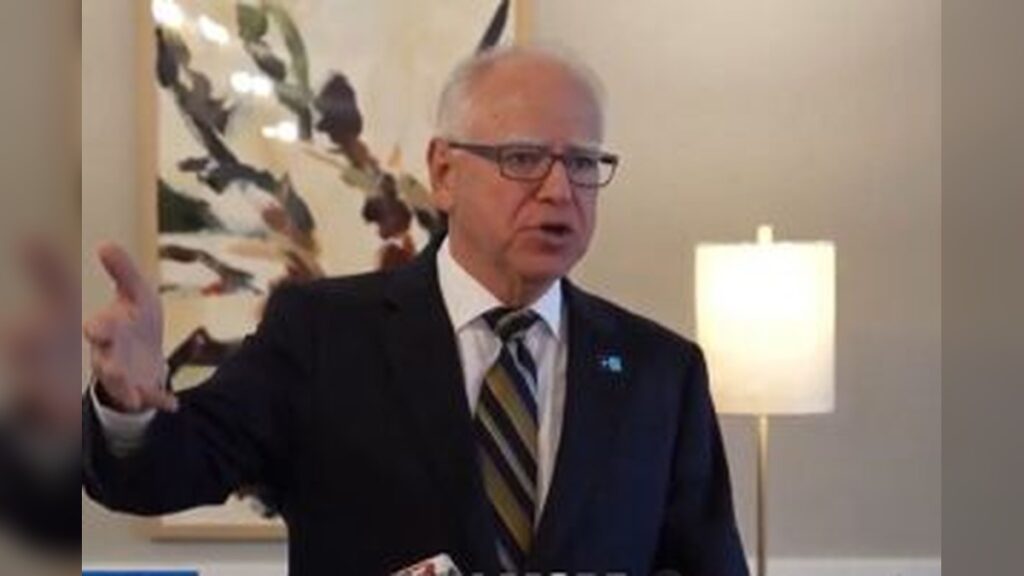
Ukrainian President Volodymyr Zelensky is facing one of the strongest waves of domestic criticism of his presidency after unexpectedly removing Defence Minister Mykhailo Fedorov, a figure widely praised for modernising Ukraine’s military during the war with Russia.
The decision immediately sparked protests in Kyiv and several other cities, where demonstrators—many of them young Ukrainians—gathered carrying banners demanding Fedorov remain in office.
Protesters accused the government of undermining Ukraine’s war effort, chanting slogans such as “Hands off Fedorov” and “Stop sabotaging victory!”
Military Leadership Dispute Comes Into the Open
The controversy quickly deepened after both Zelensky and Fedorov publicly acknowledged long-rumoured disagreements between the Defence Ministry and Ukraine’s military leadership.
Fedorov disclosed that he had personally recommended replacing Commander-in-Chief Oleksandr Syrskyi as well as Chief of the General Staff Andrii Hnatov.
Zelensky confirmed that tensions between the Defence Ministry and the General Staff had become a long-running institutional problem, saying conflicts had existed at multiple levels and that cooperation between Fedorov and Syrskyi often required presidential intervention.
According to Fedorov, he accepted Zelensky’s decision not to replace Syrskyi but found many of the ministry’s reform proposals repeatedly blocked.
Fedorov Accuses Military Command of Blocking Reform
During his farewell remarks, Fedorov argued that Ukraine needed fresh and unconventional strategies to defeat Russia rather than internal divisions.
He criticized Syrskyi for failing to embrace innovative approaches to the conflict, claiming the military command had resisted reforms designed to improve battlefield performance.
Despite the sharp criticism, Fedorov stressed that his disagreement was not directed at Zelensky personally, expressing confidence that the president would ultimately make the right decisions.
He also revealed that Zelensky had invited him to remain as a presidential adviser, but he declined the offer.
Zelensky Names New Interim Defence Chief
Later on Thursday, Zelensky announced Major General Yevhenii Khmara, who currently serves as acting head of Ukraine’s Security Service (SBU), as acting defence minister.
The president praised Khmara’s experience in modern warfare, particularly in technology-driven military operations, describing his expertise as exceptional.
Meanwhile, parliament was expected to consider other candidates for the permanent defence minister position, including Interior Minister Ihor Klymenko. Zelensky clarified that no final nomination had yet been formally submitted.



Wider Government Reshuffle Continues
The defence ministry changes came as part of a broader overhaul of Ukraine’s government.
Lawmakers approved Serhiy Koretsky, formerly the head of the country’s state oil and gas company, as Ukraine’s new prime minister following the resignation of Yuliia Svyrydenko earlier in the week.
The reshuffle marks one of the most significant changes to Ukraine’s wartime leadership structure in recent months.
Soldiers and Civilians Rally Behind Fedorov
Reaction to Fedorov’s removal has extended well beyond political circles.
Several Ukrainian soldiers publicly questioned the decision, with one serviceman describing it as the most damaging mistake of Zelensky’s presidency.
He said many troops had trusted Fedorov’s vision for transforming the armed forces and believed the minister had earned widespread respect within the military.
Demonstrators echoed those sentiments during protests in Kyiv, arguing that Fedorov’s reforms had strengthened troop morale and improved the military’s effectiveness at a critical stage of the war.
Responding to the demonstrations, Zelensky acknowledged the public reaction, saying he understood society’s concerns and was paying close attention to what Ukrainians were saying.
A Reformer Credited With Modernising Ukraine’s Defence
Although Fedorov served as defence minister for only a few months after taking office in January, he quickly built a reputation as one of Ukraine’s leading reformers.
He focused heavily on reducing bureaucracy, tackling corruption and introducing data-driven management throughout the ministry.
Before leading the defence portfolio, he served as minister of digital transformation, where he helped establish Ukraine’s volunteer “IT Army” to carry out cyber operations against Russian targets.
He also spearheaded the successful “Army of Drones” fundraising campaign and introduced technology-based systems that rewarded military units for successfully striking Russian equipment.
Technology Became the Centrepiece of His Strategy
Fedorov’s emphasis on innovation continued throughout his time as defence minister.
His ministry invested heavily in drone warfare, expanded procurement reforms and promoted the use of advanced technology across Ukraine’s armed forces.
He also played a role in efforts to limit Russia’s use of Starlink satellite communications for military purposes, a move that reportedly disrupted Russian frontline operations.
His ministry further contributed to recent Ukrainian attacks targeting Russian-controlled Crimea, where long-range drone operations have become an increasingly important part of Kyiv’s military strategy.
Allies Praise His Legacy as Resignations Follow
Following his dismissal, Fedorov defended his record, promising to continue supporting Ukraine through technological innovation and organisational reform.
Several of his closest advisers praised his leadership, calling him one of the country’s most effective defence ministers.
They argued that bureaucratic resistance had slowed many of his initiatives despite their potential to strengthen Ukraine’s military capabilities.
The fallout also prompted high-profile resignations.
Pavlo Yelizarov, a respected drone unit commander and deputy commander within the Ukrainian Air Force, stepped down in protest, warning that Fedorov’s departure could weaken Ukraine’s defence during one of the most challenging periods of the war.

