
A U.S. Army AH-64 Apache attack helicopter has gone down in waters close to the Strait of Hormuz, triggering an urgent multinational-style rescue effort that saw both crew members pulled from the sea after spending around two hours stranded.
The incident, confirmed by U.S. Central Command, occurred during a routine patrol mission off the coast of Oman, in an area bordering Iranian maritime space.
Officials say the cause of the crash is still unknown, and an investigation is underway.
Both aviators survived and are reported to be in stable condition following their recovery.
Dramatic Recovery at Sea Using Unmanned Naval Technology
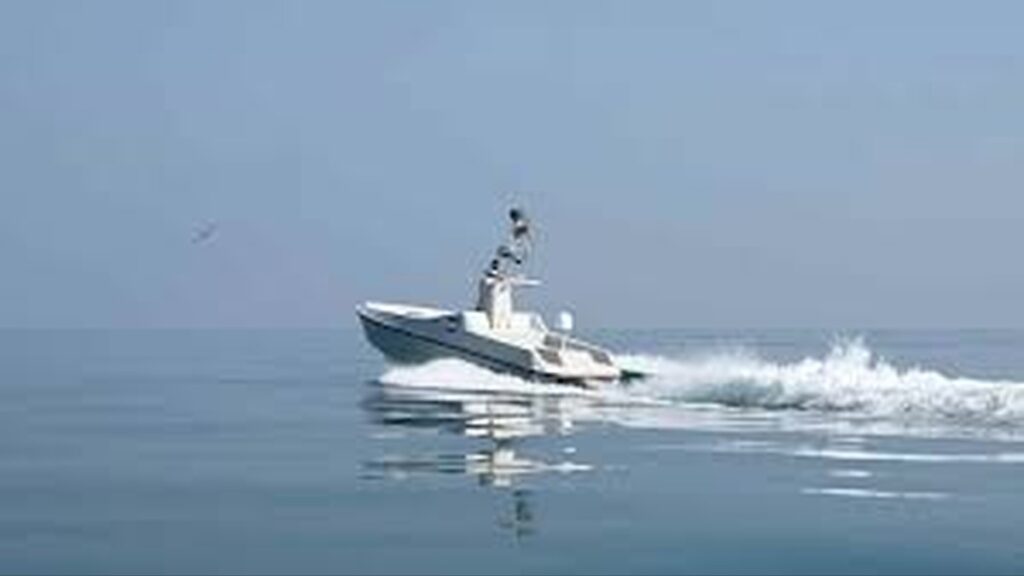
One of the most striking developments in the rescue was the use of advanced unmanned systems. A U.S. Navy drone vessel operating in the region located and assisted in recovering the downed crew, marking what officials described as a groundbreaking moment in military search-and-rescue operations.
The unmanned surface craft worked alongside traditional naval and air assets deployed nearby, forming a coordinated response that ultimately brought the stranded pilots back safely after they had been in the water for roughly two hours.
Military sources have characterized the operation as the first known instance of an American unmanned maritime system directly participating in the rescue of service members during an active mission.
Uncertainty Over Cause as Investigation Continues
Authorities have not yet determined why the Apache went down, and officials have been cautious about speculation.
Early reports suggested multiple possibilities, including the chance of hostile involvement, but military leaders have stressed that no conclusions have been reached.
The crash took place amid heightened alert levels in the region, where U.S. forces have been operating in a complex and volatile security environment.
Despite the tension, officials have not confirmed any direct enemy engagement connected to the incident.
Trump Confirms Pilots Are Safe
Speaking to reporters, President Donald Trump addressed the situation briefly, reassuring that the crew survived without serious harm and that an official report would follow initial assessments.




“Nobody injured. We are going to issue a report tomorrow.
But the pilots are fine,” he said, emphasizing that the situation was under review.
Strategic Waterway at the Center of Global Attention
The crash occurred near the Strait of Hormuz, a narrow but critically important maritime corridor linking the Persian Gulf to the Gulf of Oman.
Roughly one-fifth of global oil shipments pass through the waterway, making it one of the most strategically sensitive chokepoints in the world.
For years, the strait has been a flashpoint in U.S.-Iran tensions, with frequent concerns over shipping security, naval patrols, and the risk of escalation in the region.
Apache Helicopter Operations in a High-Risk Environment
The downed aircraft was an AH-64 Apache, a heavily armed attack helicopter widely regarded as one of the U.S. military’s most capable battlefield platforms.
Designed for high-threat combat zones, it features advanced targeting systems, reinforced armor, and precision weapons such as Hellfire missiles.
Apache units regularly patrol maritime corridors like the Strait of Hormuz to deter drone threats, fast-attack craft, and other potential risks to commercial shipping.
These missions often place crews close to contested or sensitive areas near Iranian-controlled territory.
Rising Regional Tensions Frame the Incident
The crash comes against the backdrop of ongoing friction in the Middle East, where the United States, Israel, and Iran are navigating a fragile and uneasy ceasefire following months of confrontation.
Some reports have pointed to broader military activity in the region, including Iranian claims of downing U.S. surveillance drones and other aircraft losses attributed to both combat and operational accidents.
However, officials have not linked the Apache incident to any confirmed hostile action.
If later verified as a non-combat loss, it would still represent a significant event: potentially the first recorded loss of an AH-64 Apache in the current period of heightened regional conflict.
Expanding Role of U.S. Forces in the Region
In recent months, U.S. Central Command has intensified patrol operations around the Strait of Hormuz, reflecting growing concerns over maritime security and regional escalation risks.
These expanded missions have placed American aircraft and naval units in closer proximity to Iranian-controlled areas, including disputed waters and strategically important islands.
Despite diplomatic efforts to stabilize shipping lanes, military presence in the region remains high.
For now, attention remains focused on the ongoing investigation—and on how a routine patrol turned into one of the most unusual rescue operations involving U.S. military forces in recent years.

