
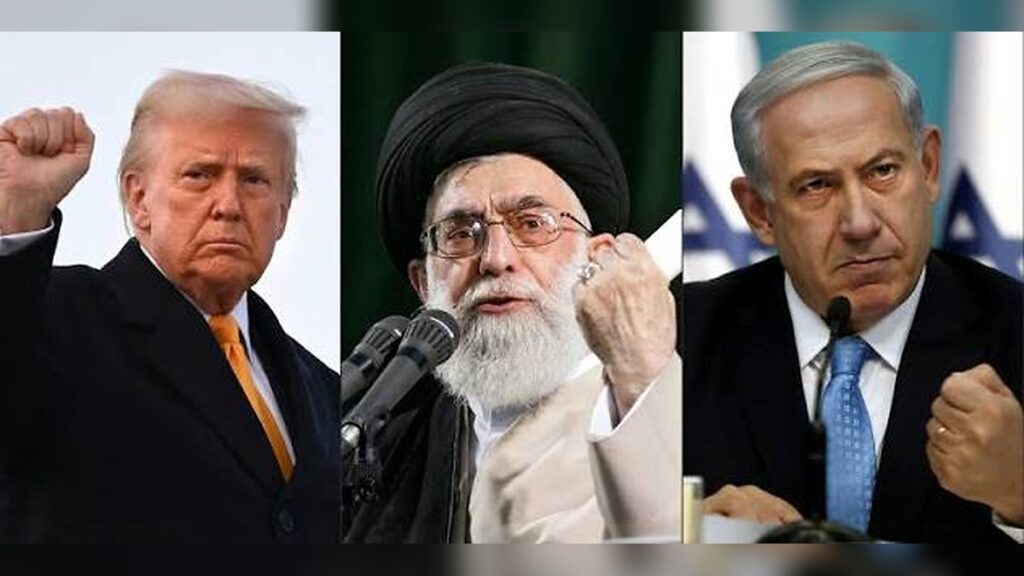
US President Donald Trump is confronting growing challenges in his effort to bring the conflict with Iran to a close after a fresh wave of military exchanges shattered hopes that a fragile ceasefire could hold.
The latest escalation has reignited fears of a prolonged confrontation, leaving the White House balancing military pressure, diplomatic ambitions and domestic political concerns.
While Trump has repeatedly expressed confidence that the conflict can be contained, analysts believe recent developments have significantly narrowed his options.
New Round of Strikes Reignites the Conflict
The fragile pause in fighting collapsed after Iran launched attacks on US military installations in Bahrain and Kuwait.
The strikes came in response to American bombing operations targeting Iranian positions following earlier attacks on commercial tankers passing through the Strait of Hormuz.
Trump responded by declaring that the temporary agreement aimed at ending the fighting was effectively finished.
He subsequently ordered another round of US military strikes, raising concerns that both sides could slide back toward a broader regional conflict despite public assurances that the crisis would soon ease.
The renewed confrontation also rattled global energy markets, with oil prices surging by roughly seven percent as investors worried about disruptions to one of the world’s most important shipping routes.
White House Faces Increasingly Difficult Choices
More than three weeks after Washington and Tehran signed a memorandum intended to launch a peace process, negotiations appear to be losing momentum.
Foreign policy experts argue that every available path now carries significant risks.
Escalating military action could trigger another full-scale war, while a restrained response might encourage Iran to continue challenging American influence in the Gulf.
Trump has continued to insist that military pressure could eventually force Iran back to negotiations over its nuclear programme.
However, many observers question whether Tehran is prepared to accept the sweeping concessions Washington continues to demand.
Former US Middle East negotiator Aaron David Miller summed up the dilemma by saying Trump has effectively cornered himself, arguing that neither military operations nor diplomacy currently appear likely to produce meaningful gains.
Political Pressure Builds at Home
The foreign policy crisis comes at a politically sensitive moment for Trump as he seeks to reassure American voters ahead of the November midterm elections.




The war has already claimed thousands of lives while contributing to economic uncertainty both internationally and inside the United States.
Rising energy costs have added further pressure, creating concerns that prolonged instability could weaken public confidence in the administration.
A Reuters/Ipsos survey conducted on June 23 placed Trump’s approval rating at 34 percent, matching the lowest level recorded during his second presidential term.
The declining numbers have also raised concerns within Republican circles about maintaining control of Congress after the upcoming elections.
Peace Negotiations Remain Stalled
The latest military exchanges have overshadowed diplomatic efforts launched through the June 17 memorandum, which established a 60-day framework for negotiations.
Although the agreement temporarily reduced hostilities, many of the most difficult issues were postponed for future discussions.
Those talks have since produced little measurable progress, and uncertainty continues to surround whether another negotiating session will even take place.
Analysts have remained doubtful from the beginning that such a complicated conflict could be resolved within the relatively short timeline outlined in the agreement.
Iran Continues to Resist Despite Mounting Pressure
Iran has endured severe economic damage throughout the conflict, while its military infrastructure has also suffered significant setbacks.
The country’s position became even more difficult after Washington cancelled a waiver that had allowed Tehran to continue selling oil internationally, removing one of the few economic advantages secured during the temporary agreement.
Despite these setbacks, Iran’s leadership has shown little indication that it intends to soften its negotiating position.
Some experts believe the recent military exchanges were carefully calibrated demonstrations of strength designed to improve each side’s leverage before any future negotiations resume.
Former US intelligence official Jonathan Panikoff suggested that this pattern of controlled confrontation may continue indefinitely, describing the likely future as one of recurring violence rather than either full-scale war or lasting peace.
Competing Visions for the Strait of Hormuz
A major obstacle remains the future control of the Strait of Hormuz, a narrow waterway through which approximately one-fifth of global oil shipments travel.
During the conflict, Iran demonstrated its ability to disrupt maritime traffic through the strategic passage, increasing its importance in any future settlement.
Tehran reportedly believes it should retain an influential role in overseeing activity within the strait and has floated ideas including charging transit fees.
The United States and its Gulf allies, however, insist that commercial shipping must continue without restrictions or additional costs.
Analysts believe these competing visions have become one of the central disputes preventing a broader peace agreement.
Gulf Stability and Election Politics Shape Trump’s Decisions
Regional experts argue that Iran may be calculating that Washington lacks the appetite for another prolonged Middle East war, particularly as Gulf nations push for regional stability and economic normalcy.
Trump also faces pressure from domestic economic realities.
Higher oil prices risk driving up gasoline costs across the United States, an issue that could become politically damaging during the election campaign.
Middle East specialist Laura Blumenfeld noted that Trump has repeatedly emphasized the importance of protecting the American economy, suggesting he understands that an extended conflict could undermine both consumer confidence and his party’s electoral prospects.
For now, the administration finds itself attempting to balance military deterrence, diplomatic negotiations and political survival, with no clear path toward a permanent resolution to one of the region’s most dangerous confrontations.

