
Israeli defense technology startup Skapion has secured $36 million in seed funding as it pushes forward with the development of a next-generation system designed to counter the growing threat of drone swarms.
The company revealed the investment on Thursday, saying the fresh capital will help accelerate product development and expand its engineering workforce.
The funding round was jointly led by UP.Partners and Khosla Ventures, while existing investors Fusion VC, Stratos Ventures, TBD VC, and q Fund also participated.
Modern Battlefields Are Driving Demand for New Air Defense Solutions
The announcement comes as militaries around the world face an increasing challenge from inexpensive unmanned aerial vehicles (UAVs), particularly drones deployed in coordinated swarms.
Once considered a niche battlefield tactic, mass drone attacks have become a major concern in modern conflicts.
The use of low-cost drones first gained widespread attention during the conflict in Syria before becoming a defining feature of the war in Ukraine.
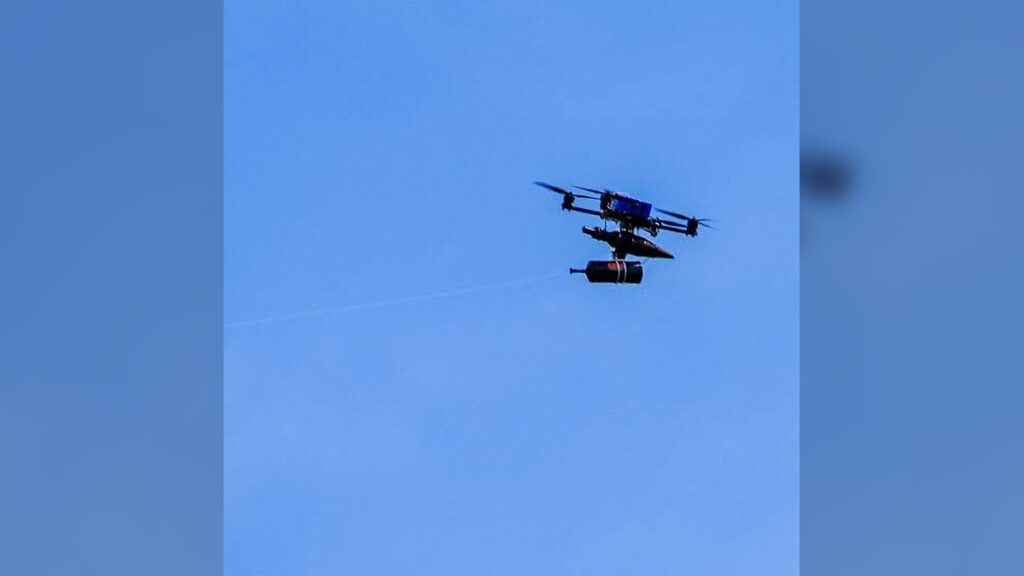
More recently, groups such as Hezbollah have employed fiber-optic drones capable of targeting Israeli military personnel and equipment, highlighting weaknesses in existing air defense systems.
Designed to Stop Swarms Instead of Individual Targets
Unlike conventional counter-drone platforms that primarily focus on intercepting single, high-value aerial threats, Skapion is building a system intended to confront dozens or even hundreds of drones simultaneously.
Its platform combines detection, tracking, engagement, and neutralization into a mobile solution that can continue operating even when communications are disrupted or environmental conditions are difficult.
The company says the technology is designed to protect both military units on the move and fixed strategic sites, including critical infrastructure.
CEO Says Traditional Air Defenses Are No Longer Enough
Skapion co-founder and Chief Executive Officer Ido Bar-On believes the challenge facing armed forces has shifted dramatically.
According to Bar-On, the issue is no longer whether individual drones can be detected or destroyed.
Instead, military planners must determine how to defeat large-scale drone attacks quickly and affordably without exhausting expensive defensive resources.




He said the newly secured funding will enable the company to accelerate development, strengthen its engineering capabilities, and recruit additional specialists needed to tackle what it views as one of the defense sector’s most pressing challenges.
Cheap Drones Are Changing the Economics of Warfare
Skapion argues that the rapid spread of low-cost unmanned aircraft since 2022 has fundamentally altered air defense planning.
Large numbers of inexpensive drones can overwhelm conventional systems, forcing defenders to launch costly interceptor missiles against relatively cheap airborne threats.
This imbalance creates a significant financial and operational disadvantage while exposing vulnerabilities in air defense networks that were never designed for simultaneous mass attacks.
The company believes addressing this imbalance requires an entirely different defensive approach rather than simply adapting older technologies.
Existing Counter-Drone Systems Face New Challenges
Israel’s defense industry has introduced several counter-UAV platforms in response to growing threats along its northern border, where troops frequently encounter first-person-view (FPV) and fiber-optic drones.
However, Skapion maintains that many existing systems struggle when faced with coordinated swarms launched in high numbers.
The company says these attacks can overwhelm traditional defenses, allowing multiple drones to penetrate protected areas.
Investors Compare the Technology to a New Generation of Missile Defense
UP.Partners co-founder and managing partner Ben Marcus described drone swarms as the next major evolution in aerial warfare.
He said systems like Iron Dome transformed Israel’s ability to defend against rockets and missiles, while Skapion aims to deliver a similar shift in protection against coordinated drone attacks.
In his view, defense technologies must evolve as adversaries increasingly rely on large numbers of inexpensive unmanned aircraft instead of fewer high-cost weapons.
Leadership Team Brings Extensive Defense Experience
Skapion’s founding team includes veterans from Israel’s defense establishment and aerospace sector.
Among them is co-founder and founding architect Brigadier General (Res.) Pini Yungman, a former senior executive responsible for air and missile defense programs at Rafael.
He previously played key roles in projects such as David’s Sling and Iron Dome, two of Israel’s most prominent missile defense systems.
CEO Ido Bar-On previously oversaw international defense and government operations at XTEND and also served as a reserve lieutenant colonel in the Israel Defense Forces’ special operations community.
The company’s leadership also includes Chief Technology Officer Gal Goren, engineering entrepreneur Zafrir Yoeli, and defense industry veteran Yaron Karp, bringing expertise across robotics, advanced engineering, and autonomous systems.
Expansion Plans Focus on Israel, the United States and Allied Markets
Founded in late 2025, Skapion has already assembled a workforce of several dozen employees specializing in engineering, robotics, aerospace, autonomy, and defense technologies.
The company said the newly raised capital will fund additional hiring, engineering development, government testing programs, and partnerships across Israel, the United States, and other allied nations.
Skapion operates from its headquarters in Washington, D.C., while maintaining its research and development center in Ramat Gan, Israel, where much of its technological innovation is being carried out.

