
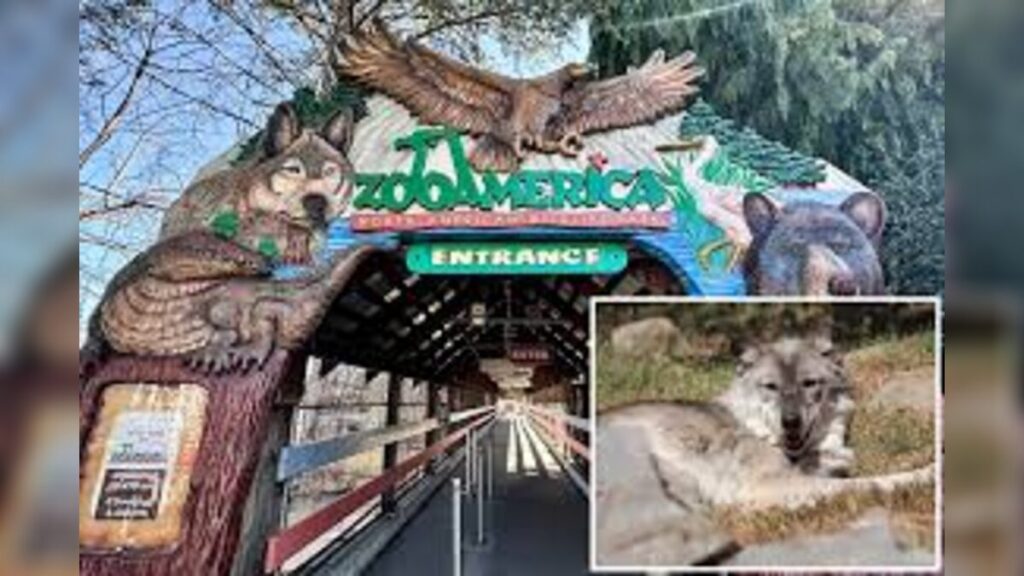
A day of family fun at Hersheypark took a terrifying turn when a 17-month-old toddler ended up with their hand caught by a wolf.
The incident occurred Saturday in a restricted area near the wolf exhibit, according to the Derry Township Police Department.
Authorities said the child had slipped through a small opening in a wooden barrier while their parents were distracted by their cellphones.
How the Incident Happened
Law enforcement reported that the toddler reached through the metal fencing, prompting one of the wolves to grab the child’s hand.
Police emphasized that it was an instinctive reaction by the animal rather than an aggressive attack.
Bystanders rushed to the scene and successfully freed the child before serious injury could occur.
The toddler’s parents, Carrie B. Sortor, 43, and Stephen J. B. Wilson, 61, from Lititz, had reportedly walked 25–30 feet away to a nearby bench.
Both were charged with misdemeanor endangering the welfare of children, a decision made in consultation with the Dauphin County District Attorney’s Office.
ZooAmerica’s Response
Hersheypark houses the ZooAmerica North American Wildlife Park, an 11-acre zoo with more than 200 animals.
The zoo confirmed that the wolf made contact with the child’s hand and reassured the public that the behavior was consistent with natural animal instincts.




Officials stressed that the toddler never entered the wolf’s enclosure.
ZooAmerica emphasized that the safety of visitors is a top priority and reminded families to supervise children closely and remain within designated viewing areas.
Multiple protective layers, clear signage, and barriers are in place to prevent incidents, but the zoo noted that gray wolves can be especially hard to see due to their camouflage.
Details About the Wolves
The zoo’s gray wolf pack consists of one male, Twister (born 2015), and two sisters, Hazel and Freya (born 2019).
Gray wolves are carnivorous and typically feed on elk, deer, bison, moose, caribou, and occasionally smaller animals such as beavers and rabbits.
Their camouflaged coats make them difficult for visitors to notice, increasing the need for vigilance around the exhibit.
Impact and Consequences
The immediate impact involved minor injuries to the toddler, emotional distress for the family and onlookers, and legal consequences for the parents.
The case highlights broader concerns about child safety in animal exhibits and the risks of distraction in public spaces.
For Hersheypark, the incident underscores the ongoing challenge of balancing accessibility to wildlife with strict safety protocols.
Failure to supervise children could result in further legal and reputational consequences for visitors and the park alike.
What’s Next
Authorities will likely continue monitoring the situation, ensuring parents understand responsibilities when visiting animal exhibits.
ZooAmerica may revisit its barriers and signage to prevent similar incidents.
Families may face stricter guidelines on supervision, and there could be wider public education campaigns on staying safe near large carnivores in zoos.
Summary
A toddler at Hersheypark reached into a restricted wolf exhibit, leading to minor injuries when a wolf instinctively grabbed their hand.
Quick action by bystanders prevented serious harm.
The toddler’s parents were charged with misdemeanor child endangerment, and ZooAmerica reinforced its safety policies while emphasizing natural animal behavior.
Bulleted Takeaways
- 17-month-old toddler injured after reaching through fencing at Hersheypark wolf exhibit
- Parents were distracted by phones and charged with misdemeanor endangering the welfare of children
- Wolf’s action was instinctive, not aggressive, and child never entered the enclosure
- Hersheypark’s ZooAmerica has three camouflaged gray wolves, making close supervision crucial
- Incident highlights the importance of supervising children around wildlife and adhering to designated viewing areas
- Authorities and the zoo may revisit safety measures to prevent future incidents
- Child’s injuries were minor, but the case raises awareness of risks in public animal exhibits

