
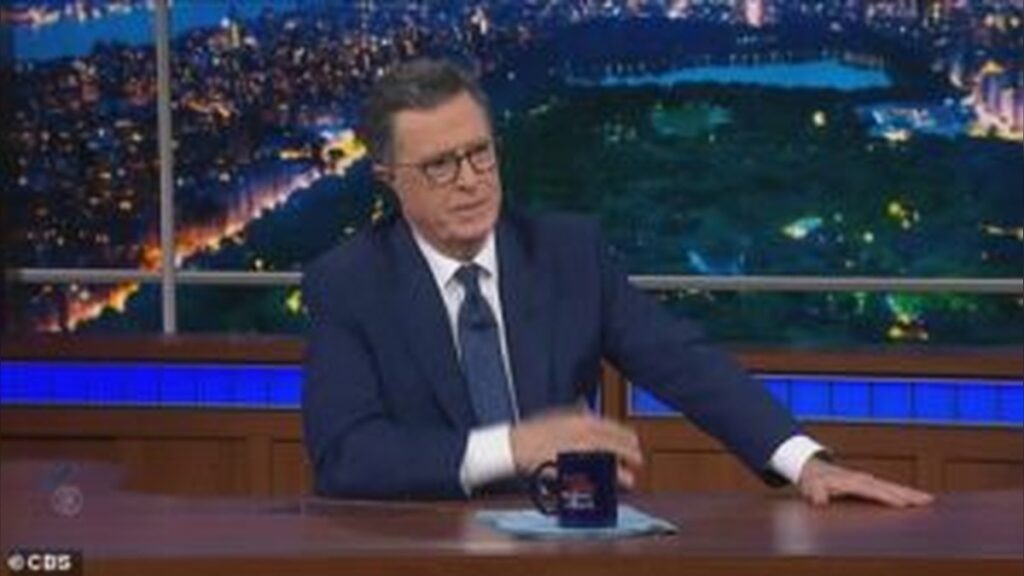
Late-night television in the U.S. hit a turning point as Stephen Colbert wrapped up his long-running stint on The Late Show.
After nearly 11 years behind the desk, his final episode wasn’t just a goodbye—it turned into a full-blown television moment people will be talking about for a while.
The atmosphere inside the Ed Sullivan Theatre in New York felt different from the start.
There was laughter, nostalgia, and a sense that something historic was about to happen, even before the credits rolled.
A Surprise That Stopped the Show: Paul McCartney Walks In
Midway through the final broadcast, Colbert teased what looked like a chaotic lineup of last-minute guests, including a playful bit about a fictional “Pope Leo” refusing to leave his dressing room.
But the real shock came when music legend Paul McCartney casually stepped onto the stage.
The audience erupted instantly. McCartney’s entrance wasn’t random either—it tied directly back to the building’s deep history with The Beatles.
The Ed Sullivan Theatre is the same venue where the band’s first major U.S. television appearance took place in 1964, an event that helped spark “Beatlemania” after more than 73 million viewers tuned in at the time.
Colbert called McCartney his “perfect final guest,” and the two shared a warm embrace that felt more like old friends reconnecting than a scripted TV moment.
The Beatles Connection That Made the Moment Bigger
McCartney didn’t just show up for nostalgia. He brought a framed, colorized photo of The Beatles’ original Ed Sullivan Show performance—signed with a personal note for Colbert.
The studio audience erupted again when the gift was revealed.
The Beatles—John Lennon, George Harrison, Ringo Starr, and McCartney—first performed live in the U.S. on that very stage in February 1964.
They returned multiple times over the years, turning the venue into a symbolic landmark of pop culture history.
McCartney reflected on those early days, recalling how young and slightly overwhelmed they were, performing five songs in one night including I Want To Hold Your Hand and She Loves You.




Despite the nerves, he said the band felt confident and energized by the response.
A Musical Farewell That Closed the Curtain
As the final act of the night, McCartney picked up a guitar and performed Hello, Goodbye, turning the studio into a live concert.
Colbert, visibly emotional, joined in along with the house band and special guests including Elvis Costello and Jon Batiste.
It wasn’t polished in a perfect TV way—it felt loose, loud, and real.
The audience stood, sang, and clapped as the final minutes of the show played out like a shared memory rather than a broadcast.
That closing performance marked the end of an era not just for Colbert, but for modern late-night television itself.
Why the Show Ended and What Led to It
Colbert originally announced earlier that Paramount and CBS would not renew his contract, a decision the network described as financial.
However, the timing sparked wider debate, especially given Colbert’s public criticism of corporate and political decisions involving media ownership and regulatory pressure.
He had taken over the show in 2015 after the retirement of David Letterman, who originally launched the program in 1993.
Under Colbert, the show became more politically sharp while still keeping its comedic identity intact.
In its final week, other late-night hosts like Jimmy Kimmel and Jimmy Fallon paused new episodes in solidarity, airing reruns instead.
Impact and Consequences
The ending of The Late Show under Colbert signals more than just a host change—it highlights the shrinking space for traditional late-night formats in a changing media landscape.
For CBS and Paramount, the decision reflects increasing pressure on legacy television networks facing rising production costs and declining linear TV audiences.
For viewers, it marks the loss of one of the few remaining shows that blended political commentary, celebrity culture, and live musical performance in a single nightly format.
For late-night TV overall, Colbert’s exit raises a bigger question: whether the format can survive in its current form or will need to evolve into something more digital-first and fragmented.
What’s Next?
Colbert is expected to step away from daily hosting duties, but not from entertainment entirely.
Reports suggest he will host a private “Fired and Festive” wrap party in New York, attended by industry figures and celebrities.
Meanwhile, CBS is expected to reassess how it fills the late-night slot, potentially leaning toward lower-cost programming or restructured formats that fit streaming-era viewing habits.
The broader industry will be watching closely.
If Colbert’s departure leads to ratings shifts or audience migration, it could influence how other networks handle their own late-night franchises.
Summary
Stephen Colbert’s final Late Show episode blended comedy, nostalgia, and music into a farewell that doubled as television history.
The surprise appearance of Paul McCartney, combined with a Beatles-connected venue and a live performance, turned the end of the show into a cultural event rather than a simple send-off.
Bulleted Takeaways
- Stephen Colbert ended his nearly 11-year run on The Late Show
- Paul McCartney surprised the audience as the final guest
- The Ed Sullivan Theatre connects directly to The Beatles’ historic 1964 U.S. debut
- McCartney performed Hello, Goodbye during the emotional finale
- The Beatles’ original lineup helped spark “Beatlemania” after their U.S. TV debut
- CBS and Paramount chose not to renew Colbert’s contract, citing financial reasons
- Late-night competitors aired reruns in solidarity during the finale night
- The end of the show raises concerns about the future of traditional late-night TV
- Colbert will host a private wrap party titled “Fired and Festive”

