
Ukraine has reported one of the largest waves of Russian drone attacks in recent months, with 269 drones launched overnight and during the day, targeting energy facilities, railway networks and other critical infrastructure across the country.
The attacks coincided with concerns over disruptions affecting Starlink satellite communications, which Ukrainian forces rely on for coordinating some of their drone interception operations.
As the aerial bombardment continued, Ukraine announced that Britain had agreed to accelerate deliveries of air defence systems designed to counter increasingly sophisticated Russian drones, including jet-powered Shahed-type aircraft.
The announcement followed high-level discussions in London, where Ukrainian officials outlined the scale of the attacks and the urgent need to strengthen the country’s air defence capabilities.
Russian Forces Launch 124 Drones Overnight and Another 145 During the Day
Russian forces launched 124 drones during the night, followed by another 145 throughout the day, according to figures released by the Ukrainian presidency.
The combined total of 269 drones represented an exceptionally large aerial assault, with Ukrainian officials describing the operation as one of the biggest attacks in terms of scale.
At the time of the latest update, more than 40 Shahed-type drones were reportedly still operating in Ukrainian airspace, indicating that the threat had not ended.
Ukraine’s air defence forces intercepted a significant proportion of the incoming drones, although some managed to reach their intended targets.
The government did not immediately provide a complete breakdown of the number intercepted, the number that struck targets or the extent of damage across affected regions.
Energy Infrastructure, Railway Facilities and Logistics Networks Targeted
The attacks were directed at several categories of critical infrastructure, including electricity facilities, logistics installations and railway networks.
These sectors play important roles in maintaining civilian services and supporting transportation across Ukraine.
Damage to electricity infrastructure can affect power generation and distribution, while attacks on railway facilities may disrupt passenger services, freight movement and essential supply routes.
Ukrainian authorities confirmed that some drones had penetrated the country’s defences and struck targets, despite the interception of many others.
However, detailed information about the locations of individual strikes, infrastructure damage and possible casualties was not included in the initial statement.
The latest bombardment adds to concerns about the continuing vulnerability of essential services during sustained aerial attacks.
Ukraine Raises Concerns That Russia Is Exploiting Starlink Communication Problems
A significant concern emerging from the latest attacks involves disruptions to Starlink satellite communications in Ukraine.
Ukrainian officials believe Russian forces may be attempting to exploit operational difficulties affecting the system, which supports communications used in some Ukrainian drone interception operations.




Interceptor drones have become an important component of Ukraine’s response to Russian unmanned aerial attacks.
Their effectiveness can depend on reliable communication links for coordination, control and the transmission of operational information.
Disruptions to those connections could complicate interception efforts, particularly during large-scale attacks involving hundreds of incoming drones.
Ukraine has suggested that the timing and intensity of the latest bombardment may reflect an attempt by Moscow to take advantage of these difficulties.
However, the allegation that Russia deliberately timed its attacks around Starlink disruptions has not been independently established.
Britain Agrees to Accelerate Air Defence Supplies Against Jet-Powered Shahed Drones
Britain has agreed to speed up the delivery of air defence systems intended to help Ukraine counter jet-powered Shahed-type drones, according to the Ukrainian government.
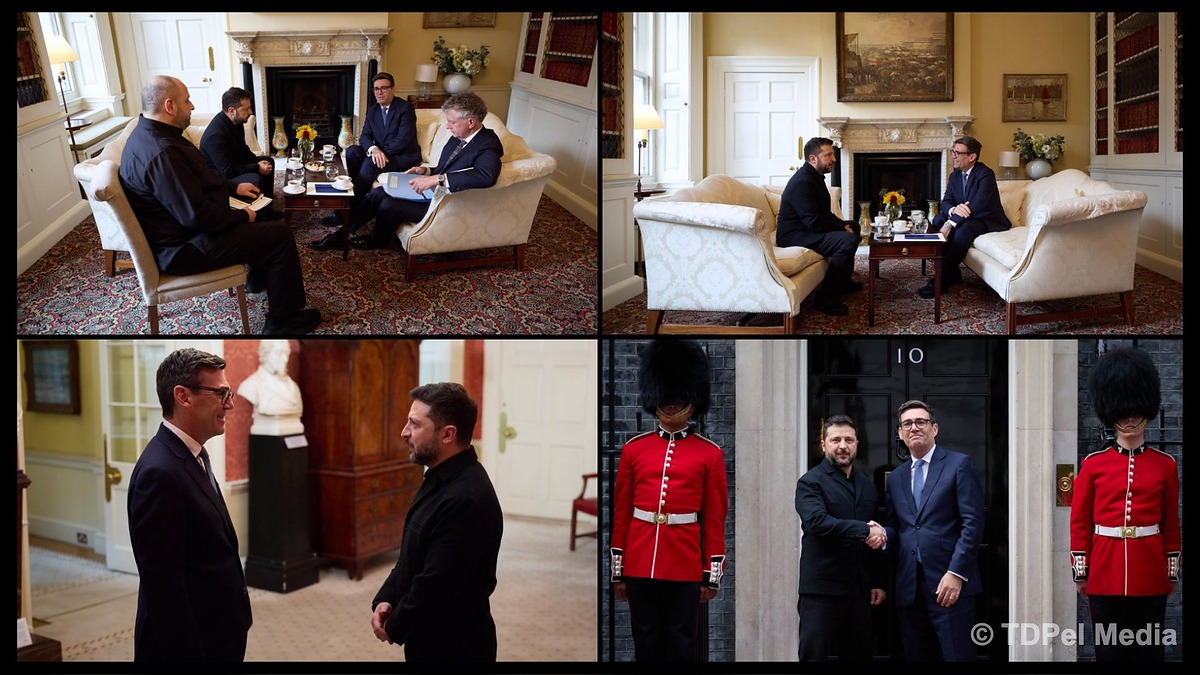
The decision was announced following discussions in London between Ukrainian President Volodymyr Zelenskyy and British Prime Minister Andy Burnham, as identified in the Ukrainian statement.
The talks focused on the continuing Russian attacks, Ukraine’s defensive requirements and the importance of maintaining international military assistance.
The proposed acceleration of British supplies is intended to strengthen Ukraine’s ability to respond to increasingly demanding aerial threats.
Jet-powered drones can present additional challenges for defensive systems because of their speed and flight characteristics.
The Ukrainian statement did not specify the models or quantities of the British systems involved, their financial value or the revised delivery schedule.
Nevertheless, Kyiv described the decision as timely assistance during a period of heightened aerial attacks.
British Government Confirms Expanded Military Support During London Talks
The British government confirmed the meeting at Downing Street on October 14, stating that both leaders discussed Russia’s attacks on civilian and energy infrastructure and the need to improve Ukraine’s protection against jet-powered drones.
The discussions included a new package of British Lightweight Multirole Missiles, as well as opportunities to accelerate defensive assistance before winter.
Britain also pledged to continue developing military solutions for Ukraine, including adapting British equipment for use with defence systems supplied by other countries.
The talks reinforced London’s commitment to supporting Ukraine’s military capabilities while pursuing additional diplomatic measures against Russia.
Starlink Restrictions Add to Ukraine’s Air Defence Challenges
Reports of limitations affecting Ukrainian military access to Starlink have increased concerns about the reliability of communications used in drone operations.
The Associated Press reported that restrictions had disrupted Ukrainian drone missions, while other reporting indicated that some terminals experienced limitations affecting their operational effectiveness.
The difficulties have emerged as Ukraine faces sustained Russian aerial attacks, creating additional pressure on its defensive systems.
Although Ukrainian officials suspect Russia is exploiting the situation, the available information does not independently establish that Moscow coordinated its attacks with the communications disruptions.
Britain and Ukraine Seek Stronger Security Cooperation as Russian Attacks Continue
The latest developments highlight the growing importance of cooperation between Britain and Ukraine as Russian forces continue targeting critical infrastructure.
London has maintained that supporting Ukraine’s defence remains important for European security, while Kyiv continues seeking additional interceptor missiles, communications support and other equipment.
The British government has also indicated that it will pursue further international cooperation to secure defensive supplies for Ukraine.
The immediate priority remains strengthening the country’s ability to intercept incoming drones, particularly newer jet-powered variants that present additional challenges.
With more than 40 Shahed-type drones reportedly still airborne at the time of Ukraine’s statement, the latest attacks underline the urgency behind the decision to accelerate British assistance.
The drone launch figures and assessments of Russian intentions were provided by Ukrainian officials. The British commitment to additional defensive support was separately confirmed by the UK government.
