
Unconfirmed reports from Israeli information outlets say that Major General Amir Hatami, identified as Iran’s commander-in-chief of the army, was killed during the large-scale US and Israeli strikes launched early Saturday, February 28.
So far, there has been no official confirmation from Tehran regarding his death. Iranian authorities have acknowledged that civilians were injured in the attacks but have not provided figures or detailed information about the severity of those injuries.
Iranian President Masoud Pezeshkian, according to initial reports, was not harmed during the assault.
Explosions Rock Tehran and Other Cities
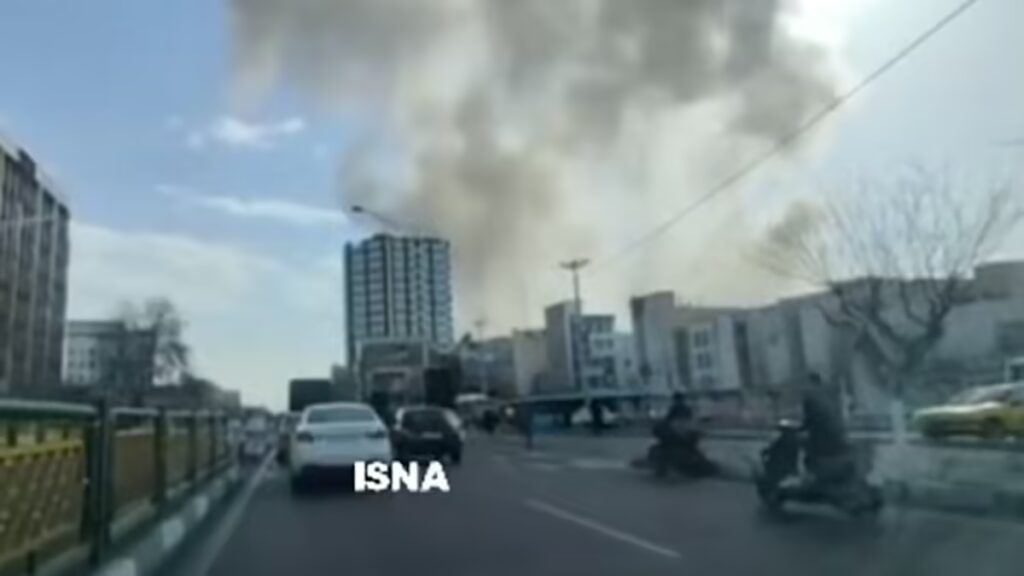
The coordinated operation began around 8:00 a.m. local time, with explosions reported across Tehran and in several other major cities. Early accounts suggest that at least 30 targets were struck.
The strikes mark one of the most significant escalations in tensions between Iran, the United States, and Israel in recent years. Officials on both sides expect the military campaign to continue for several days.
Iran Signals No “Red Lines”
In the immediate aftermath of the attacks, an unnamed senior Iranian official told Al Jazeera that Iran no longer recognizes any “red lines.” The statement signals a potentially more aggressive posture from Tehran, raising concerns about further escalation.
Iran has already responded by launching missiles toward Israel. Air raid sirens were activated in Israeli cities, and air defense systems intercepted incoming threats.
Trump Defends Operation and Issues Warning
US President Donald Trump addressed the nation in an eight-minute speech, stating that Iran’s refusal to abandon its nuclear ambitions left Washington with no choice but to act.
He described Iran as the world’s leading sponsor of terrorism and warned that the United States would destroy Iranian missile capabilities and dismantle its missile industry.
Trump also acknowledged that American casualties were possible, calling such losses an unfortunate reality of war.


In a direct message to Iranian military personnel, he urged them to lay down their arms, promising immunity. He also addressed Iranian civilians, encouraging them to prepare to “take” control of their government once operations conclude.
Netanyahu Frames Operation as Strategic Turning Point
Israeli Prime Minister Benjamin Netanyahu said the joint campaign had created the conditions for the Iranian people to shape their own future.
Israel has named its campaign Operation “Lion’s Roar,” while the United States refers to its involvement as Operation “Epic Fury.”
Reza Pahlavi Backs the Campaign
Reza Pahlavi, the son of Iran’s former shah, publicly supported the strikes, calling them a “humanitarian intervention.”
He emphasized that the operation targets the Islamic Republic’s leadership and security apparatus, not the Iranian population. Pahlavi urged civilians to prepare for mobilization while advising them to remain indoors for safety.
Fears of Oil Disruption in the Persian Gulf
Beyond the battlefield, experts are warning about serious economic fallout. Industry analyst Leonid Khazanov suggested that continued hostilities could halt shipping through the Persian Gulf.
If maritime traffic is suspended, oil exports from the Middle East could be temporarily cut off, potentially triggering volatility in global energy markets.
Impact and Consequences
The immediate impact includes civilian injuries, missile exchanges, and the closure of airspace in affected areas. The reported death of a senior Iranian military figure, if confirmed, would represent a significant blow to Iran’s military leadership.
Strategically, the confrontation risks spiraling into a broader regional conflict. Missile launches toward Israel and explosions heard in neighboring Gulf states suggest that the crisis may not remain confined to Iranian territory.
Economically, any disruption to oil shipments through the Persian Gulf could have global repercussions, affecting energy prices and international markets.
What’s Next?
Officials expect the strikes to continue for several days. Iran has signaled the possibility of a “crushing retaliation,” while US and Israeli leaders have made clear they intend to sustain operations until their stated objectives are achieved.
The coming days will likely determine whether the conflict remains limited to targeted strikes or escalates into a wider regional war involving additional actors.
Summary
A sweeping US and Israeli military operation against Iran has triggered explosions across multiple cities, missile retaliation from Tehran, and mounting fears of regional escalation.
Reports claim a top Iranian commander was killed, though this remains unconfirmed.
Leaders in Washington and Jerusalem have framed the campaign as necessary to prevent Iran from advancing its nuclear ambitions, while Tehran has warned that it recognizes no further “red lines.”
Bulleted Takeaways
- Israeli sources report that Iranian army chief Amir Hatami was killed, but no official confirmation has been issued.
- Explosions struck Tehran and other cities, with at least 30 targets reportedly hit.
- Iran responded by launching missiles toward Israel, prompting air defense interceptions.
- President Donald Trump defended the operation and warned of further military action.
- Prime Minister Benjamin Netanyahu said the campaign could empower the Iranian people.
- Reza Pahlavi described the strikes as a humanitarian intervention targeting the regime.
- Analysts warn that oil exports through the Persian Gulf could be disrupted if fighting continues.
- Officials on both sides expect the military operation to last several days.
