
Trump Announces Sweeping Strikes on Iran.
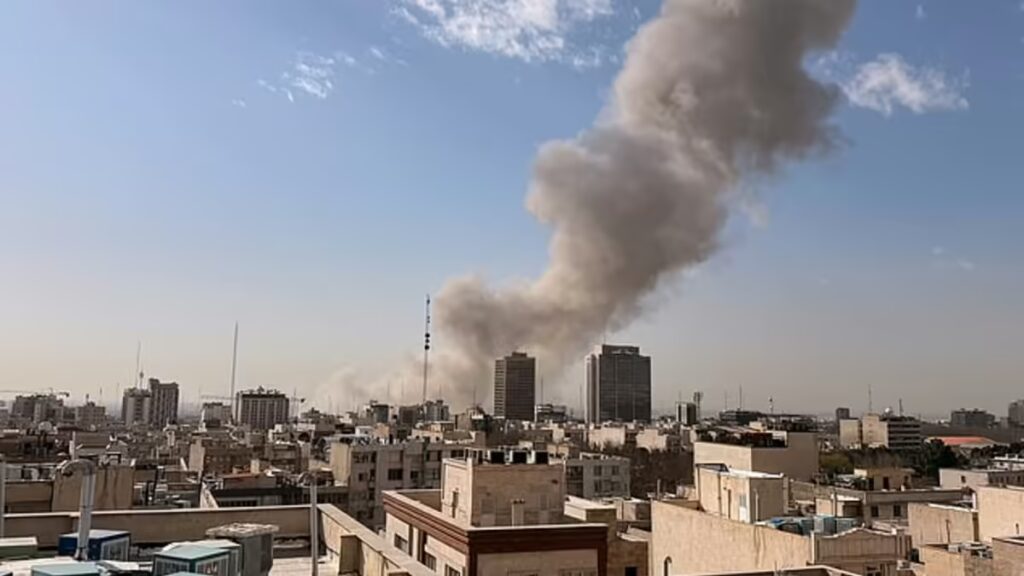
In a dramatic late-night address, Donald Trump confirmed that American forces, alongside Israel, have launched extensive military operations against Iran.
Speaking in an eight-minute video posted online, the president accused Iran’s leadership of nearly five decades of violence and declared that the United States would no longer tolerate what he described as “mass terror.”
The strikes mark a sharp escalation after weeks of rising tension over Iran’s nuclear ambitions and regional activity.
“Major Combat Operations” Underway
Trump said US forces had begun what he called “major combat operations,” targeting Iran’s military infrastructure, missile capabilities and naval assets.
He vowed to dismantle what he described as the regime’s weapons industry and warned Iranian security forces to lay down their arms or face deadly consequences.
According to the president, the goal is clear: prevent Iran from ever acquiring a nuclear weapon and neutralize threats to US troops and allies in the Middle East and beyond.
A Message to Tehran and the Iranian People
The president directed sharp criticism at Iran’s rulers, blaming them for historic attacks on American forces and for backing militant groups across the region.
He referenced past incidents including the 1979 US embassy hostage crisis, the 1983 Beirut barracks bombing and more recent attacks on US personnel.
But his remarks were not only aimed at the leadership. Trump also addressed the Iranian public directly, urging citizens to remain indoors during the strikes and suggesting that a political turning point could follow the military campaign.
He framed the intervention as an opportunity for change, calling it a potential “hour of freedom” for the Iranian people.
Israel Backs the Offensive
Israel confirmed its participation in the operation, which it has named “Lion’s Roar.” Prime Minister Benjamin Netanyahu said the joint mission was designed to eliminate what he described as an existential nuclear threat.
Netanyahu called on Iranians from all ethnic and social backgrounds to rise against their government, arguing that the current regime poses a danger not only to Israel but to global security.



Retaliation and Regional Fallout
Iran swiftly warned of a “crushing response.” Reports indicated explosions in northern Israel as Iranian ballistic missiles were detected and intercepted by Israeli defense systems.
The ripple effects have spread beyond Israel and Iran.
Explosions were reported in parts of the Gulf, including Bahrain, Qatar, Kuwait and Abu Dhabi. Bahraini authorities said a missile targeted the headquarters of the US Navy’s Fifth Fleet.
Airspace closures, diplomatic evacuations and shelter-in-place warnings have been issued across the region. The UK has withdrawn diplomatic staff from Iran and relocated personnel in Israel as a precaution.
Operation Names and Broader Strategy
Israel has dubbed its campaign “Lion’s Roar,” while the US Department of Defense — which Trump has publicly referred to as the “Department of War” — is calling its effort “Epic Fury.”
Trump referenced a previous US operation that struck nuclear facilities at Fordow, Natanz and Isfahan, warning that renewed Iranian nuclear development would not be tolerated.
He emphasized that while precautions have been taken to protect US forces, casualties remain possible.
Impact and Consequences
The immediate impact is a region on edge. Airspace closures and missile alerts have disrupted civilian life, while military installations are on high alert.
Energy markets and global security analysts are bracing for volatility as fears grow that the conflict could widen into a broader regional war.
Diplomatic relations are also under strain. Western embassies are scaling back operations, and Gulf states are preparing for potential escalation.
If Iran follows through on threats of retaliation, the situation could quickly expand beyond its current scope.
What’s Next?
Much now depends on Iran’s next move. A large-scale counterattack could trigger further US and Israeli strikes, potentially drawing in additional regional actors.
Meanwhile, international diplomatic efforts may intensify behind the scenes in an attempt to prevent full-scale war.
Whether negotiations resume or hostilities deepen remains uncertain.
Military analysts say the coming days will be critical in determining whether this operation remains limited or spirals into prolonged conflict.
Summary
The United States and Israel have launched coordinated strikes on Iran, with President Trump framing the operation as a necessary step to eliminate nuclear threats and curb regional militancy.
Israel has echoed those concerns, describing the mission as essential to its survival.
Iran has promised retaliation, and missile activity has already been reported.
With embassies evacuating staff and airspace closing across the region, the Middle East faces one of its most volatile moments in recent years.
Bulleted Takeaways
- Donald Trump confirmed major US military operations against Iran
- Benjamin Netanyahu said Israel joined the strikes to eliminate nuclear threats
- Iran warned of a “crushing response” and launched ballistic missiles toward Israel
- Explosions were reported in multiple Gulf states, including near US military installations
- Western diplomatic staff have been withdrawn or relocated amid rising security concerns
- The conflict could escalate further depending on Iran’s next move
