
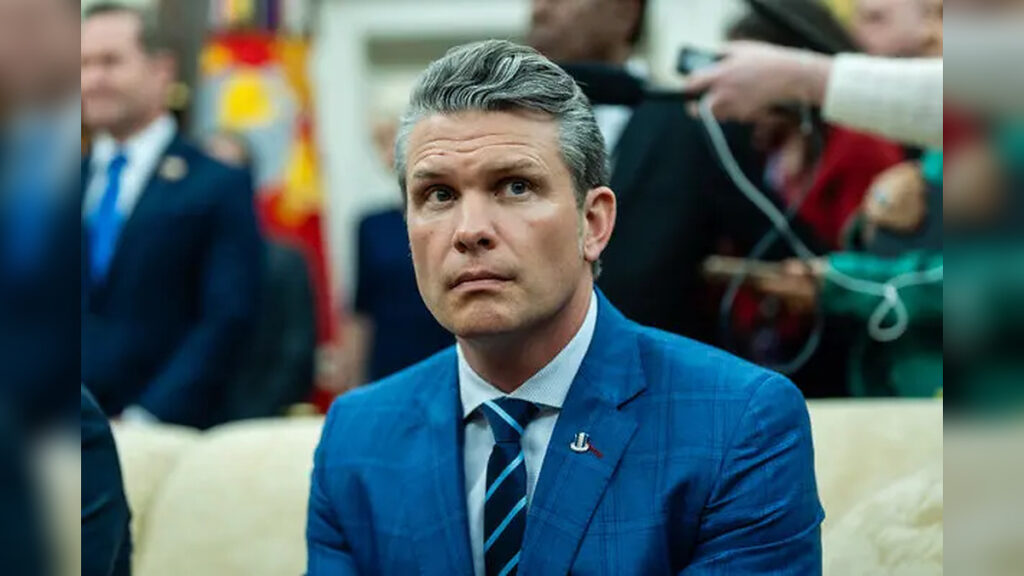
Tensions have emerged within President Donald Trump’s administration over the future of the United States’ military presence in Europe, with a disagreement between Secretary of State Marco Rubio and Defense Secretary Pete Hegseth highlighting competing views on NATO policy.
The disagreement surfaced after Hegseth prepared plans to reduce U.S. troop deployments across Europe, only for the proposal to be halted before it reached NATO allies, according to reports.
Pentagon Proposal Stalled Before NATO Briefing
Hegseth had been expected to present NATO officials in Brussels with plans outlining another phase of American force reductions in Europe.
The proposal reportedly included scaling back troop levels while also signaling that, in the event of a major conflict, the United States would withdraw key military assets such as submarines, naval warships, and drone support from allied operations.
However, after the proposal was circulated among senior administration officials, Rubio and others opposed the plan, preventing it from moving forward.
Rather than unveiling troop reductions, Hegseth instead informed NATO representatives that the Pentagon would conduct a comprehensive review of U.S. military capabilities across Europe.
The assessment is expected to take several months before any decisions are finalized.
Broader Debate Over America’s Role in Europe
The disagreement reflects a wider policy debate inside the Trump administration over the pace at which the United States should reduce its military footprint on the continent.
President Trump has consistently argued that European allies should assume greater responsibility for their own defense instead of relying heavily on American military resources.
His administration has repeatedly urged NATO members to increase defense spending and contribute more to collective security.




Hegseth has publicly embraced that position, encouraging European nations to take what he described as the primary responsibility for defending the continent.
Rubio’s Influence Becomes Clear
The episode also demonstrated Rubio’s significant influence within the administration’s foreign policy decision-making process.
By successfully blocking the Pentagon’s proposal before it was presented to NATO, the secretary of state reinforced his ability to shape major security decisions involving U.S. allies.
The incident highlighted how diplomatic considerations are continuing to play a central role in determining Washington’s approach to Europe.
Allies and Republicans Voice Concerns
Although many officials agree that European governments should increase their defense capabilities, some lawmakers and allies have expressed concern about reducing American forces too quickly.
Several Republican members of Congress reportedly worry that a rapid withdrawal could weaken NATO’s deterrence posture and create opportunities for Russia to test the alliance’s defenses.
Those concerns have influenced proposed defense legislation that would prevent the Pentagon from lowering U.S. troop levels in Europe below 76,000 unless Hegseth first completes a formal military risk assessment and certifies that the reduction would not undermine security.
Earlier Poland Decision Also Drew Attention
Questions surrounding Hegseth’s approach reportedly surfaced earlier this year after he canceled a scheduled rotation of an armored brigade to Poland.
According to reports, the move prompted President Trump to personally question the decision, asking why one of America’s key European partners was being treated unfavorably.
Trump later announced that approximately 5,000 U.S. troops would instead be deployed to Poland, signaling a different approach from the one initially pursued by the Defense Department.
Pentagon Defends Defense Secretary’s Actions
Responding to reports about the internal disagreement, Pentagon chief spokesman Sean Parnell defended Hegseth’s handling of the issue.
Parnell said the defense secretary ensured that his messaging remained aligned with President Trump’s broader objectives and emphasized that Hegseth did not want to limit the president’s ability to make final decisions regarding U.S. military posture in Europe.
NATO Summit Expected to Address Future Strategy
The debate comes as President Trump prepares to meet NATO leaders at next week’s alliance summit in Turkey.
European defense spending, burden-sharing among allies, and the future scale of America’s military commitment to Europe are expected to dominate discussions, with member nations closely watching whether Washington ultimately pursues significant troop reductions or adopts a more gradual approach.
