
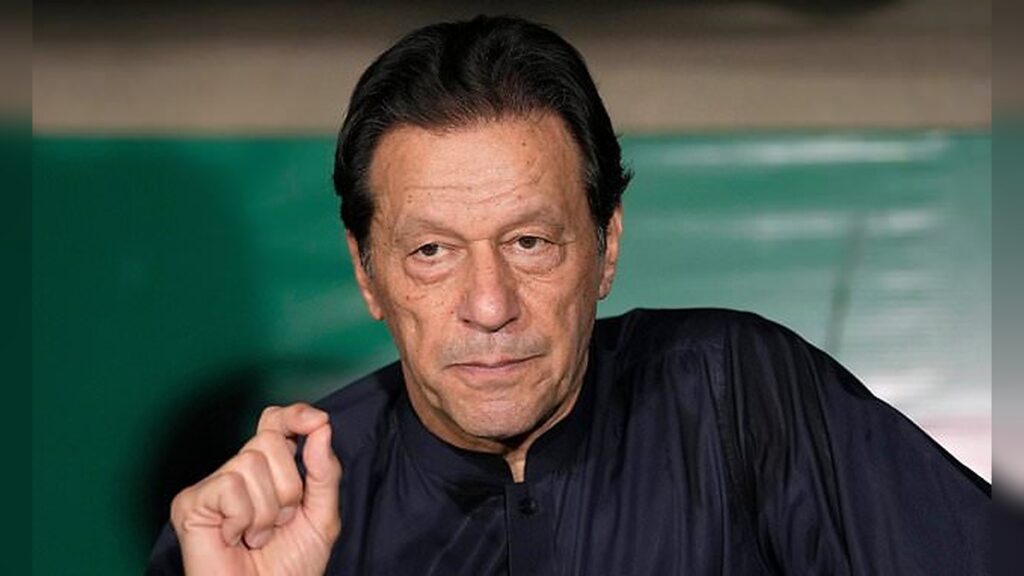
Imran Khan is set to leave the solitary confinement cell where he has spent much of his imprisonment and be transferred to a hospital in Islamabad, following sustained concerns over the former Pakistan prime minister’s deteriorating health.
The 73-year-old former Pakistan cricket captain has been held in prison for three years and is serving separate sentences of 17 and 14 years.
His family and political allies have repeatedly raised concerns about the conditions in which he has been detained.
Khan is due to be moved to Shifa International Hospital in Islamabad within 48 hours under an order announced on Tuesday. He is expected to remain there until at least September 16.
Family described his prison quarters as a ‘death cell’
Khan’s sons, Kasim and Sulaiman, have repeatedly spoken out about the conditions surrounding their father’s detention.
Kasim previously described the prison quarters as a “death cell”, claiming Khan had spent more than two years in solitary confinement with limited human contact and inadequate living conditions.
He alleged that his father had been exposed to filthy water and was housed near prisoners suffering from hepatitis.
Kasim also claimed that prison guards had been prevented from communicating with Khan, describing the isolation as a form of psychological torture.
The former prime minister has reportedly spent as many as 22 or 23 hours a day alone in his cell.
Political allies welcome decision
Zulfikar Bukhari, a spokesperson for Khan’s Pakistan Tehreek-e-Insaf party, welcomed the decision to move him to hospital but said it should have happened earlier.
“It’s a very welcome order and we wish it had happened sooner so his eye and general health would not have deteriorated this much,” Bukhari said.
He added that Khan should remain in hospital until his doctors were satisfied with his condition.




The decision follows repeated appeals from Khan’s family and supporters, who have argued that his treatment in prison has fallen well below acceptable standards.
Previous hospital requests were rejected
The latest transfer comes after two earlier requests for Khan to be moved to hospital were rejected by the courts.
His sons have continued campaigning for improved treatment, saying their father has been held in conditions that they believe are “completely substandard” and inconsistent with international standards for prisoners.
They have also expressed fears that they may never see him again.
The brothers have been unable to visit Khan since his imprisonment because of difficulties obtaining visas.
Cricket legends backed humanitarian appeal
Concern over Khan’s health has extended beyond Pakistan’s political arena.
In February, 14 prominent cricket figures from around the world joined a humanitarian appeal calling for better treatment for the former Pakistan captain.
Among those backing the open letter were former England captains Nasser Hussain and Michael Atherton.
The appeal highlighted growing international concern about Khan’s treatment while behind bars.
Khan’s supporters continue to demand his release
Khan’s imprisonment has remained a major source of political tension in Pakistan, with his supporters staging repeated demonstrations calling for his release.
He was imprisoned in August 2023, months after his arrest in May that year, and has remained at the centre of a political struggle between his supporters and the authorities.
Khan served as Pakistan’s prime minister from 2018 until 2022, when his government was removed following a parliamentary no-confidence vote.
From cricket hero to political leader
Before entering politics, Khan established himself as one of Pakistan’s greatest sporting figures.
He played 88 Test matches during an international cricket career that made him one of the most celebrated all-rounders of his generation.
His greatest sporting achievement came in 1992, when he captained Pakistan to its first Cricket World Cup title.
His transition from international sporting icon to political leader ultimately took him to the country’s highest elected office.
Now, three years into his imprisonment, his planned transfer to hospital marks a significant change in the conditions surrounding his detention as concerns about his health continue to mount.
