
Pennsylvania health authorities have reported another death associated with measles, bringing the state’s reported total for 2026 to five.
The Pennsylvania Department of Health said Wednesday that an unvaccinated Lancaster County resident had tested positive for measles and subsequently died. The department notified the Centers for Disease Control and Prevention (CDC) of the case but said no further information about the deceased would be released because of patient privacy protections.
The latest fatality comes as Pennsylvania continues to record the highest number of measles cases among US states.
Nearly 1,000 Cases Reported Across Pennsylvania
According to the state health department, Pennsylvania has recorded 943 confirmed measles infections across 39 counties so far this year.
At least 179 people have required hospitalization, while another 40 cases were reported during the two days preceding Wednesday’s announcement.
The scale of the outbreak makes 2026 the most significant measles year in Pennsylvania since 1991, when a major outbreak was associated with at least 13 deaths.
Measles Cases Spread Across the United States
The outbreak is not confined to Pennsylvania. CDC data cited in the report puts the national number of confirmed measles infections at 3,659 so far this year.
Cases have been recorded in 45 states, with Arkansas, Hawaii, Mississippi, New Hampshire and Nevada the only states yet to report an infection at the time of the report.
Health authorities have cautioned that differences between state and federal figures can occur because of reporting delays, meaning the actual number of infections could be higher.
Dispute Over the Number of Deaths
The latest Pennsylvania death has also emerged amid disagreement between state and federal health officials over how measles-related fatalities should be classified and counted.
Pennsylvania has reported five deaths in connection with measles this year, while the CDC had recognized only two of those deaths in its federal tally at the time of the report.




The CDC had not publicly provided additional details explaining its classification of the reported fatalities. Pennsylvania officials previously said four of the deaths involved two infants from Lancaster County, an 18-year-old from Mifflin County and a 40-year-old from Jefferson County.
The reporting dispute has unfolded amid tensions between Pennsylvania Governor Josh Shapiro and US Health and Human Services Secretary Robert F. Kennedy Jr. over the federal handling of measles deaths.
Unvaccinated People Account for Most Reported Cases
The overwhelming majority of people infected this year have either been unvaccinated or have not disclosed their vaccination status. The figure was reported at approximately 95 percent.
Children between five and 19 years old account for the largest age group, with 1,577 infections recorded. Adults aged 20 and older make up the next-largest group, with 1,407 cases.
Nationwide, 327 people have been hospitalized, including 91 children younger than five.
South Carolina has reported the second-highest number of infections at 670, followed by Utah with 535. Texas has recorded 192 cases, while Virginia has reported 178.
Why Measles Can Become Dangerous
Measles is highly contagious and spreads primarily through respiratory droplets released when an infected person coughs or sneezes.
People without immunity are particularly vulnerable. Health authorities estimate that around nine out of 10 unvaccinated people exposed to the virus will become infected.
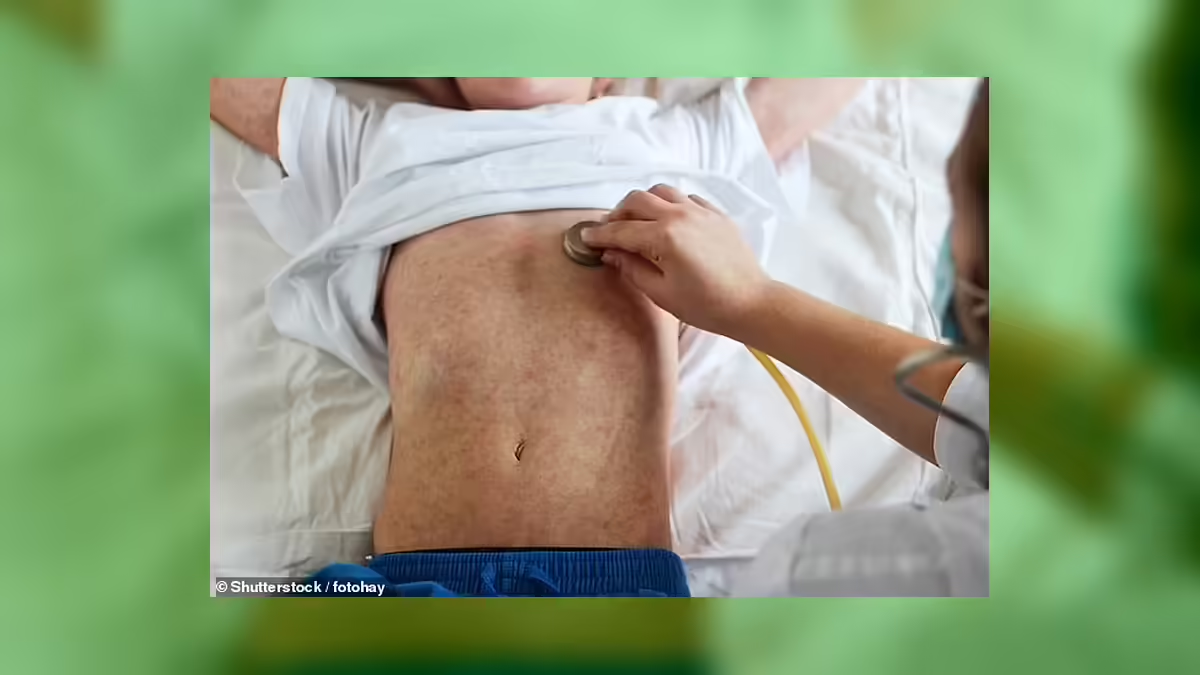
Initial symptoms can resemble the flu before the characteristic red rash develops, typically beginning around the face or hairline and spreading to other parts of the body.
Although many people recover, measles can cause serious complications, including pneumonia and encephalitis, a potentially life-threatening inflammation of the brain.
Young children, pregnant women and people with weakened immune systems face a greater risk of severe illness.
Vaccination Remains the Main Protection
The measles, mumps and rubella (MMR) vaccine is the primary way to prevent measles infection. Two doses, beginning at around 12 to 15 months of age, are estimated to reduce the risk of infection by about 97 percent.
There is currently no specific antiviral medication that eliminates measles. Treatment generally focuses on managing symptoms and preventing complications, which can include dehydration requiring intravenous fluids.
The continued rise in infections and hospitalizations has placed renewed attention on vaccination coverage as health authorities monitor outbreaks across the country.
Pennsylvania Faces a Growing Public Health Challenge
With 943 confirmed infections already reported across 39 Pennsylvania counties and five deaths linked by state officials to measles, the outbreak has become the state’s most serious in decades.
The latest death adds to concerns surrounding the rapid spread of the virus while differences between state and federal reporting continue to complicate the national picture.
As health departments continue collecting and verifying cases, the final 2026 measles figures could change as additional infections and fatalities are investigated and reported.

